Cart
0
Complete Your Setup





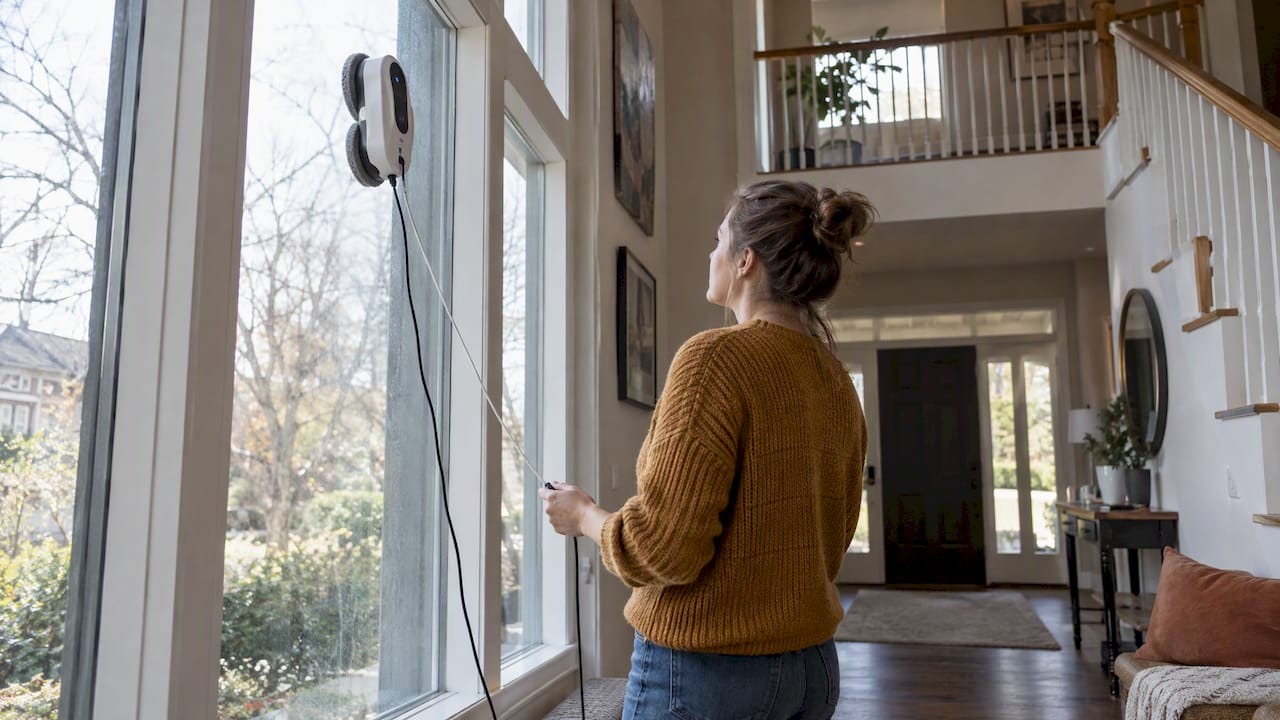
A window cleaning robot can clean tall, large panes at home without a ladder, but only if the glass is within reach of a person who can attach it and secure its safety tether. Home robots are not built for skyscraper facades, and they are not hands-free. They stick to the glass, clean it in a planned path, and leave you to do the setup and the moving.
This guide covers what “high” really means for a home robot, how to use one safely, which windows suit it, and what to check before you buy. Smart Products. Zero Hassle. That only holds when you know the limits first.
People search for a “high window cleaning robot” and mean two very different things.
Tall windows in a house. Think two-story foyer glass, a big picture window above a staircase, a wall of glass in a living room. A home robot can handle many of these, as long as you can safely reach the pane to place it.
High-rise buildings. Think glass towers. This is a separate world. Federal rules for powered platforms used for building maintenance sit in OSHA standard 1910.66, which covers installations permanently dedicated to interior or exterior maintenance of a specific structure. Those are professional systems, not consumer gadgets.
The automated machines that clean skyscrapers are also a different category. Fast Company’s report on a window washing robot called Ozmo describes a commercial system that works with human operators. A home robot is a small suction-cup device with a power cord and a safety line. It does not climb buildings.
So the honest answer is this: a home robot can clean tall glass that you can reach from inside or from a safe, level spot. It cannot replace a crew for windows that are out of reach.

A window robot holds itself to the glass with suction, moves in a path across the pane, and wipes with damp pads. Most have a backup battery and a safety tether in case suction fails.
Reviewers agree on where it earns its keep. The Gadgeteer’s review of a flagship window robot says the answer is yes, but only for the right home: one with enough uninterrupted glass that cleaning by hand is a genuine chore.
Think of it as a chore reducer. It takes the bulk of the work off you. It does not take all of it.
Safety is the whole point of this topic. A robot on a high pane is a falling object if something goes wrong, and the person setting it up should never be at risk to do so.
A professional window cleaner’s job shows how serious falls are. The U.S. Department of Labor investigated a fatal 29-story fall and found the employer failed to inspect and replace damaged protective equipment. Your situation is far smaller, but the lesson carries over: check your gear every time.
Here is a simple routine:
If you would need a ladder, a roof, or a lean out of an open window to place the robot, stop. Hire a licensed professional who has the right fall protection. A robot is not worth a fall.
The robot is not a way to avoid that risk. It works only where you can reach the pane safely.
Not every window is a good fit. Here is a quick guide.
| Window type | Good fit? | Notes |
|---|---|---|
| Floor-to-ceiling panes | Yes | Large, flat, uninterrupted glass is where robots shine |
| Sliding glass doors | Yes | Check the frame width and the track |
| Sunroom and conservatory walls | Often | Skylights and tilted glass are harder |
| Large picture windows | Yes | Reach and safe tether anchor matter most |
| Divided panes with thick grids | Limited | Frames can block movement |
| Textured or frosted glass | No | Suction and wiping both suffer |
| Windows with protruding handles | Limited | The robot can catch or lose grip |
| Shower doors | Sometimes | Soap film and water on glass change results |
A good rule: the fewer the interruptions, the better the result. A robot cleans a clear 6-foot pane faster than you can. A small window with a mullion every 12 inches will frustrate you and the robot.
Heavy grime needs a first pass by hand. A robot is built to maintain clean glass, not to strip months of buildup from an exterior pane. Wipe off bird droppings, sap and caked dirt first, then let the robot do the routine work.

On fluid, follow your manual first. Some manufacturers allow cleaning solution. Some owners report good streak-free results with a mild mix of water and white vinegar, often around 1 part vinegar to 10 parts water, according to a buyer’s guide that collected user advice. Treat that as owner advice, not a rule. Check your model’s guidance before you put anything in the tank, and never use a mix that the manufacturer warns against.
A few habits make results better:
We sell smart home gadgets, and we want you to buy the right one, not just any one. So here is what we tell homeowners about window robots.
The best use is simple. If you have a lot of large, flat glass and cleaning it is the chore you put off, a robot saves you real time. If you have a few small, divided windows, it will not feel like a big win.
We also say plainly that this is not a set-and-forget product. You will place it, clip the tether, watch it, and move it. That takes minutes, not an afternoon, but it is still your attention. We would rather you know that before checkout than find out after.
And for glass that is out of safe reach, we say skip the robot and call a pro. Our products are designed for simple setup and everyday home use. That means home windows you can reach. We want your home to be easier, not riskier.
We go deeper on the buying question in our guide, Robot Window Cleaner? 4 Questions for Homeowners.
— Tony
If you have large panes at home and want to cut the squeegee time, take a look at the GlassPilot™ Smart Window Cleaner. It sits in our Smart Cleaning range, built for easy setup and everyday home use. You can browse the rest of the range in the Smart Cleaning collection.
Shop Smarter, Live Better.
Spec sheets are long. These are the criteria that matter for tall glass.
A corded model gives you continuous cleaning but needs an outlet or extension lead near the window. A model with a battery pack suits balconies and outdoor glass. Whichever you pick, look at the backup battery: it is your safety margin if power drops.
The tether is not optional. Measure the distance from your anchor point to the far edge of the pane. A tether that is too short limits where the robot can go. A tether that is too long can swing or snag.
Check the minimum pane size and whether frameless glass is supported. Robots use frame edges to detect where the glass ends, so frameless panes need a model that handles that. Textured glass is a no for most.
Look for reviews that mention corners. Expect to wipe them yourself. A test like CHOICE’s review of the Winbot W1 Pro shows how independent labs report results: good cleaning on grimy windows, with small faint patches left after a deep clean.
A robot you have to lift to a tall pane should be light enough to handle comfortably. Also think about where it lives between uses. Some kits with a station take real shelf space.
Pads need washing and eventual replacement. Spray nozzles can clog with hard water. Factor in the small ongoing costs and effort.
Be honest with yourself about these cases:
If the robot is not the answer, you have three realistic options:
A robot can then cover the large panes you can reach, and a pro can cover the rest. That mix often costs less and carries less risk than one tool for everything.
No. Home robots are tethered appliances meant for residential glass. Skyscraper cleaning uses powered platforms and commercial systems with trained operators, covered by rules such as OSHA 1910.66. If your home has windows too high to reach safely, hire a professional.
Yes, on the right glass. They remove dust, fingerprints and light grime well on large, flat panes. You will still need to attach the robot, secure the tether, watch it, and touch up the corners by hand. They work best as a way to reduce the chore, not remove it.
It depends on how much glass you have. They pay off fastest in homes with large, uninterrupted panes, such as floor-to-ceiling glass and big sliders. If your windows are small and divided, a squeegee and a cloth may serve you better.
Yes. Stay nearby, keep the tether secured, and watch for snags on handles or frames. Move it to the next pane yourself when it finishes. Treat it as an active helper, not an unattended machine.
Follow your model’s manual first. Some owners report good streak-free results with a mild water and vinegar mix, but that is user advice, not a manufacturer rule. Do not use any liquid your manual warns against.