Cart
0
Complete Your Setup




Clean smarter, not harder: prioritize declutter first, then dwell time, then a top-to-bottom order with one-touch habits to cut cleaning time significantly. That single formula works because it removes the two biggest time wasters — clutter that blocks surfaces and scrubbing that a little soak time would have eliminated. Start here, right now:
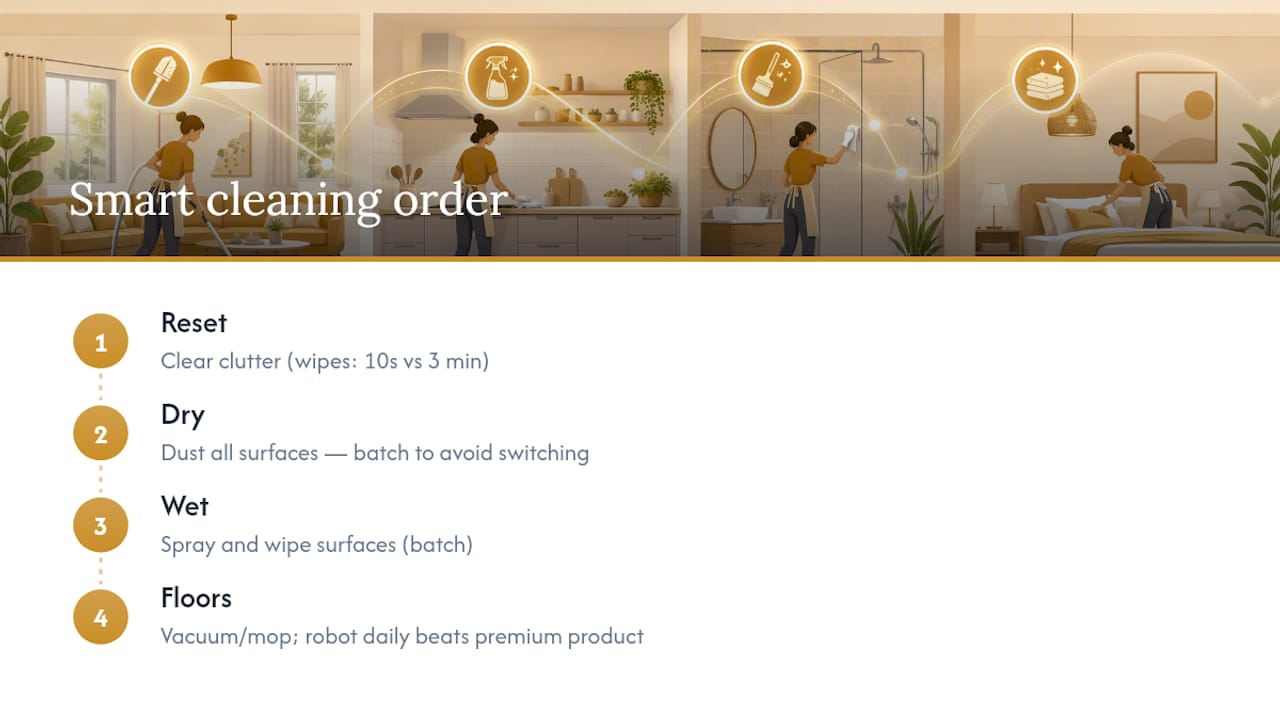
That sequence, supported by professional facility cleaners at Serene Facility Group, prevents rework and makes every pass faster. Here is your quick-reference order:
Cleaning smarter, not harder, comes down to five habits: declutter first, use dwell time, follow a top-to-bottom order, batch similar tasks, and invest selectively in tools that automate the most repetitive work.
| Point | Details |
|---|---|
| Declutter before cleaning | Clear surfaces first — a clutter-free surface takes seconds to wipe instead of minutes. |
| Use dwell time | Spray cleaners and wait 3–5 minutes before wiping; this eliminates most scrubbing. |
| Follow reset → dry → wet → floors | This sequence prevents rework and is the fastest order for any full-home pass. |
| Build daily micro-habits | A daily reset prevents the buildup that turns weekly cleaning into a marathon. |
| Sabezon for automation | Tools like the FloorPilot™ Robot Vacuum and SuperScrub Max™ handle the most time-consuming tasks hands-free. |
These are the hacks that actually move the needle. Pick three to try this week and you will feel the difference immediately.
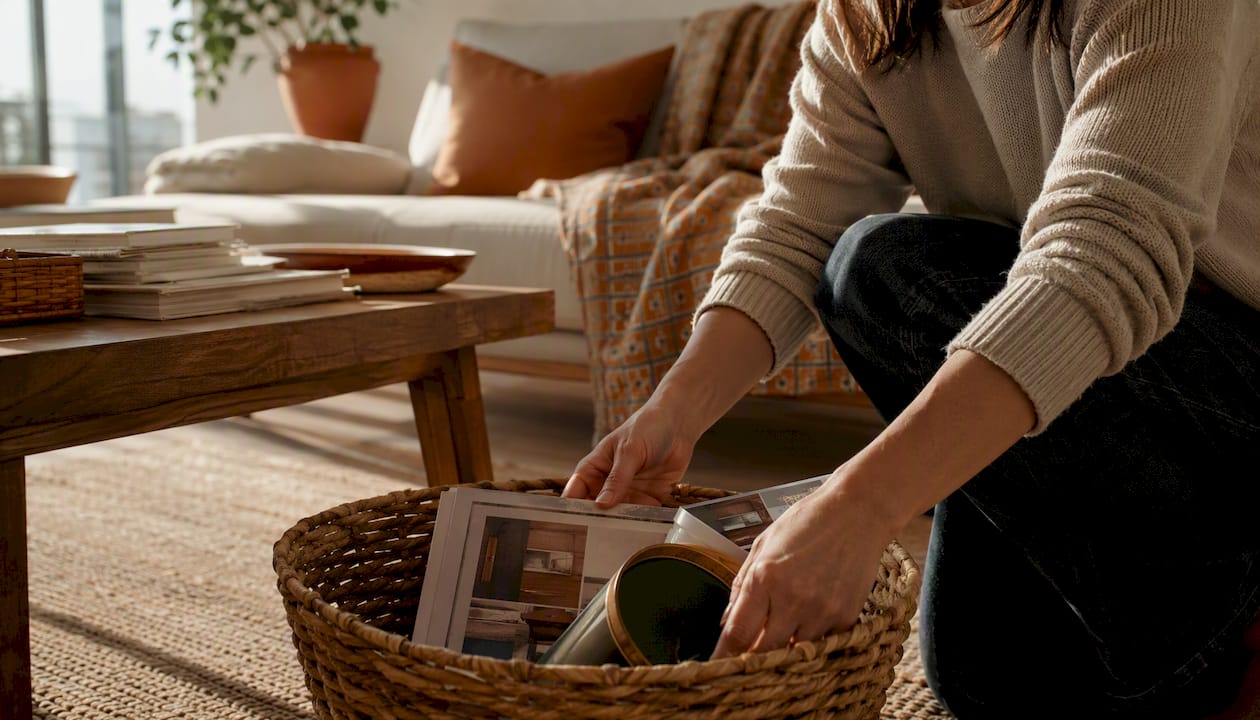
Declutter first (5 minutes). You cannot clean around stuff. Clear counters, tables, and floors before you spray anything. Clutter doubles your cleaning time because you keep moving objects instead of wiping surfaces.
Spray and dwell (5 minutes of free time). Apply your cleaner, then leave it. Bathroom soap scum and kitchen grease break down on their own if you give them 3–5 minutes of contact time. Return and wipe — no scrubbing needed. This is one of the most reliable time-saving cleaning methods cleaning editors recommend.
Top to bottom, always. Dust falls down. Wipe shelves before counters, counters before floors. Skipping this rule means vacuuming twice.
One-touch rule (ongoing habit). When you pick something up, put it where it belongs — not on the nearest flat surface. This single habit prevents the clutter reset that adds extra time to every cleaning session.
Clean wet areas first, floors last (every session). Bathrooms and kitchens generate the most mess and the most bacteria. Tackle them while your energy is fresh. Floors collect everything that falls during cleaning, so they always go last.
Batch similar tasks across rooms. Carry your glass cleaner and wipe every mirror in the house in one pass. Do the same with dusting. Switching between tasks and rooms wastes more time than the tasks themselves.
Use a cleaning caddy (2 minutes of setup, ongoing savings). Homeowners consistently report that keeping all supplies in one portable caddy eliminates the back-and-forth that quietly eats 15–20 minutes per session.
Set a timer for 20 minutes (every session). Timer-based cleaning turns an open-ended chore into a defined sprint. Most people clean faster and more completely when a clock is running.
Pro Tip: Microfiber cloths pick up bacteria and dust with water alone, cutting your product use in half. Keep a stack of at least 10 so you always have a clean one ready — running out mid-session is what sends people to paper towels and slows everything down.
Decluttering improves focus and motivation, and starting small is the key to making it stick. The four methods below each suit a different mindset and time budget. Pick one and use it today.
KonMari (Marie Kondo’s method): Sort by category, not by room. Hold each item and ask whether it sparks joy. Keep it if yes, thank it and donate if no. Best for people who want a one-time deep reset over a weekend. Takes 2–3 hours per category the first time, then almost nothing to maintain.
12-12-12 challenge: Find 12 items to throw away, 12 to donate, and 12 to put back where they belong. Takes about 15 minutes. Perfect for a quick Saturday morning reset or when you need a win without committing to a full session.
1-3-5 method: Each day, tackle 1 big item, 3 medium tasks, and 5 small ones. Keeps decluttering from feeling like a project and turns it into a daily rhythm. Works well for busy professionals who have 10–15 minutes in the evening.
Full-hands rule: Never walk from one room to another empty-handed. Always carry something that belongs in the destination room. Zero time investment, pure habit. Good Housekeeping’s declutter method roundup notes that sustainable methods like this one outlast intensive purges because they require no dedicated time block.
One-in, one-out rule: Every time something new enters the home, one item leaves. This single habit prevents clutter from returning after any method you use. For long-term storage gains, home organization systems can help you build permanent structure that makes the one-in, one-out rule effortless to maintain.
The right tool cuts a 20-minute task to 5. The wrong one sits under the sink. Here is what is worth buying and what to skip.
Tools worth the investment:
What to use carefully:
Vinegar and baking soda are useful in specific situations, but cleaning editors caution they are not universal solutions. Vinegar etches natural stone and damages grout over time. Baking soda is mildly abrasive and should never be vacuumed up from carpets or mattresses — it can clog filters and damage vacuum motors. Always check your appliance manual before applying any powder-based product.
Pro Tip: When buying any cleaning tool, prioritize ergonomics over features. A mop with an adjustable handle that fits your height eliminates back strain and lets you cover more floor in less time. A tool you use correctly every time beats a feature-heavy one you avoid.
| Tool | Time saved per session | Best for |
|---|---|---|
| Microfiber cloths | 5–10 minutes | All surfaces, daily use |
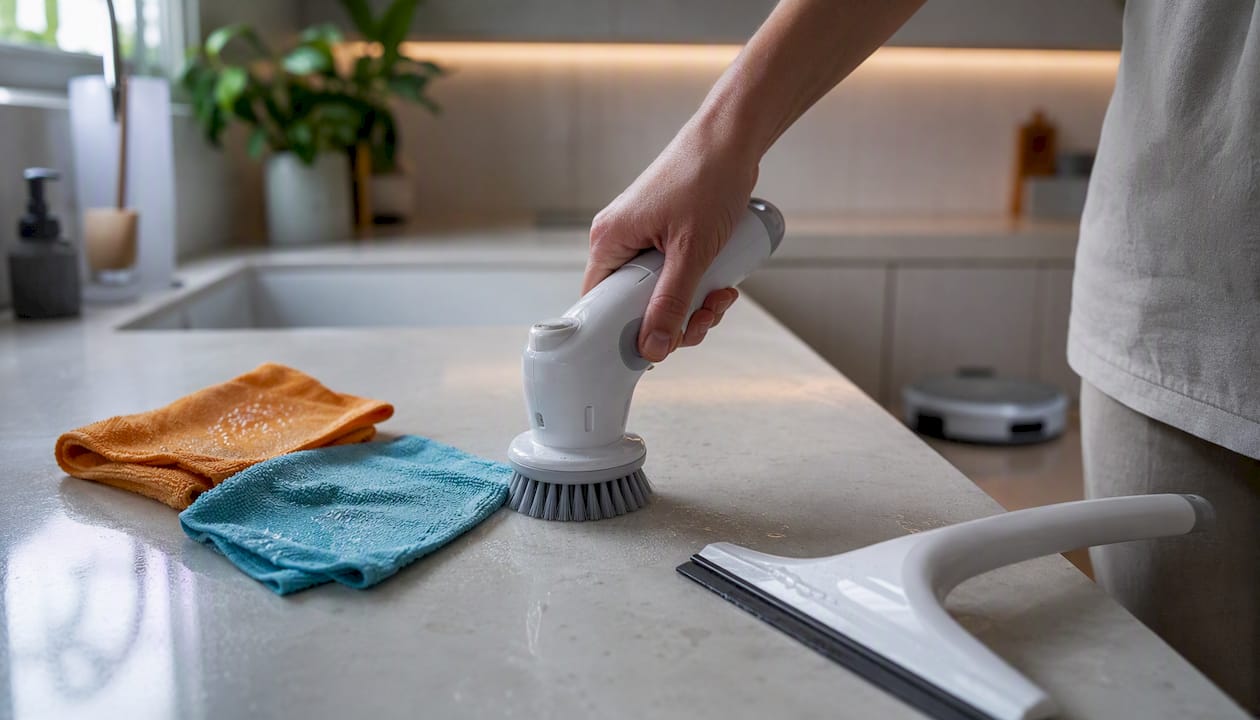
| Electric spin scrubber | 8–12 minutes | Grout, tubs, sinks |
| Robot vacuum | 15–20 minutes | Daily floor maintenance |
| Squeegee | 15–20 minutes/week | Shower glass prevention |
| Steam cleaner | 10–15 minutes | Grout, sealed tile, appliances |
Short daily habits plus one focused weekly pass beats a three-hour Saturday marathon every time. This schedule is built for a two-person household; adjust frequency up for families or pets.
For families and pet owners: Add a daily 5-minute floor sweep in the kitchen and entryway. High-traffic zones accumulate debris fast, and a quick daily pass prevents the buildup that turns a 20-minute clean into a 45-minute one. Busy professionals with robot vacuums can schedule an automatic daily run and skip step 5 entirely.
Cleaning faster should never mean cleaning dangerously. These are the rules professionals follow that most guides skip.
Never mix these chemicals:
Always read product labels before mixing anything. If a label says “do not mix,” that warning exists because the reaction is genuinely dangerous, not just a legal precaution.
Surface compatibility quick reference:
| Surface | Avoid | Safe options |
|---|---|---|
| Natural stone (marble, granite) | Vinegar, lemon juice, bleach | pH-neutral stone cleaner, dish soap + water |
| Hardwood floors | Vinegar, steam cleaners, excess water | Hardwood-specific cleaner, dry microfiber |
| Stainless steel appliances | Bleach, abrasive scrubbers | Dish soap + water, microfiber, mineral oil |
| Grout | Bleach (long-term use damages grout) | Oxygen bleach (OxiClean), steam cleaner |
| Glass | Abrasive pads | Microfiber + glass cleaner or diluted rubbing alcohol |
Pro Tip: Cleaning editors at Real Simple emphasize that dwell time is as important as product choice. Most cleaners need 30 seconds to 5 minutes of contact time to work. Wiping immediately after spraying means you are just spreading the mess, not removing it.
Pet hair and heavy foot traffic are the two fastest ways to undo a clean home. These tactics keep both under control with minimal daily effort.
Pet hair control:
High-traffic zone tactics:
Batching tasks and using dwell time productively are the two habits that separate people who clean efficiently from those who feel like they are always cleaning.
Spray everything before you wipe anything. Walk through the bathroom, spray the toilet, sink, and tub, then move to the kitchen and spray counters. By the time you return to the bathroom, the cleaner has done most of the work. You are wiping, not scrubbing.
Dust before you vacuum, always. Dusting knocks particles onto the floor. Vacuuming picks them up. Reversing this order means vacuuming twice.
Carry a caddy from room to room. Keeping all your supplies in one portable container eliminates the back-and-forth that adds 10–15 minutes to every session. Set it down, clean the room, pick it up, move on.
Use long-handled tools wherever possible. A long-handled duster, mop, and scrubber mean you are not bending, kneeling, or climbing. Less physical strain means you can clean longer without fatigue, and you cover more surface area per stroke.
Batch rooms by type, not by location. Clean all bathrooms in one pass, then all hard floors, then all glass. Switching between task types (scrubbing, then dusting, then mopping) costs mental energy and setup time.
Use dwell time to move to the next task. While the toilet cleaner sits, wipe the mirror. While the oven cleaner works, mop the kitchen floor. You are not waiting — you are working in parallel.
You do not need an hour to feel like your home is under control. Stack three of these and you have a 3-minute reset that makes a real difference.
Pro Tip: Set a 5-minute timer and pick three items from this list. Timer-based cleaning reliably increases follow-through because it turns an open-ended task into a defined, winnable sprint. Do this every evening before bed and your weekend cleaning time drops by half.
These micro-habits work best as a daily reset, not a replacement for weekly cleaning. Think of them as maintenance that prevents buildup, not a substitute for a proper pass. The daily 5-minute habit is what makes the weekly 45-minute session feel easy instead of exhausting.
Most cleaning advice focuses on products and techniques. The real problem is sequencing and mindset.
Here is the honest take: the majority of people who feel like their home is always dirty are not cleaning wrong. They are cleaning out of order. They vacuum before they dust. They wipe counters before they clear clutter. They deep-clean one room while the rest of the house deteriorates. Then they spend a full Saturday catching up, feel exhausted, and the cycle repeats.
The conventional wisdom says to clean room by room. That feels logical, but it is actually inefficient. Batching by task type — all dusting, then all spraying, then all floors — cuts total time because you are not switching tools, switching products, or mentally resetting between tasks. The Serene Facility Group’s smart-cleaning order formalizes this: reset, dry, wet, floors. It works in a studio apartment and a five-bedroom house.
The second thing most guides undervalue is decluttering as a cleaning strategy. Decluttering is not tidying. It is removing the friction that makes every future cleaning session harder. A surface with nothing on it takes 10 seconds to wipe. A surface covered in objects takes 3 minutes. Healthline’s research summary on decluttering shows it also improves focus and reduces stress — which means you are more likely to actually clean when the time comes.
Finally, the tools matter less than people think, up to a point. Beyond that, the return on investment comes from automation: a robot vacuum running daily while you work is worth more than any premium cleaning product.
Busy homeowners who want to spend less time cleaning and more time living need tools that work without constant attention. Sabezon’s smart cleaning gadgets are built for exactly that: purpose-built, easy-to-use devices that handle the most time-consuming tasks automatically.
The FloorPilot™ Smart Robot Vacuum runs daily floor maintenance on its own schedule, with LIDAR navigation and a self-emptying station so you are not emptying a dustbin every other day. The SuperScrub Max™ Electric Spin Scrubber replaces 10 minutes of tile scrubbing with 90 seconds of powered rotation. For windows and glass, the GlassPilot™ Smart Window Cleaner handles high-reach glass without a ladder or a second pass.
These are not gadgets for gadget’s sake. They are the right investment when your time is genuinely limited, when pet hair is a daily problem, or when physical effort is a barrier. Browse the full range at Sabezon and find the one tool that removes your single biggest cleaning bottleneck.
These are the most reliable references used throughout this guide, each worth bookmarking for deeper reading.