Cart
0
Complete Your Setup





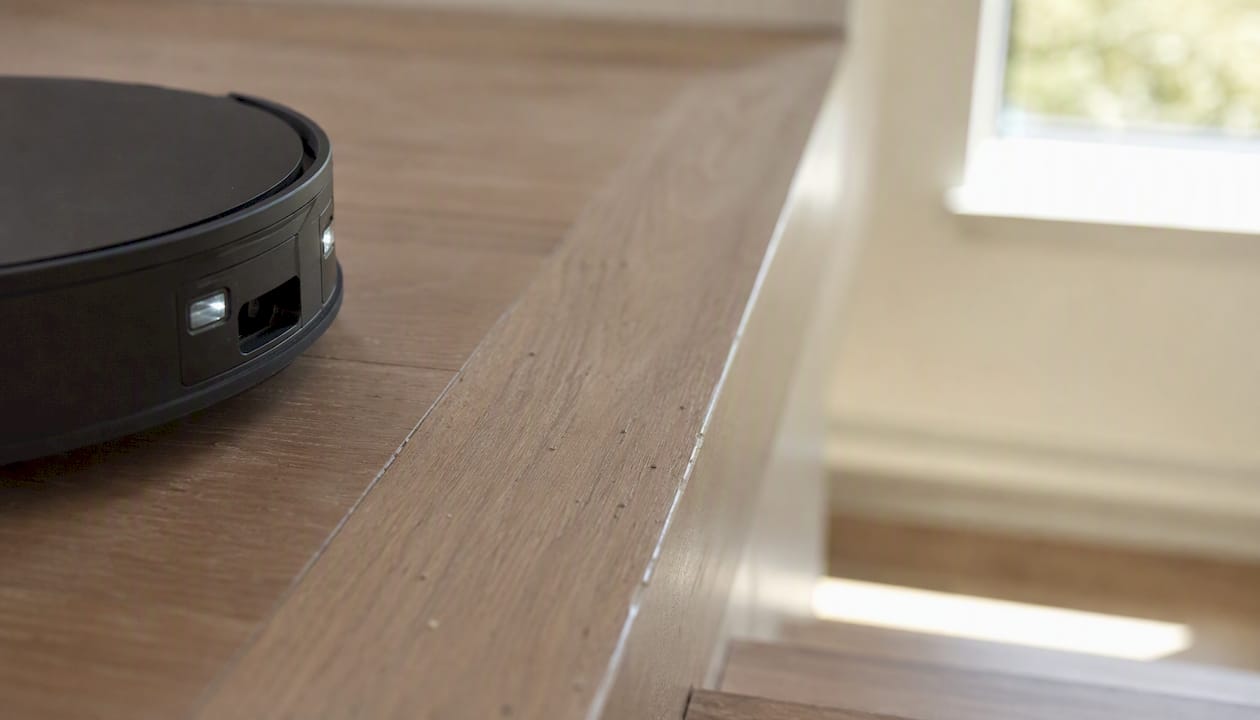
No consumer robot vacuum can reliably climb and clean stairs today. A handful of prototypes demonstrated at CES 2026 and IFA 2025 can do it in controlled conditions, but none are broadly shipping to U.S. homes. Here is what that means for you right now:
Practical recommendation for most buyers: Get a multi-map, cliff-sensor robot vacuum for each floor you want covered, or use a carry-and-go workflow with a reliable model like the FloorPilot™ Smart Robot Vacuum from Sabezon. True stair-climbing vacuums are not ready for everyday homes yet.
No stair-cleaning robot vacuum is broadly available in the U.S. today, but multi-map cliff-sensor robots like the FloorPilot™ give multi-floor homeowners a reliable, proven solution right now.
| Point | Details |
|---|---|
| No consumer stair-cleaner ships yet | Legged prototypes like the Saros Rover are in development; none are broadly available in the U.S. |
| Two distinct approaches exist | Legged robots clean each step; mech-suit carriers only transport the robot between floors. |
| Demo conditions are controlled | CES and IFA demos use wide, flat stairs; real-home performance on narrow or carpeted stairs is unproven. |
| Multi-map robots work today | A cliff-sensor robot with multi-map auto-localize on each floor is the reliable solution available now. |
| Sabezon’s FloorPilot™ ships now | The FloorPilot™ offers LiDAR navigation, multi-map auto-localize, and a self-emptying station for multi-floor homes. |
The short answer: most avoid them entirely. Nearly all current consumer models rely on cliff sensors and LiDAR to detect stair edges and stop before falling. That is the standard, and it works well. The interesting engineering question is what happens when a robot tries to go over the edge instead of stopping at it.
Three distinct mechanical approaches are in play:
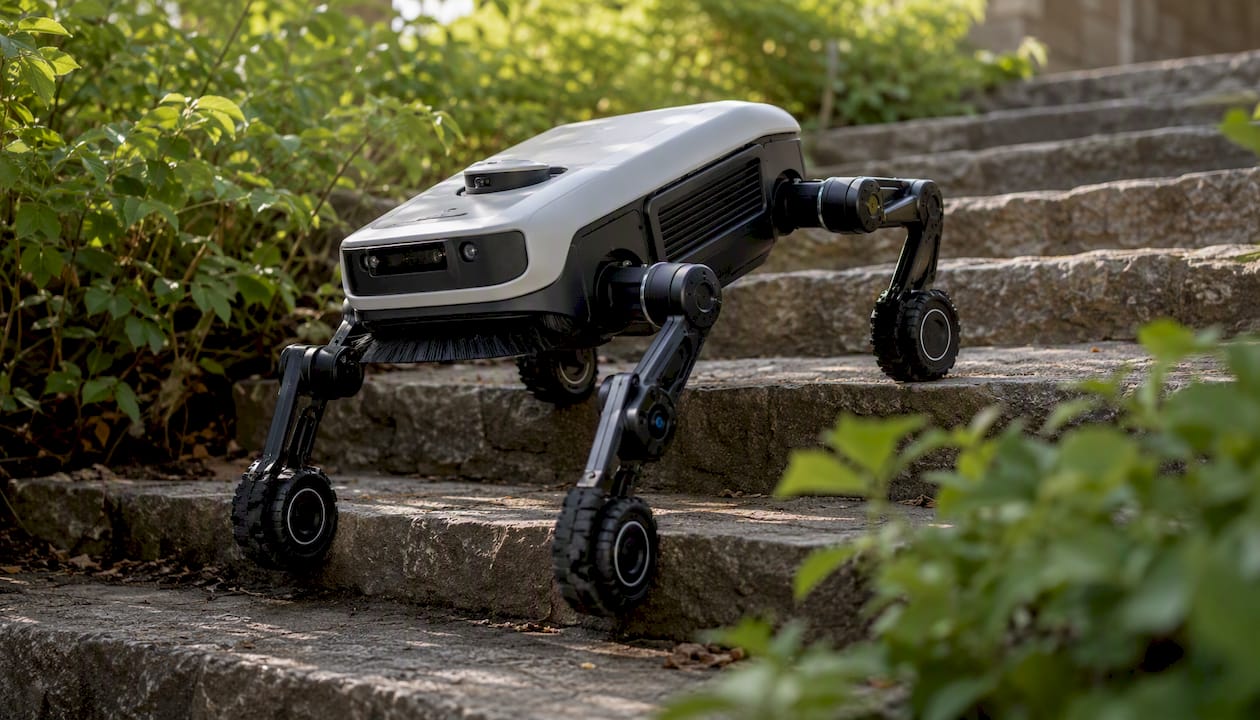
These robots replace fixed wheels with limbs that can lift, extend, and plant independently. The climb sequence works roughly like this: the robot braces against the riser, lifts its front legs onto the tread, pulls its body up, then repeats for the next step while running its brush roll on each tread surface. Roborock’s Saros Rover uses this architecture, pairing the legged gait with 3D spatial sensing to plan each move. CNET’s coverage of the Saros Rover describes this as a category shift from flat-floor machines toward bio-inspired mobility, where vacuums step or hop over thresholds rather than being stopped by them.
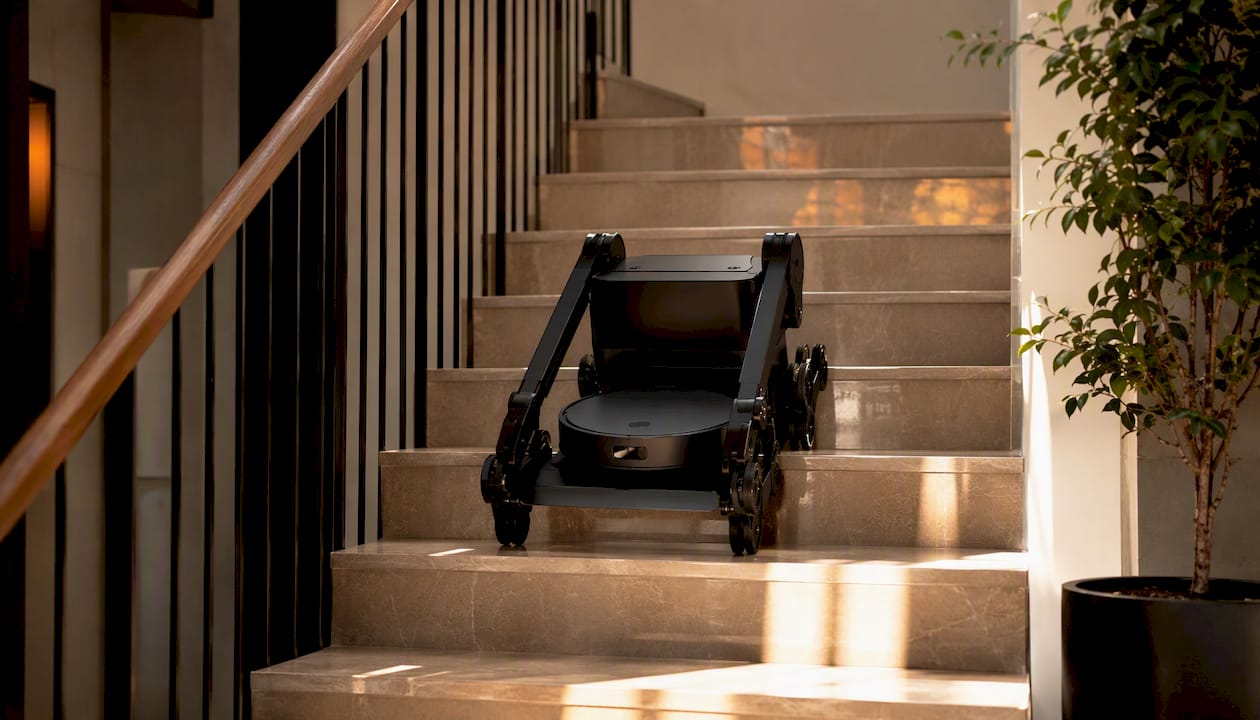
A separate carrier device grabs the robot, extends mechanical arms, and walks up the stairs. The robot inside stays passive during transit and then deploys on the new floor to clean normally. Eufy’s MarsWalker, shown at IFA, works this way. The carrier does not clean the stairs. It is a transport system, not a stair-cleaning solution, but it is a pragmatic near-term answer for getting one robot to service multiple floors.
Some current models can cross door thresholds or low transitions up to about 2 cm. These are not stair climbers. They handle the small lips between rooms, not actual risers.
Key specs to check when evaluating any stair-capable claim:
| Approach | Climbs stairs | Cleans stairs | Availability (U.S.) |
|---|---|---|---|
| Legged prototype (e.g., Saros Rover) | Yes | Yes, per tread | Prototype / in development |
| Mech-suit carrier (e.g., MarsWalker) | Yes | No | Concept / limited demo |
| Standard cliff-sensor robot | No | No | Shipping now |
Pro Tip: Speed and stability trade off directly in legged robots. A faster climb means less time for the brush to contact each tread. If a demo video looks quick, ask how much debris was actually picked up per step, not just whether the robot made it to the top.
Show-floor demos are exciting. They are also carefully staged. Here is what reviewers actually reported.
Notable demo types at CES 2026 and IFA 2025:
The Verge’s hands-on coverage of the Saros Rover noted the robot climbed five stairs in under three minutes during the CES demo, using a step-by-step legged motion while actively cleaning each tread. Reviewers also flagged moments of teetering and pointed out that the demo stairs were wide, flat, and well-lit, which is ideal conditions. Roborock described the device as still in development, with no firm U.S. ship date announced.
PCMag’s IFA 2025 roundup captured the broader pattern: multiple stair-related demos generated real excitement, but most were show-floor concepts or limited prototypes rather than products ready for consumer purchase.
What this means for buyers: A demo on wide, flat exhibit stairs does not guarantee the same robot handles your narrow, carpeted, bullnose-edged staircase. Prototype status means no warranty, no support, and no guarantee of a ship date.
Availability summary as of 2026:
Even in demos, stair-capable robots face hard physical constraints. Understanding them helps you set realistic expectations.
Performance limits:
Safety concerns for your home:
Pro Tip: Sensor fouling is a real maintenance issue. Cliff sensors clogged with dust or pet hair give false readings, which is dangerous on any staircase. Clean them every two weeks if you run the robot near stair edges.
Reviewers also noted that demo conditions matter enormously: long, wide, flat stairs are far easier than the narrow or curved staircases found in most American homes. Real-world cleaning coverage per step was often incomplete even in favorable demo setups.
For most homeowners, the honest answer is no, not yet. Here is a simple way to think through the decision.
Reasons to wait:
Reasons to consider a preorder (if one becomes available):
Decision checklist:
Practical alternatives that work right now:
Who should preorder: Early adopters with straight staircases, flexible timelines, and a high tolerance for prototype quirks.
Who should wait: Anyone with curved stairs, pets, children, or a need for reliable daily cleaning.
Who should buy now: Homeowners who want clean floors on every level today. A multi-map robot on each floor, or a carry-and-go workflow, gets the job done without the risk.
Whether you are waiting for a climbing robot or setting up a multi-floor workflow today, a little prep goes a long way.
Ongoing maintenance checklist:
Pricing for stair-capable robots is not publicly set for most prototypes. Here is what the current landscape looks like.
Price and availability overview:
How to read preorder language:
Specs to cross-check before committing to any preorder:
Good Housekeeping’s coverage of the Dreame stair-climbing robot noted that manufacturer claims about step heights and slope angles often come from controlled demo setups, not real-home testing. Verify independently before spending money.
While stair-climbing robots are still being refined, the FloorPilot™ Smart Robot Vacuum from Sabezon gives multi-floor homeowners a reliable, available solution today.
Core features for multi-floor owners:
How to set it up for a multi-floor home:
Why choose this now instead of waiting:
Pro Tip: Set the FloorPilot™ to run each floor on a staggered schedule. Floor one at 9 AM, floor two at 10 AM. Carry it up between runs and it re-localizes automatically. Clean floors on every level, zero hassle.
Not every spec sheet tells the full story. Here is a short checklist for vetting any stair-capable robot claim.
Trust signals to look for:
Vetting checklist for press demos and product pages:
Behaviors that increase confidence:
PCMag’s IFA 2025 coverage is a good example of balanced reporting: it captured the excitement of multiple stair-capable demos while being clear that most were show-floor concepts rather than shipping products. That kind of nuance is what separates useful press coverage from hype.
The stair-climbing robot category is genuinely exciting. Watching a legged robot plant its wheels on each tread and vacuum as it climbs is impressive. But there is a real gap between a controlled CES exhibit and a narrow, carpeted staircase with a dog on it and a toddler’s shoe on step three.
What strikes me most about this category is how the two approaches, legged cleaners and mech-suit carriers, solve completely different problems. The legged robot tries to replace your need to ever touch the stairs. The carrier just moves your existing robot upstairs. Neither is wrong. But buyers who conflate the two end up disappointed when a carrier arrives and does not clean a single step.
The practical reality for most American homeowners in 2026 is this: the technology is real, the demos are promising, and the products are not ready. Sabezon built the FloorPilot™ for exactly this moment, a reliable, multi-map robot that handles every floor you have today, without the wait and without the prototype risk.
Multi-floor cleaning does not have to wait for a stair-climbing prototype. The FloorPilot™ Smart Robot Vacuum from Sabezon ships now, comes with full warranty and support, and handles LiDAR-mapped multi-floor cleaning with a self-emptying station that keeps things simple.

Set it up on floor one, carry it to floor two, and it re-maps automatically. Add a VacuumPilot™ Cordless Stick Vacuum for stair treads, and every level of your home stays clean today. Browse the full smart cleaning collection at Sabezon to find the right setup for your home, and check out for same-day order processing.
Smart Products. Zero Hassle.
These sources are worth opening if you want to see demo videos, read hands-on notes, or check spec claims directly.