Cart
0
Complete Your Setup


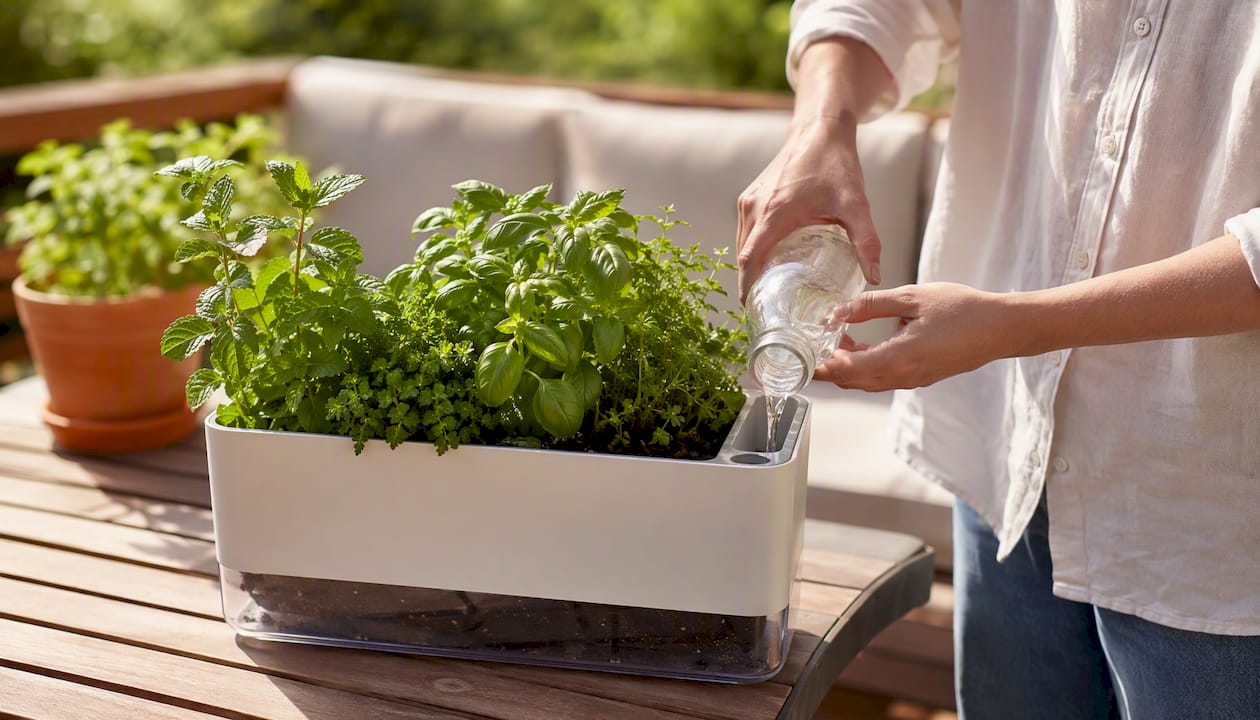
Self-watering planters are a reliable choice for most common culinary herbs. Basil, mint, parsley, chives, and cilantro all thrive with the steady, consistent moisture these systems deliver. The one caveat: woody, drought-tolerant herbs like rosemary and thyme prefer drier roots, so keep them in separate pots with standard drainage.
Ready-made pick: The Verdara™ Self-Watering Planter by Sabezon is the go-to option for most indoor and patio herb growers. It combines a built-in reservoir, a visible water gauge, and a clean design that fits any kitchen counter or windowsill.
Budget alternative: A 2-liter bottle with a cotton wick costs almost nothing and works well for experimenting. Care still matters either way: check the reservoir weekly and match your herbs to the moisture level the system provides.
Self-watering planters are the most reliable low-maintenance option for growing moisture-loving culinary herbs indoors or on a patio, and the Sabezon Verdara™ delivers the features that matter most.
| Point | Details |
|---|---|
| Best herbs to grow | Basil, parsley, mint, chives, and cilantro thrive; keep rosemary and thyme in standard pots. |
| Top feature to prioritize | A visible water gauge reduces guesswork and is the single highest-impact feature for success. |
| Core maintenance rhythm | Check the reservoir weekly, flush monthly to prevent salt buildup, and fertilize at half dose. |
| DIY option | A 2-liter bottle with a cotton wick is a proven, low-cost starter method for new growers. |
| Recommended ready-made planter | The Sabezon Verdara™ combines a reservoir, water gauge, and clean design for busy herb growers. |
The Verdara™ Self-Watering Planter is purpose-built for kitchen and windowsill herb gardening. Sabezon designed it specifically to simplify watering routines for busy homeowners who want fresh herbs without the daily fuss.
Key features at a glance:
| Spec | Details |
|---|---|
| Best for | Basil, parsley, mint, chives, cilantro |
| Reservoir access | Top-fill port |
| Water indicator | Visible gauge included |
| Ideal placement | Windowsill, kitchen counter, patio |
| Brand | Sabezon |
The Verdara™ is the right call for apartment cooks and busy homeowners. You get a reliable, design-forward planter that works from day one, no assembly puzzles, no daily watering anxiety. Product testing of indoor herb gardens consistently ranks a clear water gauge and an easy refill port as the two features that most affect user satisfaction and growing success. The Verdara™ delivers both.
A self-watering planter holds water in a lower reservoir and uses capillary action (wicking) to pull moisture upward into the soil and root zone at the rate the plant needs it. According to UrbanGreenGuide, this system keeps root-zone moisture consistent and reduces both overwatering and underwatering risks for common culinary herbs.
Here are the core components:
Some systems use hydro-felt pads that draw water from the base directly to the plant’s stem zone, and certain designs accept store-bought potted herbs without re-potting. Others, like window-box styles, use absorbent cotton wick ropes with a visible water-level window and a top fill port.
Passive soil-based self-watering systems differ from hydroponic setups. Hydroponics grow plants in water or an inert medium with nutrients added directly. Passive self-watering planters use regular potting mix and rely on capillary action alone. Simpler, lower cost, and easier to manage for most herb growers.
Pro Tip: Choose a planter with a light-blocking (opaque) reservoir. Clear reservoirs let light reach standing water, which encourages algae growth inside the tank.
Moisture-loving herbs are the natural fit for self-watering systems. Woody, drought-tolerant herbs are not.
Best herbs for self-watering planters:
Use with caution:
Experts note that self-watering planters work well for busy growers, but matching moisture level to the herb is the key variable. Basil and mint in one planter, rosemary in a separate standard pot.
Pairing tip: Basil, parsley, and chives share similar moisture needs and can share a planter. Never pair mint with other herbs; it will crowd them out. Keep rosemary, thyme, and sage in their own standard containers.
Start with reservoir size and a water gauge. Those two features have the biggest impact on how easy the planter is to use day-to-day.
Feature checklist:
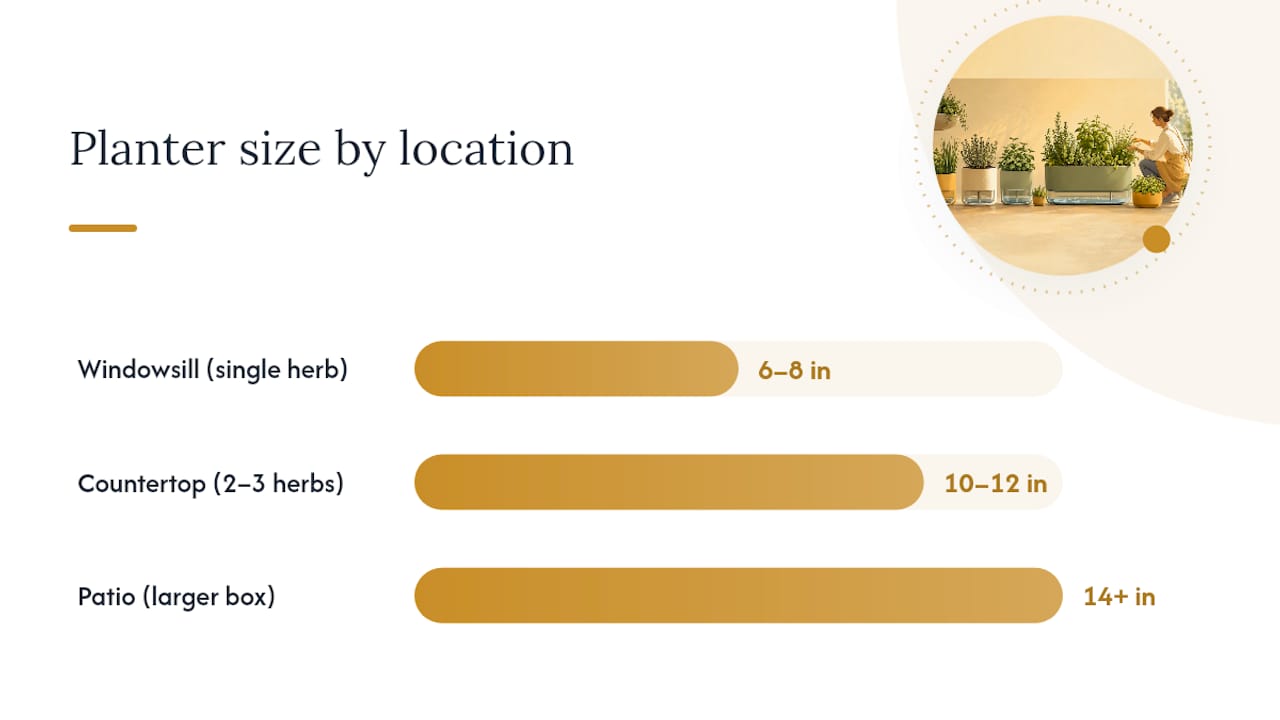
Sizing guidance: A 6–8 inch planter suits a single herb on a windowsill. A 10–12 inch box handles 2–3 herbs on a countertop. Patio setups benefit from larger boxes (14 inches or more) that hold more soil volume and a bigger reservoir.
On sustainability: plastic planters have a lower upfront environmental cost than ceramic but a shorter lifespan. A well-made ceramic or recycled-plastic planter used for years outperforms a cheap plastic one replaced every season. Urban herb gardens also contribute to broader environmental benefits of green spaces in cities, including air quality and reduced heat absorption.
This Food Network kitchen-show method is proven, low-cost, and a great way to understand capillary action before investing in a ready-made planter.
Materials:
Steps:
Pro Tip: Before planting, dip the wick in water and pull it through your fingers to confirm it draws moisture. A dry, stiff wick won’t pull water effectively. If it doesn’t wick within a few seconds of contact with water, swap it for a thicker cotton strip.
The core rule is simple: check the reservoir weekly, top-water only when planting or establishing new seedlings, and fertilize lightly on a regular schedule.
Weekly:
Monthly:
Seasonally:
Cleaning note: Use mild dish soap or diluted white vinegar to clean the reservoir. Rinse thoroughly before refilling. Residue from cleaning agents can harm roots.
The most frequent issues are root rot from overfilling, algae in the reservoir, and leggy growth from low light.
Problem → fix:
When to start over: If more than half the roots are brown and mushy, the soil smells sour, or the wick has deteriorated beyond cleaning, replace the potting mix entirely, clean the reservoir, and replant with a fresh seedling.
Pros:
Cons:
The tradeoff is straightforward: for moisture-loving culinary herbs in a busy household, the benefits outweigh the drawbacks by a clear margin.
Entry-level plastic self-watering pots start around $8–$15 for a single windowsill size. Mid-range planters with a water gauge and a larger reservoir run $20–$45. Ceramic or design-forward options land in the $40–$80 range. Multi-pot window-box systems with three or more compartments typically cost $25–$60.
DIY (2-liter bottle method) costs under $5 if you already have potting mix on hand.
Sizing and price summary:
Spending more on a planter with a water gauge and a durable reservoir is worth it if you plan to grow herbs year-round. Cheap planters without overflow protection are the most common source of root rot complaints.
Spring: Growth accelerates. Check the reservoir every 5–6 days instead of weekly. Start fertilizing monthly as temperatures rise. This is the best time to repot or refresh potting mix.
Summer: High heat increases evaporation. Outdoor planters may need refilling every 3–4 days. Move planters out of direct afternoon sun if leaves start to scorch. Basil and mint will grow fast; harvest regularly to prevent bolting.
Fall: Slow down fertilizing as growth tapers. Bring patio planters indoors before the first frost. Perennial herbs like chives can overwinter indoors near a bright window.
Winter: Growth slows significantly. The reservoir will last longer between refills, sometimes 2–3 weeks. Reduce fertilizer to once every 6–8 weeks. Watch for dry indoor air; it can stress herbs even when the reservoir is full. A small humidifier nearby helps.
The DIY bottle method is genuinely useful. It teaches you how capillary action works, costs almost nothing, and produces results. But it has real limits: the reservoir is tiny, the wick degrades within a few months, and the setup looks exactly like what it is.
For anyone who wants fresh herbs on a regular basis, a purpose-built planter is the more reliable path. The water gauge alone is worth the price difference. Knowing at a glance whether your basil needs water is the kind of small convenience that keeps a herb garden alive through a busy week. The DIY version requires you to check the reservoir by lifting the top section, which most people stop doing after the novelty wears off.
The scenario where DIY wins: you’re testing whether you’ll actually use fresh herbs before committing to a planter, or you’re teaching a kid about plants. Both are valid. For most people, a planter with a proper reservoir, overflow protection, and a visible gauge is the practical choice.
Fresh herbs on demand, no daily watering required. The Verdara™ Self-Watering Planter gives you a built-in reservoir, a visible water gauge, and a clean design that fits any kitchen or windowsill. Fill it once, check it weekly, and harvest whenever you need basil, parsley, or chives for dinner.

Sabezon products are available through the Sabezon online store with straightforward ordering and reliable delivery. If you’re building out a smarter kitchen setup, the smart kitchen collection pairs well with the Verdara™ for a complete, low-effort cooking station.
Check the Verdara™ product page for current pricing, available sizes, and shipping details. Smart Products. Zero Hassle.