Cart
0
Complete Your Setup




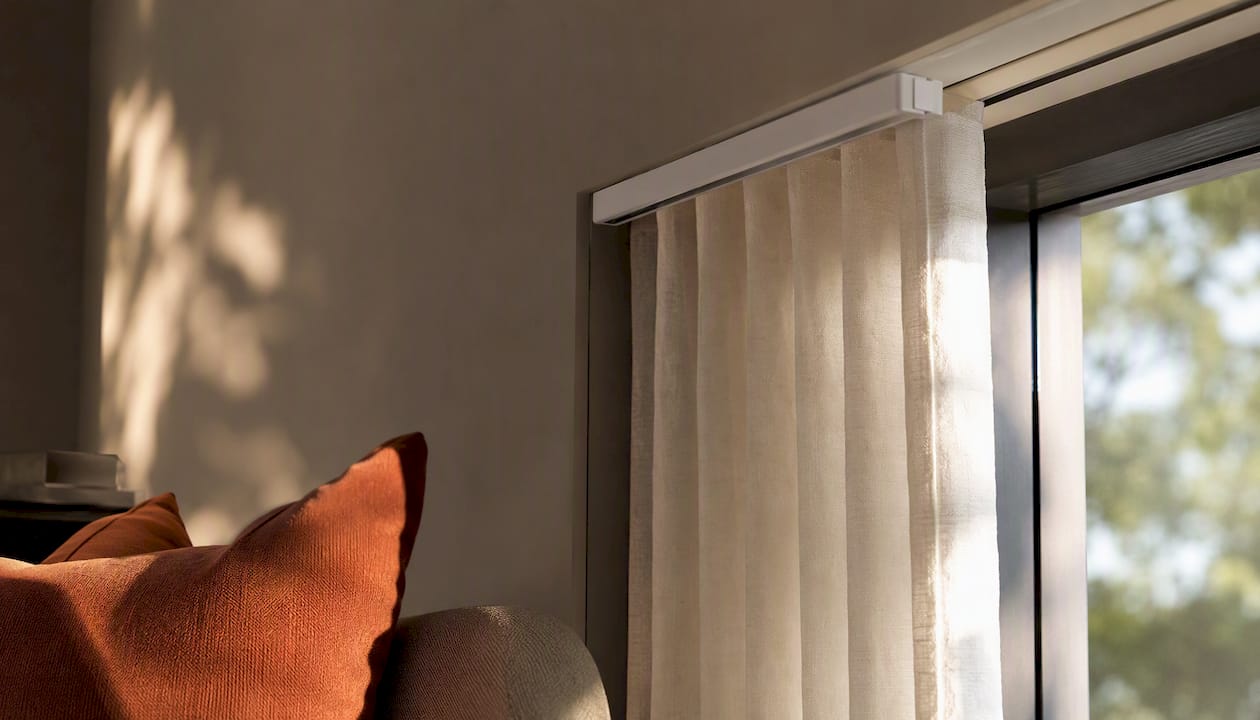
Automated curtains are worth it for most homeowners who use their curtains daily for a functional purpose — blocking morning sun, managing heat, or protecting privacy. The short answer: yes, choose them when your curtains do a real job every day. The U.S. Consumer Product Safety Commission has long flagged corded window coverings as a strangulation hazard for young children, making cordless motorized systems a meaningful safety upgrade, not just a convenience one. Timed operation can also reduce solar heat gain during peak afternoon hours, cutting the load on your air conditioner without you touching a thing.
Three factors decide whether automated curtains make sense for your home:
Automated curtains are worth choosing when they perform a daily functional job — safety, sleep, heat control, or accessibility — and the right motor type depends on your track, fabric weight, and control goals.
| Point | Details |
|---|---|
| Daily use drives ROI | Automation pays off when curtains move for a real reason every day — sleep, glare, or heat control. |
| Safety is a top reason | Cordless motorized systems eliminate the child strangulation risk flagged by the CPSC for corded window coverings. |
| Motor costs range widely | Quality motors typically run $100–$400 per unit; hardwired installs cost more due to labor and electrical work. |
| Retrofit is the low-friction start | Clip-on robot motors attach to existing tracks without drilling, making them ideal for renters or first-time buyers. |
| Sabezon smart home range | Sabezon offers practical smart-home gadgets that pair naturally with curtain automation for a connected, efficient home. |
Motorized curtains integrate with smart-home platforms like Google Home, Amazon Alexa, and Apple HomeKit, reduce energy use through scheduled operation, and eliminate exposed cords for child and pet safety. Those three advantages alone cover the most common reasons homeowners make the switch.
Blocking afternoon sun with a scheduled close can drop room temperature by 3–5°F, according to a hands-on retrofit review by XDA Developers. That is a real, measurable impact on your cooling bill without any HVAC change.
Here is what each benefit looks like in practice:
Pro Tip: For sleep quality, use a sunrise schedule to open curtains gradually rather than a smart bulb. Real sunlight exposure is more effective for circadian rhythm regulation than artificial light mimicry, since it delivers the full spectrum your body responds to.
Motorized curtains, the industry term for what most people call “automated” or “smart” curtains, fall into two main hardware categories.
In-track motors are built into the curtain rod or track system. They offer the cleanest finish, handle heavier fabrics, and are usually hardwired or plug-in. Professional installation is common. Retrofit robot motors clip onto your existing track and move the curtain carrier along the rail. They attach without drilling, making them the fastest path to automation if you already have a working track and fabric you like.
Power options at a glance:
Control methods vary by system. Most consumer-grade motorized curtains support a local remote, a smartphone app (Hunter Douglas’s PowerView app is a well-known example), and voice assistants. Higher-end systems add hub compatibility and Matter support, which lets your curtains participate in whole-home scenes alongside lights, thermostats, and locks.
Before you shop, check: track type (C-rail, I-rail, or rod pocket), header clearance, fabric weight, and how much stack-back space you have on each side.
Pro Tip: If you want to avoid any drilling or track replacement, look specifically for retrofit robot-style motors. They clip onto most standard curtain rods and are fully portable if you move.
Motor price and installation complexity vary more than most buyers expect. Consumer guidance commonly places motor costs at roughly $100–$400 per motor for quality systems, with hardwired installs costing more due to labor and electrical work.
| Solution type | Typical cost range | Best for |
|---|---|---|
| DIY retrofit robot motor | typically lower cost per unit | Renters, light panels, existing tracks |
| Consumer plug-in in-track motor | generally moderate cost per motor | Homeowners, medium panels, no electrician |
| Custom hardwired track system | higher cost per window typical | Heavy drapes, new builds, whole-home installs |
A retrofit device takes minutes to install. A plug-in in-track motor typically takes under an hour per window. A full custom hardwired system with professional measurement and installation can take a day or more, especially across multiple rooms.
Factors that push cost up: higher motor torque for heavy blackout panels, quieter motor mechanisms, and smart-hub compatibility. Always ask for a torque rating before buying — a motor that stalls on your fabric is money wasted.
Automated curtains are reliable, but they are not maintenance-free. Here is what to plan for.
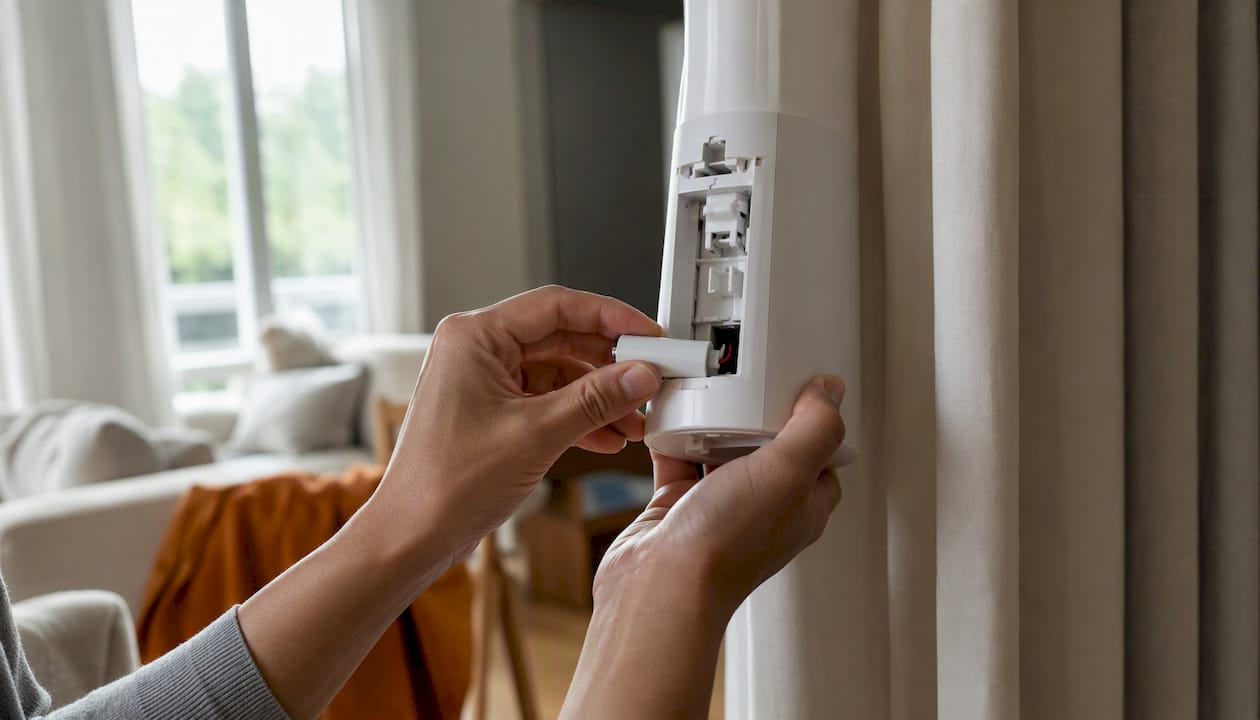
Battery and power: Battery-powered motors need recharging. How often depends on panel weight and use frequency. A power outage can leave hardwired systems without function unless a manual override is built in — always confirm this before purchasing.
Noise: Budget motors can be audible, which matters in bedrooms. Quality motors from brands like Hunter Douglas run near-silently, but you pay for that. Ask for a decibel rating or watch a video demo before committing.
Motor lifespan and warranty: Most quality motors are rated for tens of thousands of cycles. Warranties typically run one to three years for consumer-grade systems and longer for professional installations. Check SwitchBot’s support portal as an example of what post-sale support looks like — and ask any vendor the same questions before buying.
Compatibility problems: Certain header styles (pencil pleat, eyelet) do not work with retrofit motors. Very heavy blackout panels can exceed a motor’s torque rating. Sheer fabrics on wide windows can bunch unevenly.
Repair costs: If a motor fails out of warranty, replacement parts are not always available for budget systems. Stick with brands that have a U.S. service channel and published spare-part availability.
Work through this checklist before you spend a dollar.
1. Define the room goal first. Sleep blackout, glare control, heat management, accessibility, or ambiance — each goal points to different fabric weight, motor torque, and control needs.
2. Measure before you shop. Note your track type, header style, curtain weight, and stack-back space. A motor that fits your neighbor’s C-rail may not fit your I-rail.
3. Decide on control scope. Single-room scheduling is simple. Whole-home scenes with presence/away automations need a hub and compatible devices. Know which you want before comparing systems.
4. Ask vendors these questions:
Red flags to avoid:
Automation delivers the most value when curtains perform a daily functional job — sleep, glare, or heat control. If your curtains move only occasionally, a better manual curtain or improved fitting may be the smarter spend.
Three broad categories cover most of the U.S. market.
Retrofit devices win on portability and low friction. Built-in systems win on torque, finish, and long-term reliability. Most homeowners who start with a retrofit end up upgrading at least one window to a built-in system once they experience daily use.
Pairing automated curtains with other smart home tech — like a smart garage controller or connected lighting — is where whole-home automation starts to feel genuinely effortless. Energy-efficiency upgrades work best as a system, and new interior doors and insulation improvements compound the savings that timed curtain operation starts.
Yes, and it is mostly positive. Timed curtain closure during peak solar hours reduces the demand on air conditioning, which directly lowers electricity consumption. In heating months, closing curtains at night reduces heat loss through glass, supporting your furnace or heat pump rather than working against it.
The motors themselves draw minimal power — most consume under 5 watts during operation and near zero in standby. Battery-powered units use rechargeable lithium cells, which have a recycling pathway through most U.S. municipal programs.
The sustainability case is strongest when automation replaces behavior that was previously inconsistent. A homeowner who forgets to close curtains on hot afternoons gains real, repeatable energy savings from a scheduled system. The curtain fabric itself is unchanged, so there is no additional textile waste from switching to motorized operation.
Most quality motors are rated for 50,000 or more open/close cycles. At two cycles per day, that is roughly 68 years of mechanical life — far longer than the curtain fabric itself. In practice, electronics and firmware support are the limiting factors, not the motor mechanism.
Consumer-grade systems typically carry a one-year warranty. Mid-range and professional systems often extend to two or three years, with some brands offering five-year coverage on hardwired installations. Hunter Douglas, for example, offers multi-year warranties on its PowerView motorization systems.
Before buying, confirm: Is the warranty parts-only or does it include labor? Is there a U.S. repair center? Can firmware be updated over the air to maintain hub compatibility as platforms evolve?
Benefit most:
Benefit least:
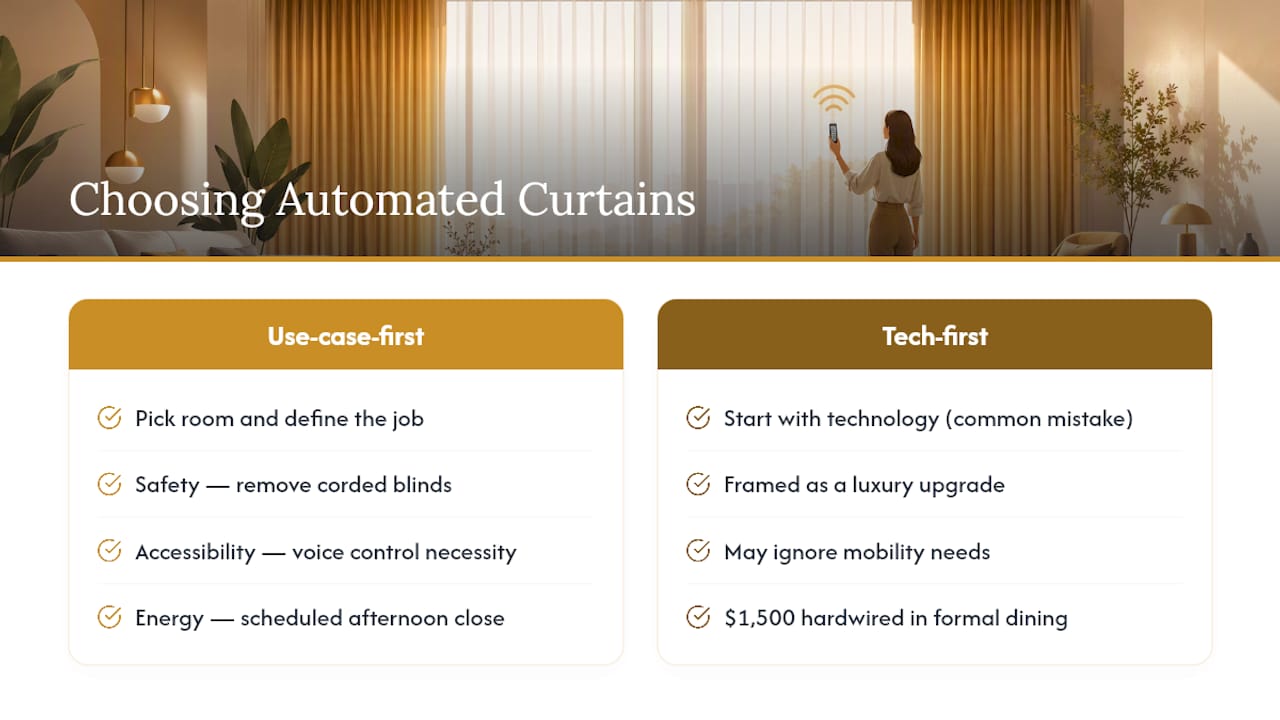
The conventional wisdom treats automated curtains as a luxury upgrade. That framing misses the point. For a parent with a toddler, removing corded blinds is a safety decision, not a lifestyle one. For someone managing arthritis or a mobility condition, voice-controlled curtains are a daily necessity. For a homeowner running central air in a sun-facing room, a scheduled afternoon close is a practical energy tool.
The mistake most buyers make is starting with the technology instead of the use case. Pick the room, define the job the curtain needs to do, then choose the motor. A $100 retrofit device on a bedroom window you open every morning at the same time will deliver more value than a $1,500 hardwired system in a formal dining room that sees guests twice a year.
Sabezon’s approach to smart home gadgets follows the same logic: practical, problem-solving devices that earn their place in your daily routine. The GlassPilot™ Smart Window Cleaner is a good example — it handles a real, recurring job (window cleaning) without adding complexity. Automated curtains fit the same profile when chosen for the right room and the right reason.
Automated curtains are one piece of a smarter home. Sabezon carries a range of practical smart-home gadgets built around the same principle: real convenience, zero unnecessary complexity. From the GlassPilot™ Smart Window Cleaner that keeps your newly automated windows spotless, to connected devices that slot into the same app-based routines you set up for your curtains, Sabezon’s products are chosen because they solve daily problems reliably. Browse the smart home tech collection to find devices that complement your curtain upgrade and build out a home that genuinely works for you.