Cart
0
Complete Your Setup


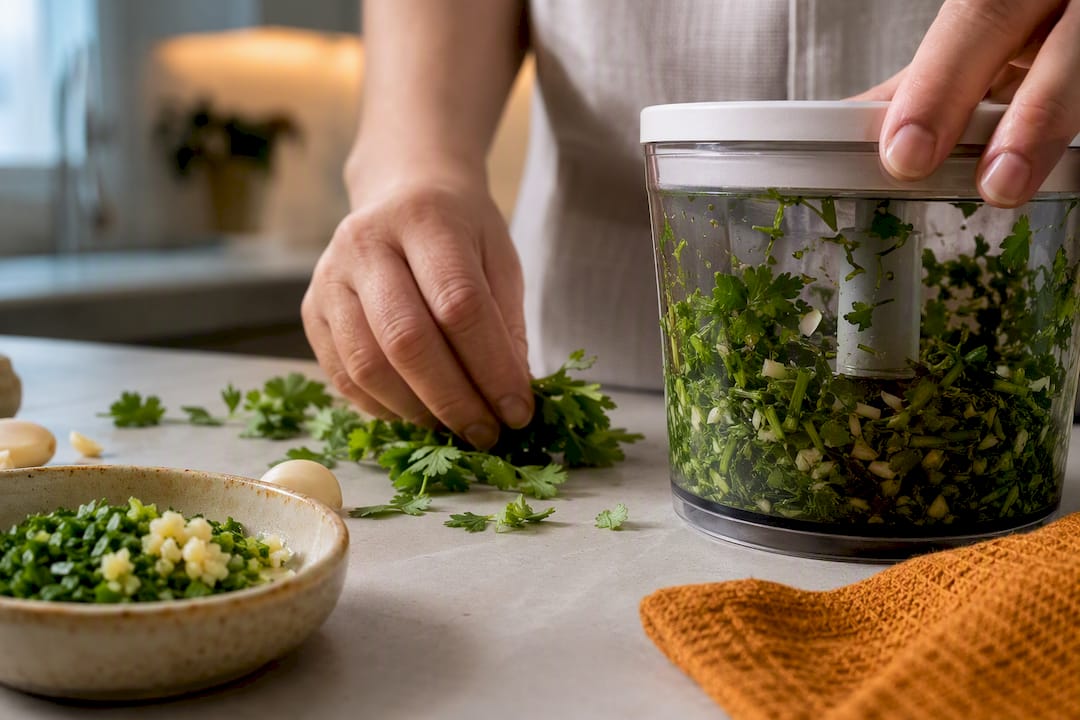
A mini chopper is built for one job: fast, small-batch chopping, mincing, and pureeing when a full-size food processor is overkill. Think minced garlic, chopped herbs, a two-person batch of salsa, a quick vinaigrette, or a single jar of baby food. It’s not built for large batches, tough nuts, or dense dough, so keep expectations sized to match its small bowl.
TL;DR:
- A mini chopper is ideal for small, repetitive tasks like garlic mincing, herb chopping, and small batches of salsa or pesto, handled in under 15 seconds.
- To achieve the best texture, pulse for coarse results or run continuously for smooth purees, with ingredients ideally cut into roughly one-inch pieces before processing.
- Keep the bowl below the maximum fill line, layer wet ingredients below dry, and avoid overfilling or forcing large batches to prevent strain and uneven chopping.
- Cleaning is straightforward, involving dishwasher-safe parts and hand-washing blades to maintain sharpness, with storage on the counter encouraging regular use.
- Placing the mini chopper on the countertop increases usage frequency; accessibility matters more than wattage, as the tool is best suited for quick tasks rather than heavy-duty grinding.
The mini chopper earns its counter space by handling the small, repetitive tasks that make cooking a chore in the first place. Its tight bowl keeps ingredients close to the blade, which is exactly why it handles herbs, garlic, and small salsas faster than pulling out a full processor and dragging the parts through a dishwasher cycle. Here are the uses worth building into your regular routine.
Pro Tip: When making dressings or dips that need to emulsify, add the oil in a thin, slow stream while pulsing instead of dumping it in all at once. That gradual addition is what keeps the sauce smooth instead of separated.
Common household uses documented by food writers include pesto, salsa, breadcrumbs, minced aromatics, and small batches of hummus, which lines up with what most home cooks actually reach for on a weeknight. None of these require the appliance to run more than 10 to 15 seconds at a stretch.
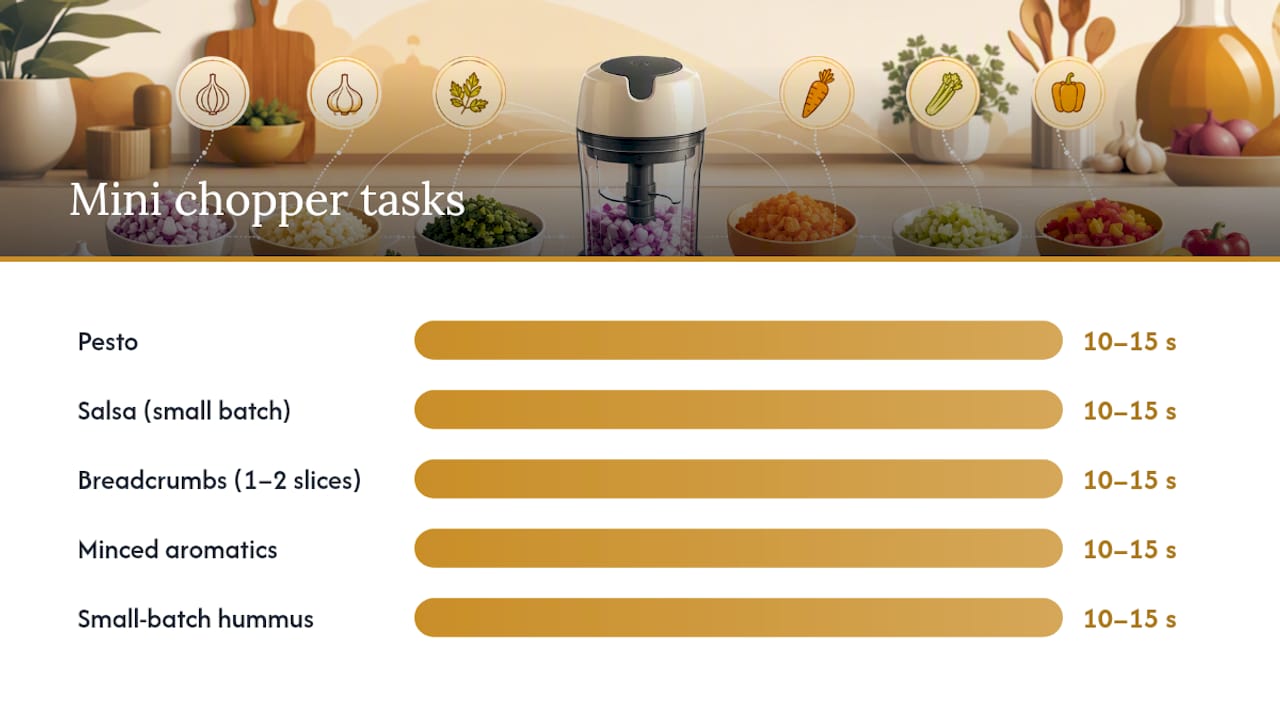
Two settings control everything: pulse and continuous run. Short pulses break ingredients into a coarse, chunky texture, ideal for salsa or chopped nuts. Longer continuous runs push toward smooth purees, which is what you want for baby food or hummus. KitchenAid’s guidance recommends cutting larger ingredients into roughly 1 inch pieces before adding them, which keeps the chop even and prevents the motor from straining against oversized chunks.
A few rules keep every batch consistent:
Pro Tip: If a task takes more than 30 seconds of nonstop pulsing to get the texture you want, it’s probably too much for the bowl size. Split it into two smaller batches instead of forcing one big one.
Most mini choppers have just a base, bowl, blade, and lid, making cleanup simple and encouraging frequent use. That simple part count is exactly why it’s easier to keep clean than a bulkier processor with a dozen attachments.
Reach for the mini chopper when you’re feeding one to four people and need speed over volume: garlic, herbs, small sauces, single-serve purees. A food processor earns its size when you’re shredding a block of cheese, kneading dough, or prepping a big-batch soup base. Blenders win for liquids: smoothies, soups you’re pureeing smooth, or crushed ice for cocktails.
If the task fits in two hands and takes under a minute, the mini chopper is the right call. If it needs a bigger bowl or a longer run time, size up.
Kitchen gadgets only earn their keep if you actually use them, and placement decides that more than features do. Keeping a small appliance on the counter, rather than in a cabinet, measurably increases how often it gets used, because pulling it out takes zero extra steps. That’s the whole logic behind treating a mini chopper as a countertop staple instead of an occasional-use gadget.
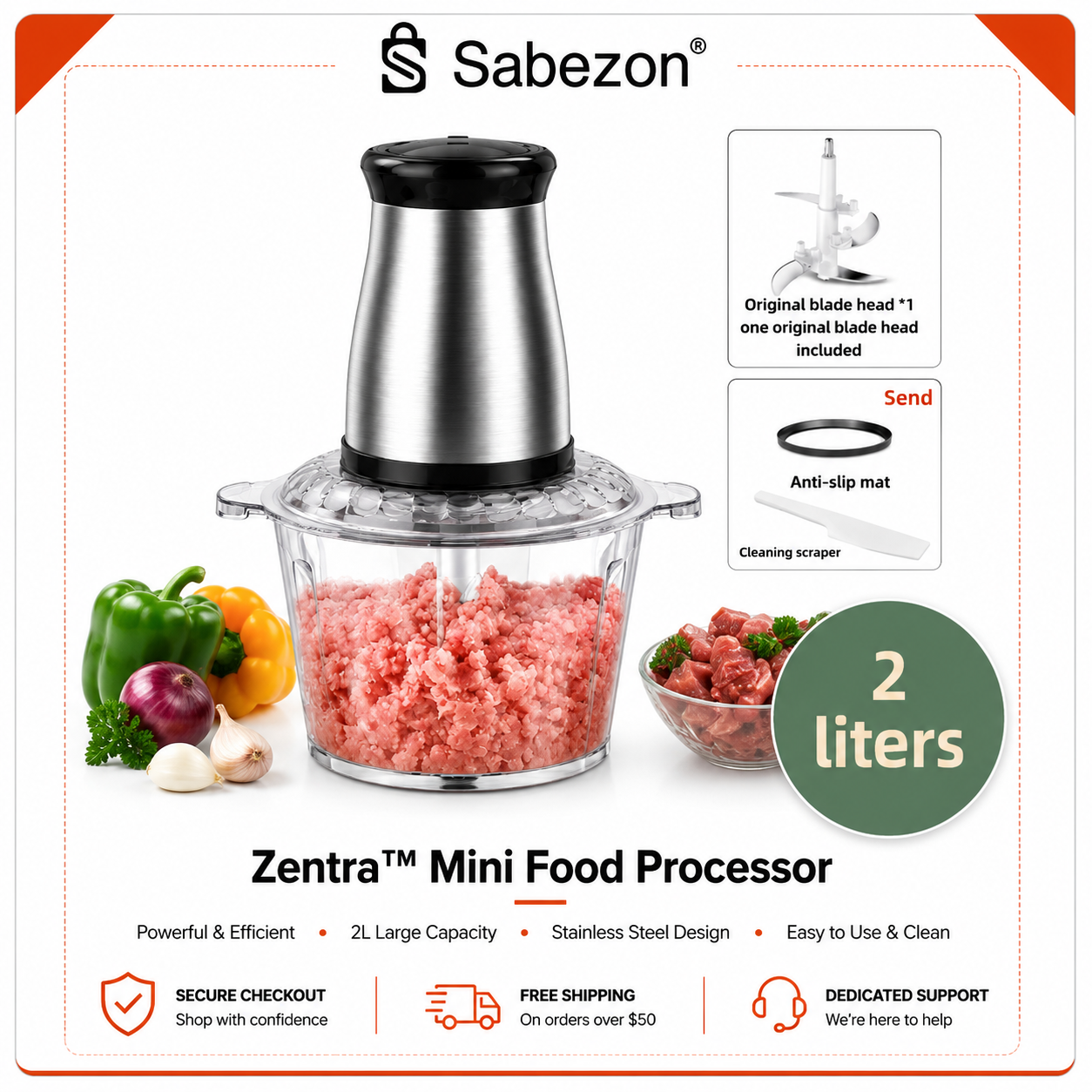
Sabezon’s Zentra™ Mini Food Processor was built around that same logic: a compact footprint, a stainless-steel blade for consistent mincing, and a design that disassembles into just a few pieces for fast rinsing. Faster cleanup means less excuse to skip using it, which is the single biggest factor in whether a small appliance becomes a daily habit or a drawer item. If you’re organizing a small kitchen and thinking about what stays visible versus what gets tucked away, that same principle applies to pantry and cabinet layout as well.
Most advice on kitchen gadgets focuses on features: wattage, bowl size, attachment count. That misses the real predictor of whether a mini chopper gets used past week two: friction. A tool that takes 10 seconds to grab, fill, and rinse gets reached for daily. One buried behind three other appliances gets used twice and forgotten.
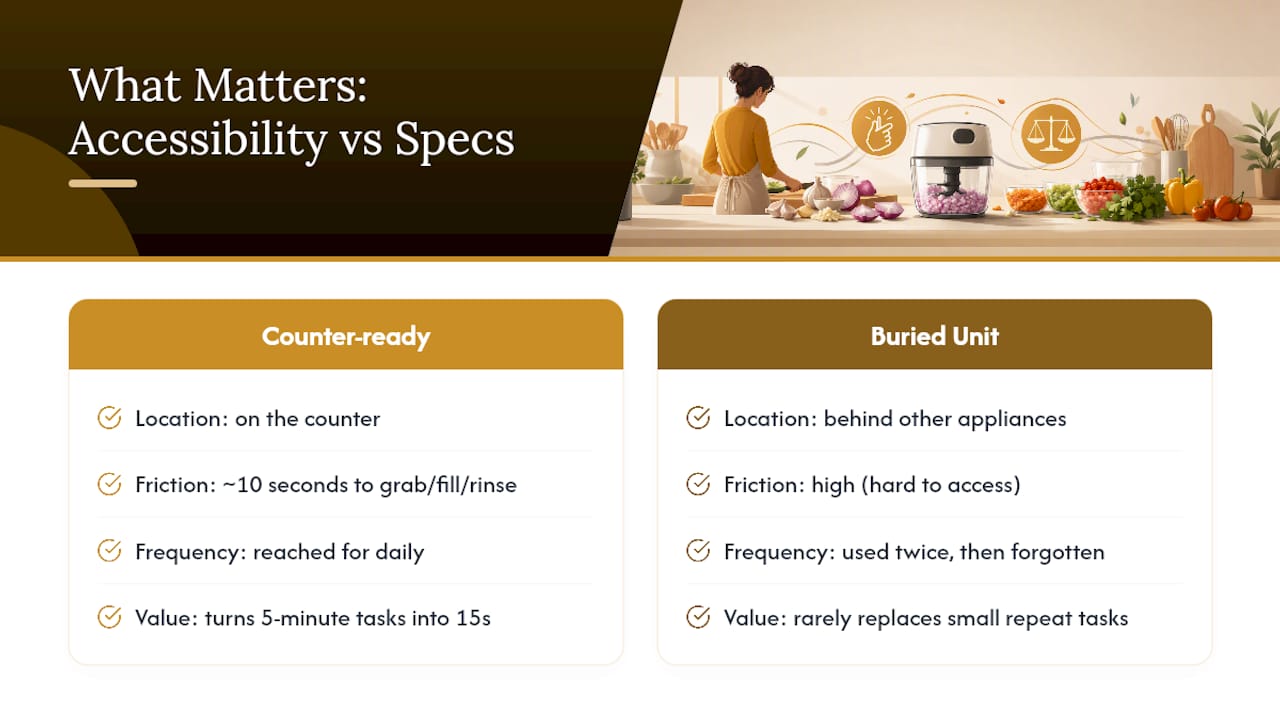
The conventional wisdom oversells versatility, promising a mini chopper can replace a full processor. It can’t, and shouldn’t try to. Its value is narrower and more useful than that: it turns five-minute knife tasks into fifteen-second ones, consistently, for the small jobs that actually repeat every week.
Prioritize accessibility over specs. A slightly less powerful chopper you keep on the counter beats a more powerful one buried in a cabinet. Buy for the tasks you actually repeat, not the ones you imagine you’ll try once.
— Tony
If the tasks in this guide sound like your weekly routine, the Zentra™ Mini Food Processor is built to keep up with them without taking over your counter.
The Zentra™ pairs a compact bowl with a stainless-steel blade, so garlic, herbs, salsa, and single-serve purees come out consistent every time. It disassembles into a handful of parts for a quick rinse, which is exactly the kind of easy cleanup that turns a gadget into a daily habit instead of a drawer occupant. That’s the same logic covered in the cleaning section above: less friction means more use.
Pair it with other pieces from the smart kitchen collection if you’re building out a countertop setup that handles more of your weekly prep without adding cleanup time. Ready to see it in your kitchen? Check out the Zentra™ product page for full specs and availability.