Cart
0
Complete Your Setup

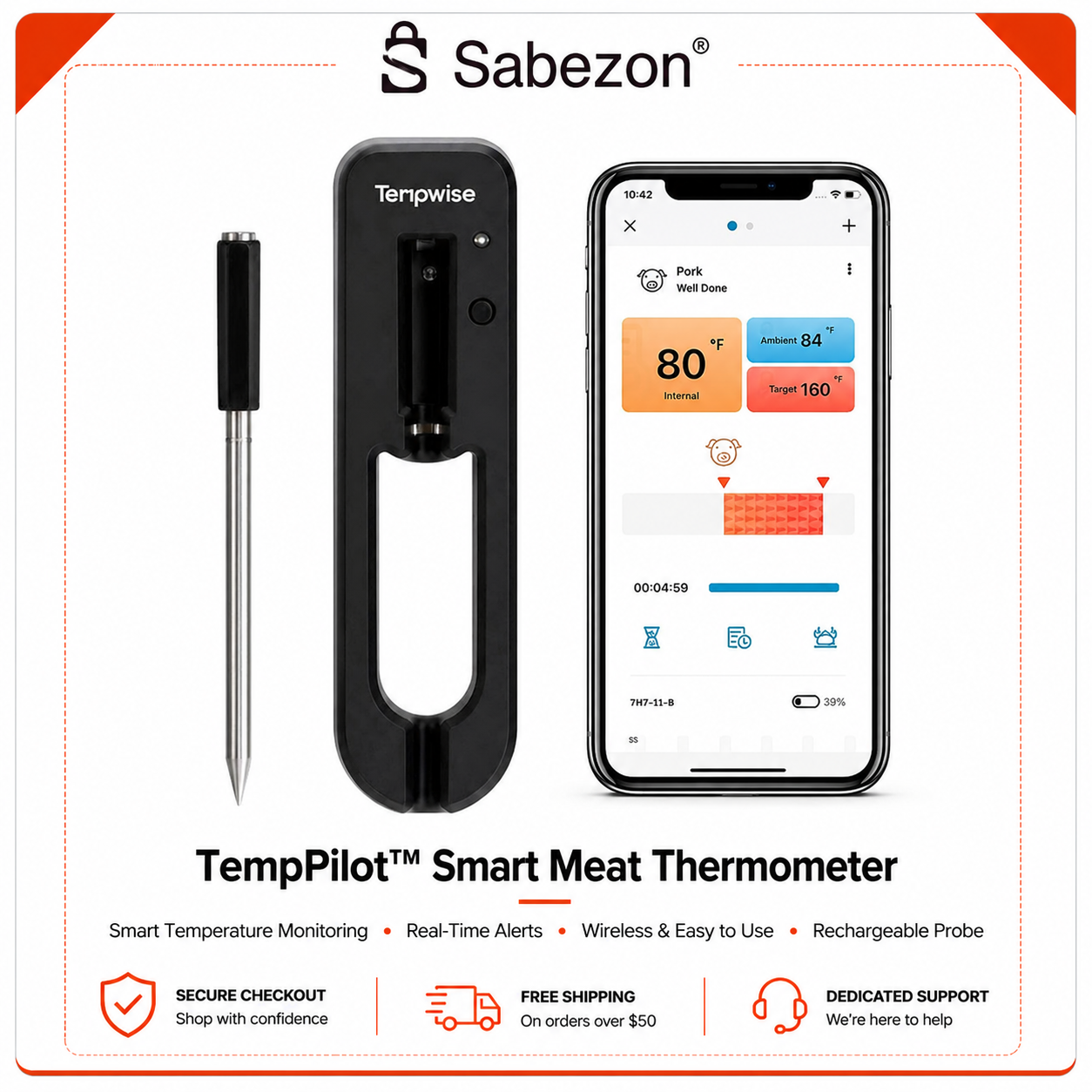



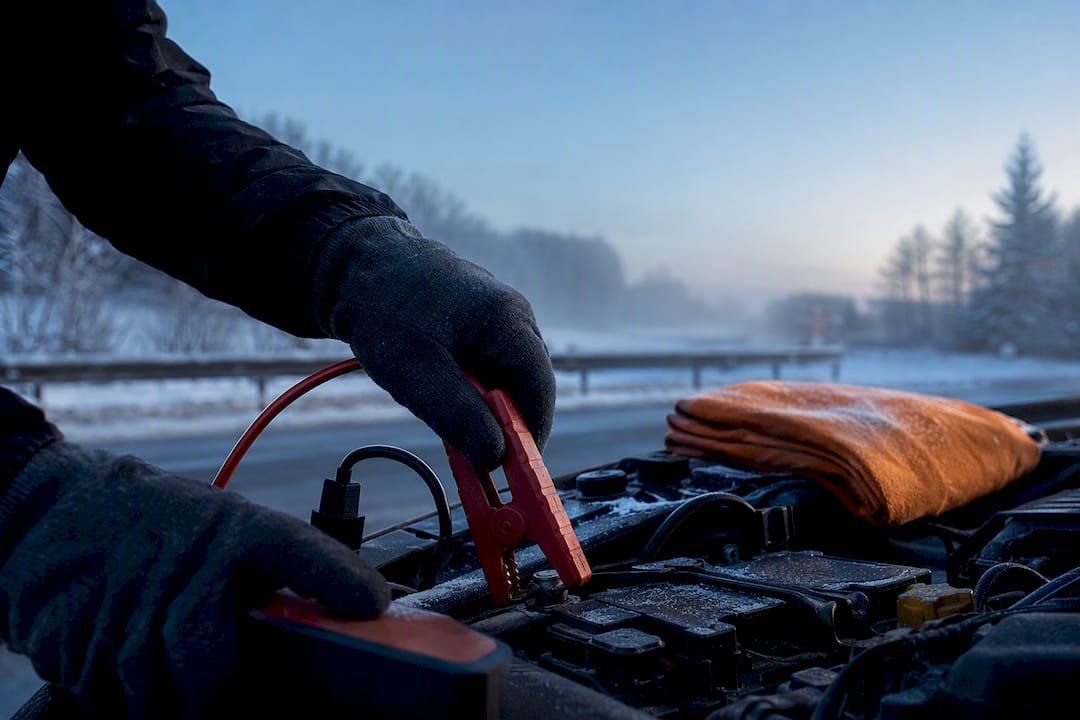
For subfreezing reliability, buy a jump starter rated with high sustained starting amps and a lithium battery management system, not just a big peak-amp number on the box. The 4-in-1 Car Jump Starter fits that profile with a high peak output and a built-in safety system for winter use. Two things matter most: power that holds steady through a 20 to 30 second crank, and protection circuits that keep the pack safe in freezing storage. Before you shop, check your battery’s cold cranking amp rating and your engine size.
TL;DR:
- Prioritize a jump starter with high sustained starting amps over peak amps, as the former predicts practical cold-weather performance.
- Lithium-ion models are lighter and retain more power at low temperatures if kept warm, while lead-acid units excel in high-demand, prolonged cranking scenarios.
- Match the jump starter’s cold cranking amp rating to or above your vehicle’s CCA, and add a safety margin to account for reduced cold-weather output.
- Store your jump starter inside and warm it before use during severe cold, and recharge it every three to six months to maintain reliability.
- Confirm the product’s cold-temperature testing and safety certifications before purchase, especially for larger engines or heavy-duty winter conditions.
Cold slows down the chemical reaction that makes a battery produce electricity. At the same time, cold thickens engine oil, which forces the starter motor to work harder to turn the engine over. You get a double hit: less power available, more power required. That combination is exactly why winter driving demands a jump starter built for the job rather than one designed for mild-weather emergencies.
Most shoppers only look at the peak amp number on a jump starter’s box. That number tells you almost nothing about cold-weather performance. Peak amps measure a brief burst, often just a second or two. What actually cranks a cold engine is sustained starting amps, the current a pack can deliver continuously for the 20 to 30 seconds a stubborn engine sometimes needs.
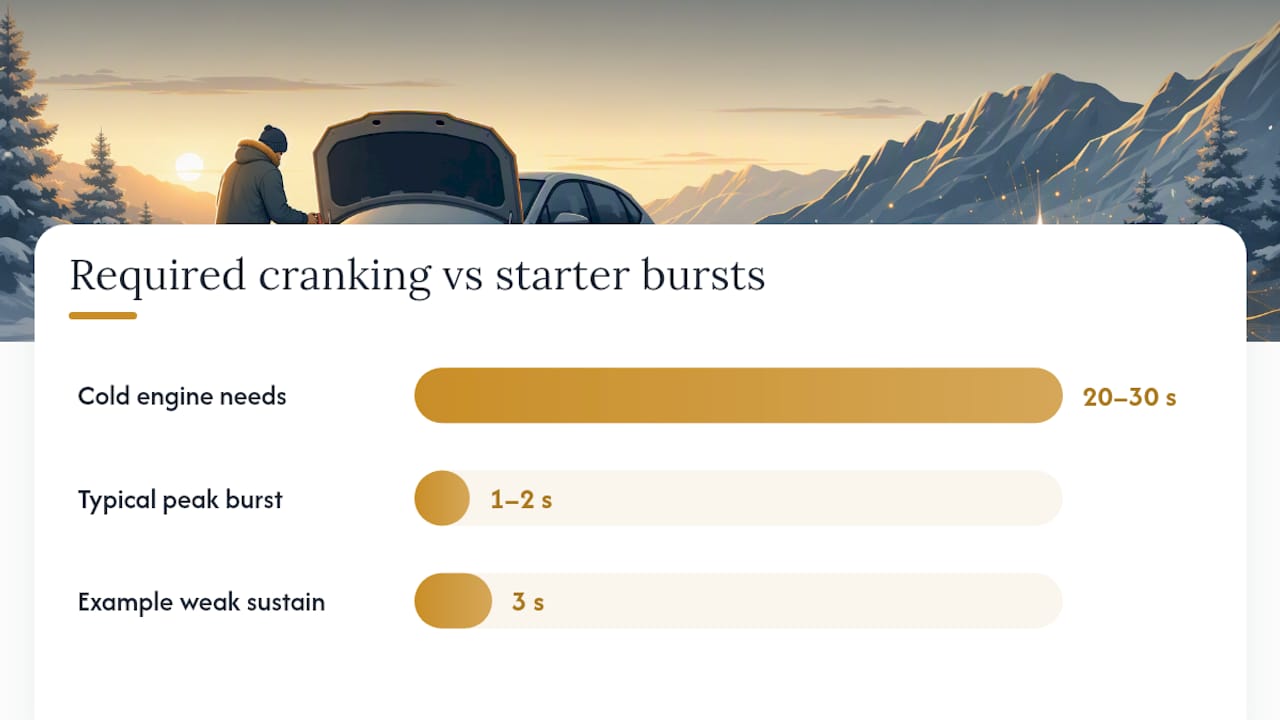
A jump starter that boasts 3000 peak amps but can only sustain that output for three seconds will leave you stranded on a cold engine that needs ten more seconds of cranking. This is why lab testing increasingly focuses on repeated-start scenarios instead of single peak-amp claims. Reviewers who bypass the vehicle battery entirely and force the jump starter to carry the full load get a far more honest picture of real cold-weather capability.
When you’re comparing specs, prioritize:
Cold-weather output loss at a glance: Lab reviews of portable jump starters consistently note that extreme cold reduces effectiveness compared to a fully charged, room-temperature test. The exact percentage varies by brand and chemistry, but the pattern holds across nearly every tested unit: colder means weaker, which is why a comfortable safety margin above your vehicle’s CCA rating matters more in January than in July.
Lithium-ion and sealed lead-acid (SLA) jump starters solve the same problem in different ways, and the right pick depends heavily on how and where you drive.
Lithium-ion packs are the modern default for a reason. They’re lighter, hold their charge far longer between uses, and deliver strong peak amps in a compact case you can toss in a glove box. Manufacturer testing on units like Battery Tender’s 2000 amp lithium jump starter claims lithium cells retain roughly 70 to 80 percent of rated output at 14°F, though that figure comes from the manufacturer rather than independent lab testing, so treat it as a claim to verify rather than a guarantee. The practical mitigation is simple: keep the pack somewhere warm, even a brief five-minute stint in the cabin before use can meaningfully improve cold output.
Sealed lead-acid units trade portability for raw sustained cranking power. Lab comparisons show SLA packs excel at long, hard cranks, the kind you’d need for a diesel truck or a large V8 that’s been sitting in subzero temperatures overnight. The tradeoff is weight and cold-storage sensitivity; SLA batteries can suffer permanent capacity loss if left fully discharged in freezing conditions.
Here’s the practical breakdown:
Engine size drives everything here. A four-cylinder sedan and a diesel pickup have wildly different cold-cranking needs, and buying based on price alone almost guarantees disappointment on the coldest morning of the year.
As a rough guide: compact and midsize gasoline engines typically need a jump starter delivering moderate sustained starting amps. Larger V6 and V8 gasoline engines require higher sustained amps. Light diesel engines, with their higher compression and thicker cold-weather starting demands, often need still more sustained output.
The number that matters isn’t the flashy peak-amp figure on the packaging. It’s how many seconds a unit can hold its rated current. Reviewers consistently recommend checking sustained amp specs when manufacturers publish them, and treating units that only advertise peak amps with some skepticism.
Run through this checklist before buying:
Where you keep your jump starter changes how well it performs when you need it. Storing it in the trunk keeps it out of sight and out of the way, but trunk temperatures often mirror the outside air, which can quietly sap a lithium pack’s cold performance. Keeping it in the cabin, under a seat or in a console, protects it from the worst cold, though it does raise the odds of theft if you leave a vehicle unattended for long stretches.
A few habits make a real difference in deep cold:
Pro Tip: Keep a small microfiber cloth in your glove box with your jump starter. Wiping snow and ice off battery terminals before connecting clamps takes ten seconds and prevents a surprising number of failed connections.
If the engine won’t turn over after two reasonable attempts, or if you smell anything unusual, stop and call roadside assistance rather than repeating the process.
A jump starter that’s been sitting untouched since summer is not a safe bet on the coldest day of the year. Cold weather accelerates self-discharge in some chemistries and makes a partially charged pack far less useful than it would be in mild conditions.
An air compressor and a flashlight sound like obvious wins in winter, and often they are. A stuck tire pressure light on a subzero morning or a dead flashlight during a nighttime breakdown both turn minor inconveniences into real problems. USB charging ports matter less for winter specifically, but they add real value if your phone is your lifeline for calling roadside help.
The tradeoff is size and weight. Every added feature increases bulk, and a bulkier pack is a pack people leave in the trunk instead of carrying inside to keep warm.
These jump starters are built around practical, everyday reliability rather than chasing the highest peak-amp number on a spec sheet. The 4-in-1 Car Jump Starter combines a 5000A peak battery booster with a 150 PSI air compressor and a power bank in one case, which covers the three most common winter roadside problems: a dead battery, a low tire, and a dead phone.
A few things worth knowing before you buy:
Cold-weather jump starts follow the same basic steps as any other season, but a few adjustments matter enough to change your odds of success.
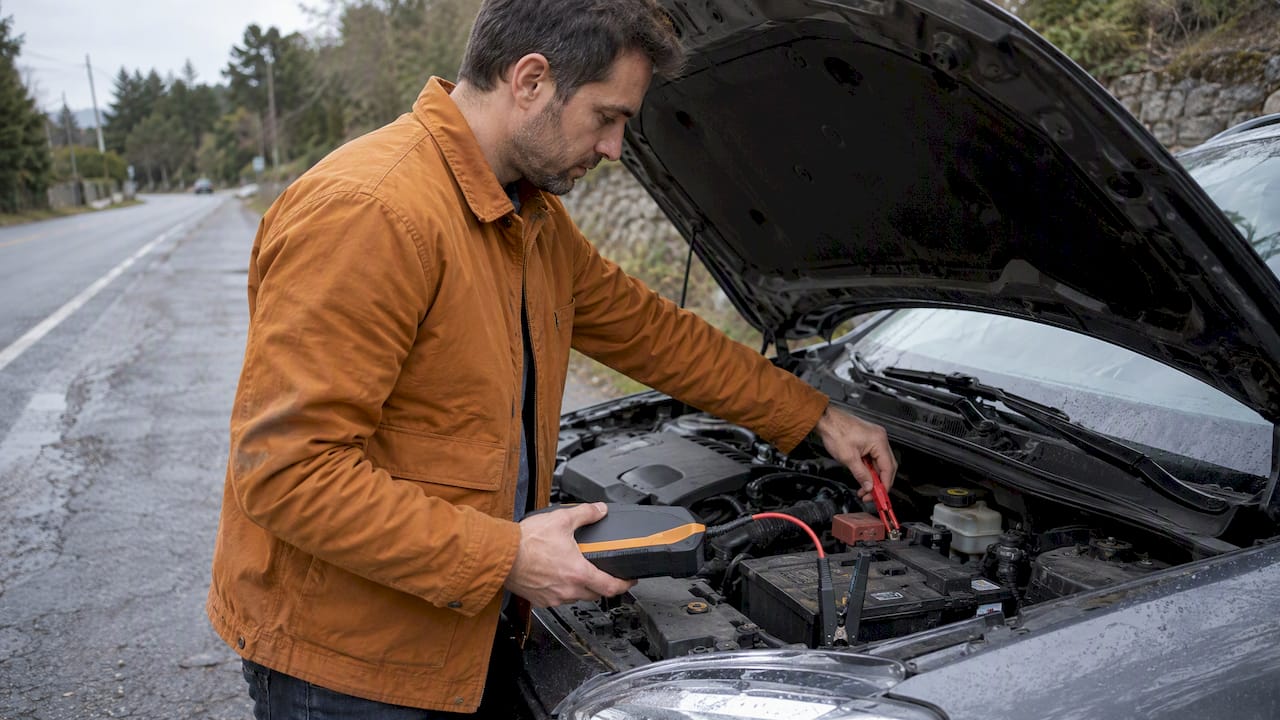
Start by checking that both vehicles, or the jump starter and the dead battery, are off before connecting anything. Attach the positive (red) clamp to the dead battery’s positive terminal first, then the negative (black) clamp to an unpainted metal surface on the vehicle’s frame, not the battery’s negative terminal. Grounding away from the battery reduces spark risk near battery gases, which matters more in cold weather since batteries under strain can vent more readily.

Give the jump starter a moment, ideally warmed to near room temperature beforehand, to stabilize once connected. Attempt the start. If the engine doesn’t fire within the pack’s rated cranking time, wait 30 seconds before trying again rather than cranking continuously, which stresses both the starter motor and the jump starter’s cells.
Once the engine runs, let it idle for several minutes before disconnecting clamps in reverse order: negative first, then positive. Cold engines benefit from a longer idle period anyway, since oil needs time to circulate and warm before the alternator can properly recharge the battery.
If the vehicle doesn’t start after two attempts, stop. Repeated failed cranks in deep cold risk damaging the starter motor and draining the jump starter faster than it can help.
The single most common mistake is trusting a peak-amp number without checking sustained output, which leaves drivers with a pack that dies mid-crank on a genuinely cold morning. A close second is storing the jump starter in an unheated trunk all winter and assuming it’s still at full readiness when needed.
Connecting clamps in the wrong order, or to the wrong terminals, causes more winter jump-start failures than most drivers realize. Numb fingers and dim light make it easy to mix up polarity, and a reversed connection can trip a jump starter’s protection circuits or, on units without reverse-polarity protection, cause real damage.
Another frequent error is expecting a jump starter to work at full strength straight out of a freezing glove box. Pulling a cold-soaked lithium pack out and immediately demanding its rated output is asking for reduced performance right when you need every bit of it. A few minutes of warming inside the cabin first changes the outcome meaningfully.
Finally, plenty of drivers only discover their jump starter is dead when they’re standing in the snow trying to use it. Skipping the recharge cadence, especially heading into the coldest months, is the quiet failure that turns a $100 safety tool into dead weight in your trunk.
Extreme cold and extreme heat both shorten a jump starter’s usable life, but they do it differently. Cold temporarily suppresses output and slows charging, while sustained heat degrades battery cells permanently over time.
In freezing conditions, a jump starter’s internal chemistry simply can’t move electrons as efficiently, which is why output drops noticeably below room-temperature test results. That drop is usually temporary. Once the pack warms back up, most of its rated performance returns, assuming the cells weren’t damaged by being stored fully discharged in deep cold for extended periods.
Charging in the cold is slower too. Lithium cells generally shouldn’t be charged below freezing at all, many built-in battery management systems will actually block charging attempts below a certain threshold to protect the cells. This is exactly why bringing your pack inside before plugging it in matters, not just for using it, but for recharging it properly between uses.
The bigger long-term risk is repeated deep discharges in cold weather. A pack that’s allowed to fully drain and then sit in a freezing trunk for weeks loses capacity faster than one that’s kept topped off and stored somewhere temperate. That’s the real argument for a consistent recharge schedule through winter rather than an occasional check when you remember.
The clearest case for carrying a cold-rated jump starter isn’t a dramatic breakdown story, it’s the mundane Tuesday morning scenario that plays out across cold climates every winter. A car sits overnight at 5°F, the battery’s chemistry slows to a crawl, and the driver turns the key to hear nothing but a click. That’s not a battery failure so much as a cold-weather performance dip, and it’s precisely the situation portable jump starters exist to solve.
Coverage of winter gear consistently frames a jump starter as essential equipment rather than a nice-to-have, specifically because the alternative, waiting for roadside assistance in freezing weather, can mean standing outside for an hour or more depending on your location and time of year.
Rural and remote drivers face a sharper version of the same problem. Without cell coverage or a nearby service station, a jump starter isn’t a convenience, it’s the difference between a five-minute delay and a genuinely dangerous wait in subzero temperatures. Fleet operators managing vehicles that sit outdoors overnight report similar patterns: the mornings after the coldest nights are reliably when dead-battery calls spike, which is why many keep dedicated jump starters assigned to specific vehicles rather than sharing one unit across a lot.
If I had to boil this whole guide down to one filter, it’s this: buy for sustained amps and documented safety protection, not for the biggest peak-amp number on the box. Everything else, air compressors, flashlights, USB ports, is a bonus.
I lean toward high-capacity, safety-certified units for genuinely cold climates because the failure mode of buying cheap is standing outside in freezing weather with a pack that quit halfway through a crank. That’s not a risk worth saving $20 to take.
— Tony
Once you know the sustained-amp range your vehicle needs, the easiest next step is checking those numbers directly against a product listing rather than guessing from marketing copy. Sabezon’s 4-in-1 Car Jump Starter page lists its 5000A peak rating, air compressor pressure, and included accessories in one place, which makes it simple to compare against your battery’s CCA rating before you buy.

Before checkout, confirm a few specifics for your own vehicle: the starting amp rating against your battery’s CCA, any stated cold-temperature performance notes, the BMS and UL 2743 safety claims covered in Sabezon’s safety checklist, the warranty terms, and exactly what’s included in the box (cables, storage case, air compressor nozzles). Larger trucks and diesel engines may also benefit from pairing a jump starter with a dual-battery isolator setup if you’re running extra electrical accessories that add cold-weather strain.
For readers still comparing categories, Sabezon’s smart home tech collection shows the full range of practical gadgets the brand builds, all with the same focus on straightforward, reliable performance. If winter prep is on your list, start with the 4-in-1 jump starter product page to check specs against your vehicle before the next cold spell hits.
For readers who want to see the underlying testing, Car and Driver’s tested roundup and TechGearLab’s lab-tested rankings both detail their cold-weather methodology. Compare how each outlet measures sustained current before trusting any single cold-temp claim, including manufacturer-published figures.
Match or exceed your vehicle’s factory CCA rating, and add a margin since cold weather itself reduces a jump starter’s effective output. Compact gas engines typically need moderate sustained amps, while larger V6/V8 and diesel engines require higher sustained output.
A fully charged lead-acid battery generally won’t freeze until temperatures drop very low, but its ability to deliver cranking power drops sharply well before that, which is why weak starts happen long before the battery itself would actually freeze.
Lithium-ion jump starters offer strong cold-weather performance with far less weight, especially when warmed briefly before use, while sealed lead-acid units offer stronger sustained cranking for heavy-duty starts but handle cold storage less gracefully.
There’s no single cutoff, but starting difficulty rises sharply as oil thickens and battery output drops in cold weather. A jump starter with strong sustained amps and a recent full charge meaningfully improves your odds at any temperature.
Its 5000A peak rating, onboard air compressor, and power bank cover the most common winter roadside problems in one unit, though independent cold-temperature lab data isn’t publicly available, so confirm the amp rating against your vehicle’s own CCA before buying.