Cart
0
Complete Your Setup


The best way to keep coffee warm is simple: preheat your vessel, fill it close to the top, and seal it in a vacuum-insulated mug or thermal carafe. If you sip on the go, a self-heating smart mug keeps you covered. For desk sipping, a low-temperature mug warmer holds your cup at drinking temperature for hours. Skip continuous high heat, though. It scorches the flavor before saving your cup.
TL;DR:
- A vacuum-insulated mug or thermos can keep coffee at a drinkable temperature for four to eight hours, but marketing claims of 12 hours are often exaggerated.
- Filling your mug or flask close to the top and sealing it with a tight lid significantly reduces heat loss by minimizing exposed surface area and air contact.
- Mug warmers work best when paired with stainless steel cups and material-specific settings, with hot plates maintaining temperatures around 130 to 140°F for hours.
- Reheating old coffee with high heat destroys flavor, so quick fixes like stirring in boiling water or using gentle stovetop warming are preferable for maintaining taste.
- For desk use, an electric mug warmer with multiple temperature settings and auto-shutoff offers reliable heat retention, while preheating your mug enhances performance.
You don’t need fancy gear to buy yourself real time. A handful of small habits, done together, add up fast.
These aren’t gimmicks. They’re the same physics that expensive gadgets are built around, just without the price tag.
Not all coffee warmers deliver on their promises, and the gap between marketing copy and real-world performance is bigger than most shoppers expect. Here’s how the main categories actually perform.
A quality vacuum-insulated mug works by removing the conduction path entirely. Instead of one solid wall carrying heat straight out to the air, you get two walls with a vacuum gap between them. That gap can’t conduct heat, so your coffee stays hot far longer than in a single-wall cup.
Realistically, a well-sealed, preheated vacuum flask keeps coffee at drinkable temperature for four to eight hours. That’s a meaningfully shorter window than the “keeps drinks hot for 12 hours” claims stamped on the packaging. Those numbers are usually measured against a low bar, often around 120°F, which is barely warm to the tongue. If you want coffee that still tastes like coffee and not lukewarm dishwater, plan around the 4 to 8 hour window instead of the marketing number.
Pro Tip: Test your own mug once with a kitchen thermometer. Pour boiling water in, seal it, and check the temperature every hour. You’ll know exactly how much real time you’re working with, instead of trusting a sticker.
If you’re serving more than one person, a thermal carafe usually beats an insulated mug. It holds a full pot’s worth of coffee at a steady temperature without sitting on a heating element, which means no risk of scorching the batch while people trickle in for refills. Carafes shine in offices, family kitchens, and anywhere coffee gets poured in stages rather than all at once.
Mug warmers fall into two camps, and they behave very differently.
Hot plate warmers sit under your existing mug and apply gentle, continuous heat from below. Independent testing on mug warmers found some hot-plate systems hold a stainless-steel cup around 130 to 140°F for hours, which sits right in the comfortable sipping range. The catch is compatibility. Thin ceramic mugs lose heat quickly on a hot plate because the material and the plate aren’t working together the way a matched stainless-steel cup and warmer do.
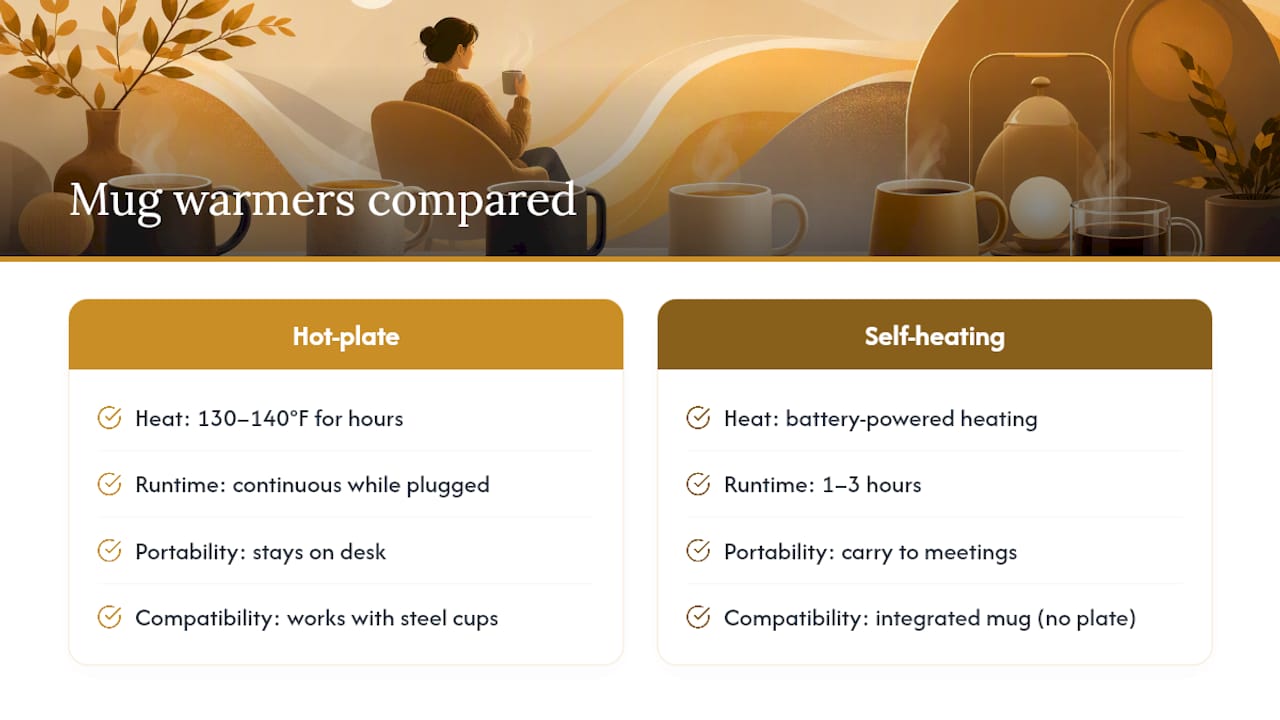
Self-heating mugs run on an internal battery instead of a plate, so you can carry them from your desk to a meeting without losing power. The trade-off is runtime. Most self-heating mugs deliver one to three hours before the battery taps out, which makes them better suited to a single long work session than an all-day setup.
Immersion heaters and stovetop reheats bring cold coffee back to temperature fast, but fast heat is exactly what changes the flavor. This is a fix for emergencies, not a daily routine.
Realistic retention windows, side by side:
| Method | Typical hot window | Best for |
|---|---|---|
| Vacuum-insulated mug (preheated, sealed) | 4 to 8 hours | Commuters, travel, all-day holds |
| Thermal carafe | Several hours, no reheating | Serving multiple people |
| Hot plate mug warmer | Hours, held at ~130 to 140°F | Desk sipping, matched steel mug |
| Self-heating mug | 1 to 3 hours on battery | Portable desk use, meetings |
| Ceramic mug on a basic warmer | 30 to 60 minutes | Short, casual holds |
Matching your mug material to your warming method matters more than most people realize. Stainless steel paired with a matched plate or vacuum wall performs best. Thin ceramic loses heat fast on a desk warmer, no matter how good the warmer is.
Owning the right gear only gets you halfway there. The routine you build around it decides whether your coffee actually stays enjoyable.
Pro Tip: If you brew hot and plan to hold your coffee for hours, coarsen your grind slightly or shorten your brew contact time. Brewing near the top of the recommended range and then holding it for a long stretch can push extraction further than you want, leaving the cup bitter by hour three.
Clean your gear the way the material demands. Stainless-steel vacuum mugs need a occasional deep clean with baking soda and warm water to knock out coffee oils that build up on the walls. Ceramic warmer plates just need a wipe down, since they’re not sealed vessels holding liquid against a wall for hours.
The habits that seem harmless are usually the ones doing the most damage, both to flavor and, in a couple of cases, to safety.
None of these mistakes require expensive fixes. They mostly require breaking a habit that felt convenient but was quietly working against you the whole time.
Cold coffee doesn’t automatically mean wasted coffee, but the right move depends on how long it’s been sitting.
If your cup went cold in the last 20 to 30 minutes, a quick fix usually saves it. Stir in a tablespoon of freshly boiled water. It brings the temperature up fast without blasting the whole cup with prolonged heat, and it protects the aromatic compounds that a microwave or stovetop reheat tends to cook off.
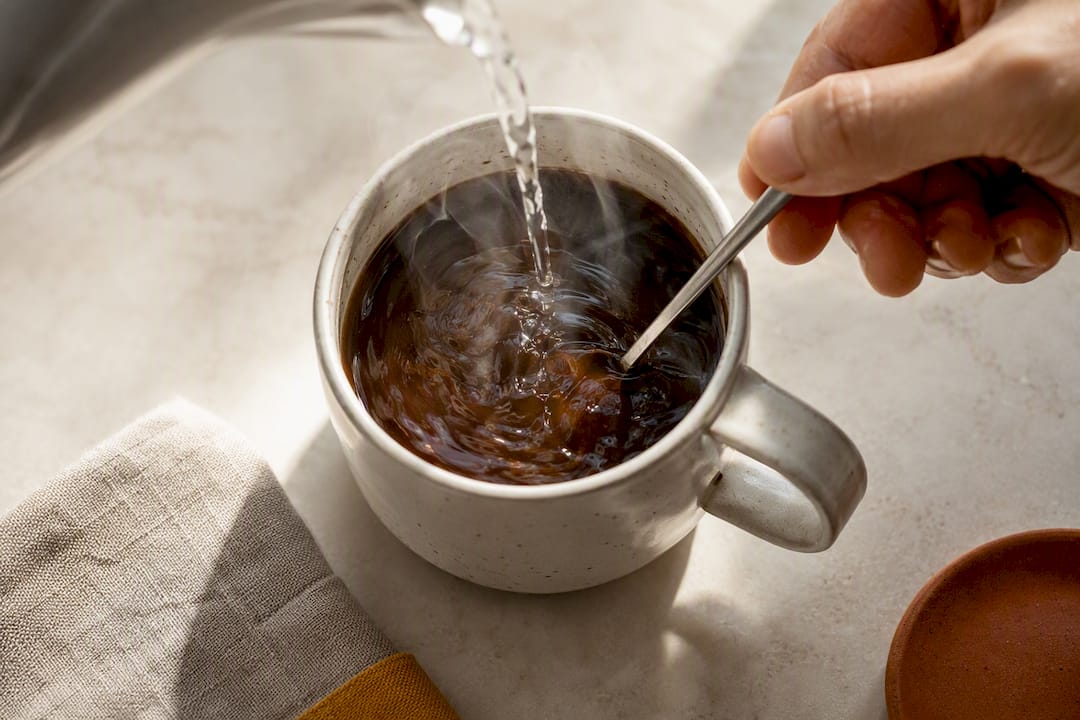
For coffee that’s been sitting an hour or more, gentle stovetop warming in a small pot, or a series of short microwave bursts with stirring between each, works better than one long high-heat reheat. Check the temperature as you go rather than guessing.
Once coffee has been sitting for several hours, brewing fresh is almost always the better call. The flavor compounds that make coffee taste bright and complex break down over time, and temperature itself changes how your taste buds perceive what’s left. Research on taste-cell activity shows warmer temperatures shift how acidity and bitterness register on the tongue, which is part of why reheated old coffee tastes muted no matter how hot you get it.
If you’re into stovetop brewing methods in general, a moka pot is worth exploring for anyone who wants strong, espresso-style coffee without a full machine, and the same gentle-heat principles apply when you’re warming what’s already brewed.
Most warmer reviews rank products by features. That’s the wrong lens. The right question is always: what’s your actual routine?
If you’re chained to a desk for six hours, a hot plate warmer paired with a stainless-steel mug beats almost anything else, because it’s the one setup built for exactly that scenario. If you’re moving between meetings or working from three different rooms in a day, a self-heating mug’s portability matters more than its shorter battery life. And if you’re commuting or traveling, no plugged-in device beats a preheated vacuum mug with a good seal.
The mistake I see most often is buying a warmer to fix a habit problem, when a $0 fix, like filling the mug fuller or sealing the lid properly, would have solved most of the heat loss already. Gadgets are convenience multipliers, not miracles. Get your basics right first, then let the right piece of gear carry you the rest of the way.
— Tony
If your coffee routine happens mostly at a desk, the Amora™ Mug Warmer is built for exactly that. It’s a compact hot-plate warmer with three temperature settings, so you can dial in the right heat for your mug material instead of guessing, plus auto-shutoff so you’re not left running it unattended for hours.
Pick a desk mug warmer when your coffee mostly stays on a desk rather than on the go. Pair it with a stainless-steel mug for better heat transfer, or use a lower setting with ceramic to avoid uneven heating. If your day involves travel, a commute, or hours away from an outlet, a preheated vacuum-insulated mug works well for heat retention without needing power. If you want more detail on picking the right desk warmer for your setup, Sabezon’s guide on choosing a desk mug warmer walks through the features that matter most. Ready to stop reheating cold coffee at your desk? Check out the Amora™ Mug Warmer and browse Sabezon’s full smart kitchen lineup for more everyday fixes that save you time.
The temperature and brewing guidance here traces back to the National Coffee Association’s brewing standards, which set the benchmark for brew and sipping temperatures used throughout this guide. The physics of why coffee cools the way it does comes from a straightforward heat transfer primer on coffee cooling, which explains why full mugs and tight lids matter so much. Product performance claims lean on hands-on testing from The Spruce Eats’ mug warmer reviews and travel-focused thermos testing from Kit Authority. For readers ready to shop, Sabezon’s Amora™ Mug Warmer and desk warmer guide are the next stop.