Cart
0
Complete Your Setup


Yes, a facial steamer for sinuses can loosen mucus and ease congestion within minutes, but it’s a comfort tool, not a cure. Warm, moist air soothes irritated nasal passages the same way a hot shower does. If congestion persists for an extended time, or your steamer only has one heat setting, pick a device with adjustable control or check in with a doctor.
TL;DR:
- Steam provides only short-term relief by loosening mucus and easing breathing but does not kill viruses or shorten sinus infections.
- Devices with targeted nozzles, adjustable temperature, auto shut-off, and easy-to-clean parts are essential for safe and effective sinus steam therapy.
- Avoid steaming if you have recent nasal surgery, severe asthma, sensitive skin conditions, or symptoms like high fever and worsening facial pain.
- Use distilled water exclusively, keep sessions between 5 to 15 minutes, and maintain a safe distance to prevent burns or irritation.
- A device like the Sabezon Calira™ Facial Steamer offers a practical, adjustable, and easy-to-maintain option for occasional sinus relief.
Warm, humidified air thins the mucus lining your nasal passages, which makes it easier to breathe and blow your nose without irritation. Many people feel looser within a few minutes of steaming.
Mayo Clinic frames steam as supportive care for congestion, not a treatment for the underlying cause. It eases breathing in the moment but doesn’t touch a virus, bacterial infection, or allergy trigger. Cleveland Clinic echoes this, noting that humidified air and steam can loosen mucus, while also flagging burn risk when steam is used carelessly.
The evidence base is thinner than most people assume. A frequently cited analysis of steam inhalation trials found mixed, limited results for long-term symptom improvement, largely because few large randomized studies exist. Steam feels good and often helps you breathe short term, but it hasn’t been proven to shorten a cold or clear a sinus infection.
The relief is real, but temporary. Here’s what steam reliably does and doesn’t do:
Healthline sums up the research well: steam inhalers give short-term symptomatic relief for congestion, but they aren’t a substitute for medical treatment when infections or chronic sinus disease are involved.
These three devices get lumped together constantly, but they’re built for different jobs. Picking the wrong one means you’ll either waste money on skincare features you don’t need or miss the targeted relief you were after.
A personal steam inhaler is the most direct route to sinus relief. It typically includes a nasal cone or small mask that channels steam straight into your nose and sinus passages, concentrating the effect where congestion actually lives.
A facial steamer produces a broader, open stream of steam meant to cover your whole face. It’s built primarily for skincare, opening pores and softening skin before a cleansing routine, but the warm mist still loosens nasal mucus as a side benefit if you lean over it and breathe deeply.
A warm-mist vaporizer humidifies an entire room rather than targeting your face. It’s useful overnight for keeping nasal passages from drying out, but it won’t deliver the concentrated, close-range steam that clears congestion fast.
Here’s how they stack up on the factors that actually matter:
Product roundups routinely separate these categories for exactly this reason: an inhaler and a facial steamer solve related but distinct problems.
The right device comes down to a short list of features, not a long spec sheet. Skip anything that doesn’t check these boxes.
Pro Tip: Check whether your device is FSA or HSA eligible before checkout. Many personal steam inhalers and facial steamers qualify as medical devices for sinus relief, which can offset the cost.
Steam does its best work when you use it correctly. Rushing the setup or ignoring temperature is how a helpful device turns into a trip to urgent care.
Pro Tip: Skip menthol rubs, essential oils, or petroleum-based products in your steamer unless the manufacturer explicitly says it’s safe. Many additives clog components or aren’t rated for the internal heating parts, and some can irritate already-inflamed sinus tissue.
A dirty steamer defeats the purpose of using one. Stagnant water and mineral residue are exactly the kind of environment bacteria thrive in, and you’re breathing whatever comes out of that tank.
Sabezon’s home gadget maintenance guide covers descaling and water-quality basics that apply directly to steam devices, alongside other appliances that build up mineral deposits over time.
Steam isn’t right for every face or every symptom. Skipping these warnings is how a relief routine turns into a setback.
Avoid facial steaming if you’ve had recent nasal or sinus surgery, have severe asthma that reacts to humidity or heat, or manage rosacea or eczema. Dermatologists warn that heat can worsen inflammation in already sensitive or reactive skin. Steam is also not appropriate for very young children, whose skin burns more easily and who can’t reliably keep a safe distance from hot mist.
Certain symptoms mean it’s time to stop steaming and call a doctor instead of reaching for another session:
Mayo Clinic specifically recommends professional evaluation for frequent or severe sinus pain rather than relying on home remedies alone. If congestion is a recurring pattern rather than an occasional cold, an ENT or allergist can identify whether infection, chronic rhinosinusitis, or migraine is the actual driver, something Healthline also points to as a reason to seek specialist care for chronic cases.
Most advice on facial steaming treats it as either a miracle cure or a spa gimmick. Neither framing is honest. Steam is a mechanical tool: it adds heat and moisture to tissue that’s dried out and inflamed, and that combination genuinely loosens mucus. What it can’t do is replace a diagnosis.
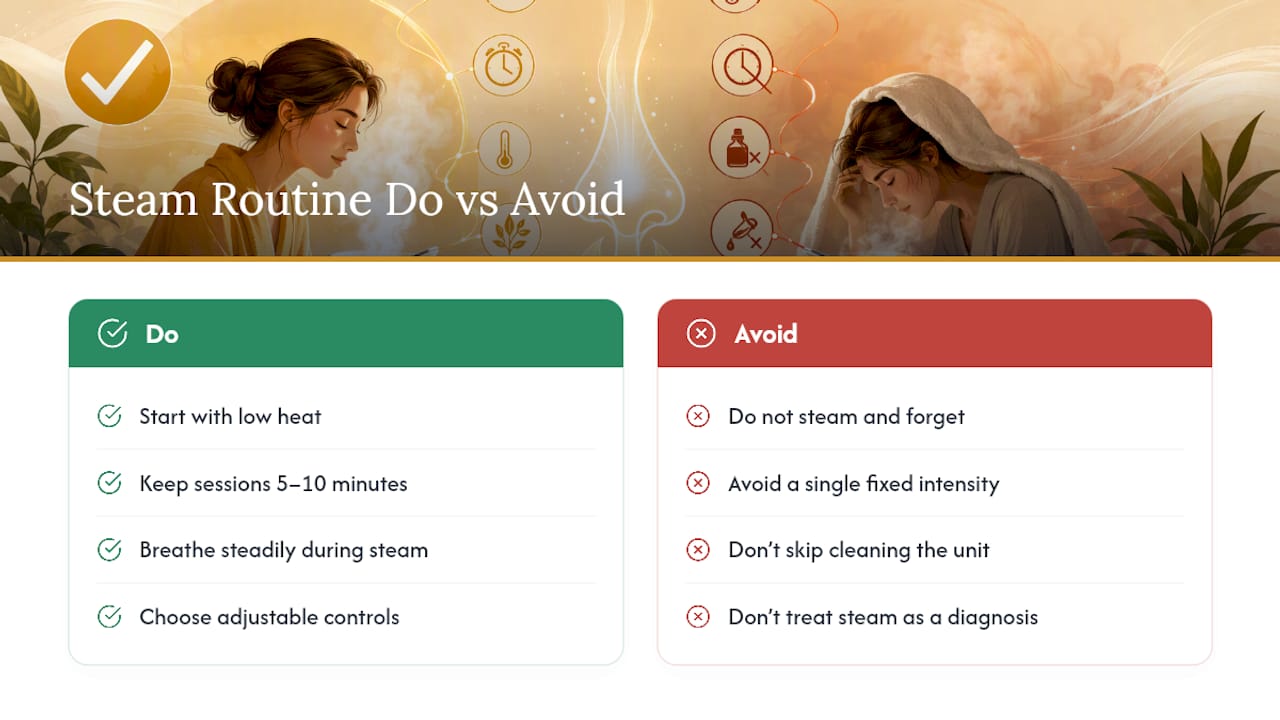
Sabezon built a 5 to 10 minute facial steamer routine around that reality. The short version: low heat first, short sessions, and steady breathing rather than a long steam-and-forget approach. The reason adjustable controls matter so much comes down to consistency. A device stuck on one intensity either undertreats congestion or overheats sensitive skin, and neither outcome builds a habit you’ll stick with. Easy-to-clean parts matter just as much, since a steamer that’s a hassle to rinse out gets used twice and then abandoned in a drawer.
If your congestion is occasional, a good steamer earns its place on the counter. If it’s chronic, steam is a comfort measure while you get the real cause checked out by a doctor.
— Tony
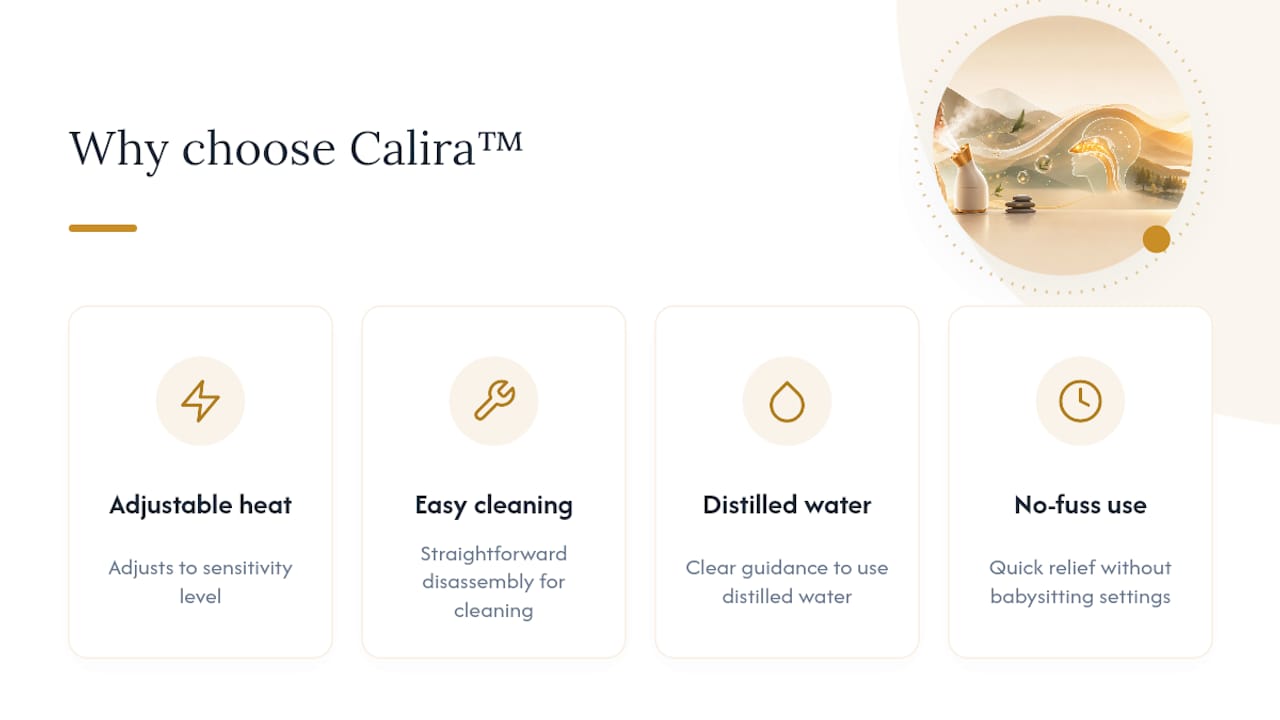
If you want one device that handles both quick sinus relief and skincare without fussing over settings, Sabezon’s Calira™ Facial Steamer is built around exactly the features this guide flags as non-negotiable: adjustable heat, straightforward disassembly for cleaning, and clear guidance on using distilled water to avoid mineral buildup.

This type of device suits busy individuals who want relief without babysitting a complicated appliance. It’s a steamer that adjusts to sensitivity level and cleans up quickly once finished. No guesswork on settings, no fighting with hard-to-reach parts at the sink.
Browse the Calira™ Facial Steamer page for full specs, or check out the full smart home tech collection if you’re comparing it against other practical, time-saving gadgets for your routine.
For medical facts on congestion and steam’s limits, Mayo Clinic and Cleveland Clinic offer the clearest clinical framing, including burn-risk warnings. The PubMed review of steam inhalation trials explains why evidence for long-term benefit stays limited. For device features and real-world testing notes, Healthline’s steam inhaler roundup and Women’s Health’s facial steamer guide cover what separates a well-designed unit from a frustrating one.