Cart
0
Complete Your Setup


Mini food processors typically hold about 1.5 to 6 cups, and 3 to 4 cups is the practical sweet spot for most home cooks. That size handles salsa, pesto and a chopped onion without taking over your counter. At Sabezon, we offer compact processors built for exactly this kind of small-batch prep.
TL;DR:
- A 1 to 2 cup bowl handles garlic, herbs, and single servings, while 2 to 3 cups suits pesto, one onion, or a small hummus batch.
- Bowl capacity on the label is total volume, not usable space; one tested chopper processed 500 ml in an 830 ml bowl, so check working capacity.
- Dense mixtures such as nut butter and dough demand more from the motor; compare wattage and leave room for ingredients to circulate.
- Solo cooks can choose 1 to 2 cups, while family meals or batch preparation favor 3 to 5 cups, if storage space permits.
Think of mini capacity in four bands. Each one suits a different set of kitchen jobs.
Reviewers keep landing on the middle band. America’s Test Kitchen prefers 3.5 to 4 cup models as compact but broadly useful, and it steers readers toward 3 to 6 cup machines over the tiniest choppers. The Spruce notes that 3 cups is often ideal for quick pesto or grinding nuts, while models under 3.5 cups can be too small for a full recipe yield.
The larger end of the range is growing too. TechRadar’s compact-processor reviews recommend starting at two or three cups and note that cordless and higher-capacity mini models, up to 5 cups, are available.

One thing trips up many buyers: the number on the box is usually the total bowl volume. The amount you can actually process is lower, and we cover that gap in its own section below.
Cups only mean something when you can picture the food. Here is how the sizes play out in a real kitchen.
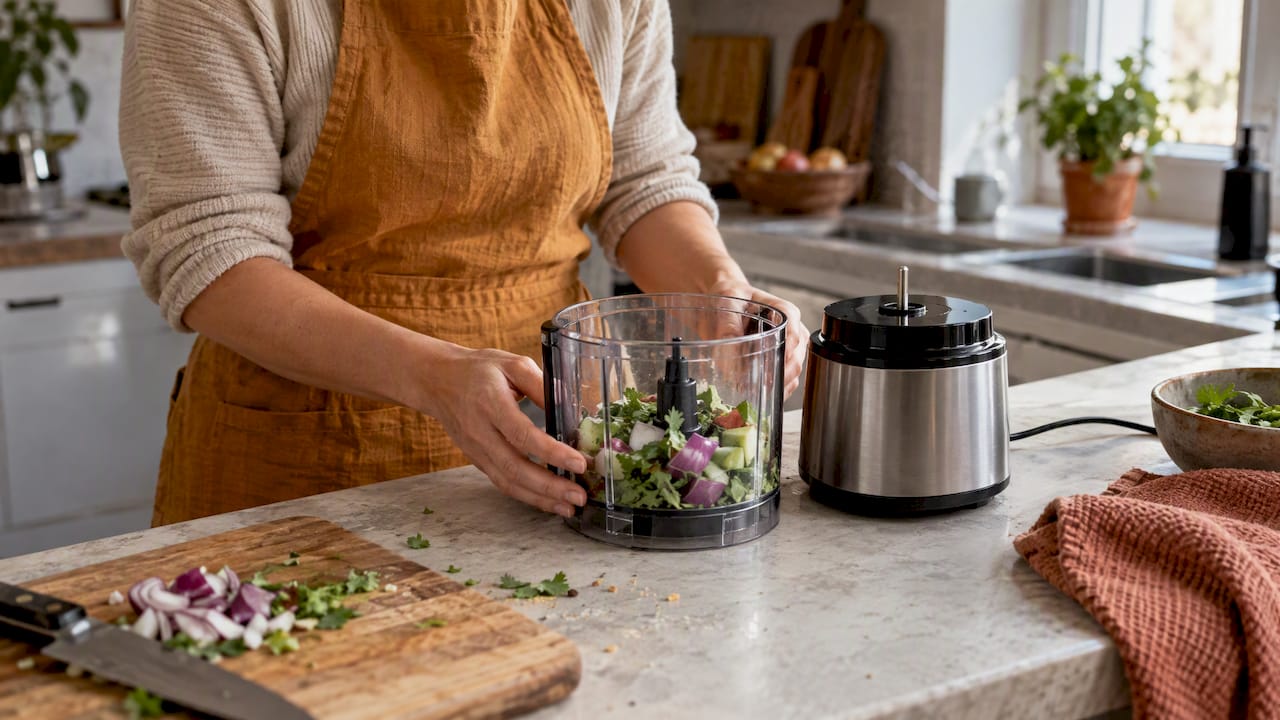
Density changes the math. A bowl of wet salsa behaves very differently from a bowl of dry almonds or a thick paste, and dense mixes lower the effective volume. Cut large items into chunks before they go in, and leave headroom so the food keeps moving back toward the blades. For more everyday ideas, our post on mini chopper uses for daily countertop prep walks through quick recipes.
Pro Tip: Use short pulses for a chunky texture and let the motor run continuously for purees. If the mix starts to climb the walls, stop and scrape it down.

Two numbers matter: stated capacity and working capacity. Stated capacity is the full volume of the bowl. Working capacity is how much food it can handle while still chopping evenly. The second one is what you will live with every day.
BBC Good Food’s mini chopper testing shows the difference. It reports working capacity figures such as 500 ml inside an 830 ml bowl, and it finds mini choppers range from about 0.3 L up to roughly 2 L.
Start with who you cook for, then check the practical details.
If you cook for a small household, a 3 to 4 cup bowl still gives you room to grow. It handles a bigger batch when guests come over, and it is not much harder to store than a smaller model.
Daily care decides whether a gadget stays on the counter or ends up in the back of a cupboard.
I recommend considering a compact model for everyday kitchen prep. That matches what we care about at Sabezon: easy-to-use kitchen gadgets that simplify your routine. Before you buy, think about counter space and cleanup time as seriously as the cup number.
— Tony
We offer mini food processors. They are designed for practical, everyday use. You can see specs and buy right on our site.

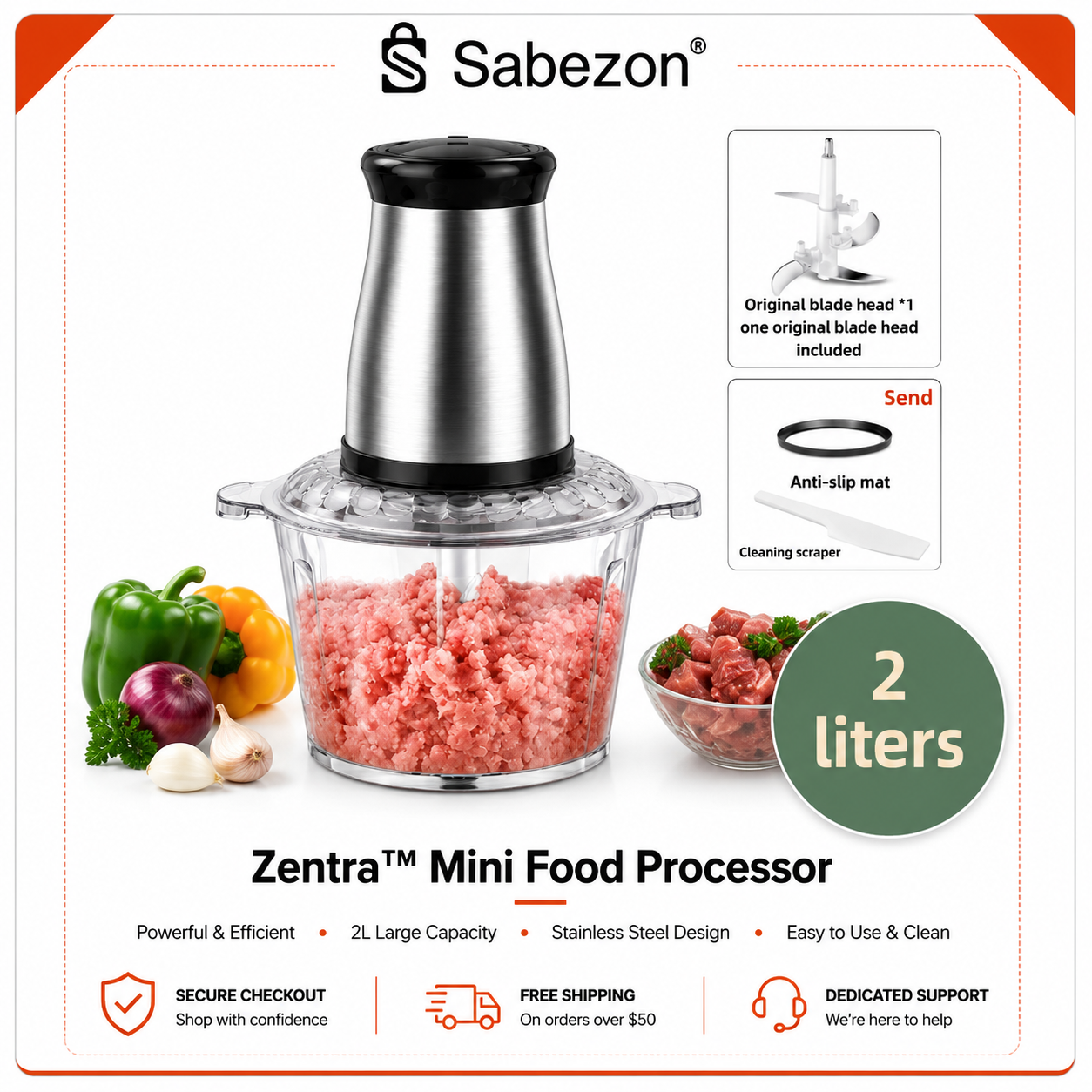
Start with our Zentra™ Mini Food Processor, then browse our full smart kitchen collection for more tools that make prep simple. Smart products, zero hassle.
Power depends on the motor rating, not the bowl size. Check the wattage in the spec list, especially if you plan to grind nuts or work with dense mixtures.
No. A 7 cup bowl is a mid-size machine, larger than a mini and smaller than a full-size model. America’s Test Kitchen notes that large food processors commonly start at 11 cups.
Most home cooks do well with 3 to 4 cups for everyday chopping, sauces and dips. Saveur’s buyer guide says three cups is enough to chop an onion or make pesto for several servings.
The smallest mini choppers hold roughly 1.5 cups. Food & Wine’s roundup finds most mini bowls range from 2 to 5 cups, with smaller bowls working better for spices and herbs.