Cart
0
Complete Your Setup




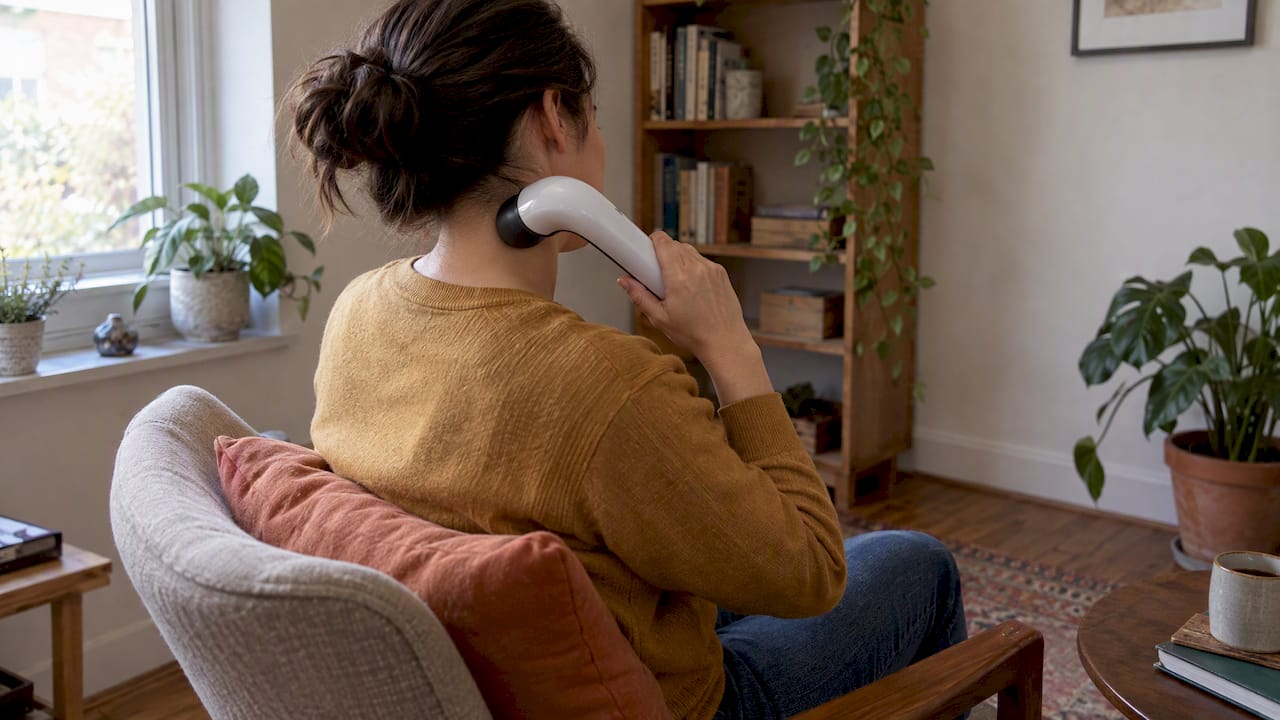
A neck massager is safe for most healthy adults when used gently, for short sessions, on the back of the neck only. The one precaution that matters most: never target the front or sides of your neck, and stop right away if you feel dizziness, a severe headache, or any strange neurological symptom. If something new or serious shows up after a session, get it checked by a doctor.
TL;DR:
- Use neck massagers only on the back of the neck for no longer than 10 minutes at low intensity to reduce the risk of serious artery dissection.
- Avoid placing the device on the front or sides of the neck, especially near major arteries, and stop immediately if neurological symptoms or dizziness occur.
- Individuals with recent neck trauma, blood thinner use, or medical implants near the neck should consult a healthcare professional before use.
- Devices with clear safety features such as adjustable settings, auto-shutoff, and explicit safe zones are safer choices, and regular inspection is recommended.
- Serious complications, although rare, include vertebral and carotid artery dissection, which necessitate prompt medical attention if symptoms develop after use.
A few seconds of prep can prevent most problems. Run through this list every time, especially if you are new to the device.
Treat this list as a habit, not a one-time read. Smart products should make safe use easy, and a quick checklist does exactly that.
Good technique comes down to placement, intensity, and timing. Here is a simple routine that keeps risk low while still giving your muscles real relief.
Pro Tip: Keep a simple log of intensity, duration, and how you feel afterward. It makes it much easier to spot a pattern if something feels off.
Some situations call for caution or a clinician’s go-ahead before you use any neck massage device; for professional in-person neck treatments and advice about clinical services, consider visiting Vitaluxe Drip Lounge.
If you are unsure where you fall on this list, a conversation with your primary care provider, a neurologist, or a physical therapist is worth the five minutes it takes.

Most people who use a neck massager gently experience nothing worse than temporary soreness, mild skin irritation, or a short-lived headache. These effects are common and usually resolve on their own within a day.
Rare but serious events do show up in the medical literature. Case reports describe vertebral artery dissection following use of a home massage device, and a separate case report documents carotid artery dissection and stroke after a 20-minute handheld electric massager session on the neck.
Case reports and clinical reviews note that even low-energy trauma from home devices can be relevant when cervical artery dissection is suspected, which is why clinicians are advised to ask about recent massage or device use during evaluation.
Reviews of manual therapy raise a similar caution: a comprehensive review on cervical artery dissection risk notes that causation from neck manipulation or massage is difficult to prove from case reports alone, but the association is consistent enough that clinicians use structured risk-assessment tools before working on the neck. These events appear to be rare, but because the consequences can be severe, persistent or new neurological symptoms after any neck massage deserve prompt medical attention rather than a wait-and-see approach.
Not all neck massagers are built with the same care, and the manual often tells you everything you need to know before you even turn the device on.
If a manual skips neck-specific guidance entirely or makes broad claims like “deep tissue relief for the entire body” with no limits mentioned, treat that as a gap, not a green light. When instructions are missing or vague, default to the gentlest possible settings and the shortest sessions until you can confirm safe use another way.
A well-maintained device is a safer device.
A few minutes of inspection before each use goes a long way toward preventing both skin irritation and device failure.
Most side effects from gentle neck massage are mild and short-lived, but a few signs mean you should act immediately. Sudden severe headache, facial drooping, arm weakness, slurred speech, sudden vision loss, or severe dizziness are emergency signs. If you notice any of these during or after use, call 911 right away, using the same FAST or BE-FAST approach recommended for recognizing stroke symptoms.

Less urgent but still important: persistent or worsening neck pain, progressive numbness or weakness, or a headache that will not let up after a session warrants a call to your primary care provider or an urgent care visit. When you do reach out, tell your clinician exactly when you used the device, what type it was, the intensity and duration, and whether your symptoms have changed since.
A neck massager is a tool for short-term muscle relaxation, not a diagnostic device and not a cure for neck pain that has a real underlying cause. I think the biggest mistake people make is treating a satisfying session as proof that nothing could be wrong, when persistent or unusual symptoms deserve a second look regardless of how good the massage felt.
My practical advice: start with a 5 to 10 minute routine, keep a quick note of how you feel afterward, and bring that log to your clinician if anything seems off. We built our approach around publishing clear, safety-first guidance for home devices because good information should be as easy to find as the product itself.
— Tony
Choosing a device with clear instructions and sensible settings makes safe use far easier. Our TermaSage™ Neck & Shoulder Massager comes with manufacturer guidance and adjustable, low-intensity settings designed to support the kind of gentle, short-session use outlined above.

Before you buy any neck massager, prioritize a few things: adjustable intensity, an auto-shutoff timer, and instructions that actually explain where and how long to use it. Our safety guidance on home devices walks through the same careful approach we apply across the gadgets we sell. If you would rather explore a full range of options first, you can browse our collection of smart home devices and compare features side by side before you decide.
This article is general information, not a substitute for advice from a qualified doctor. Consult a qualified healthcare professional about your own circumstances before acting on anything here.
A neck massage is generally safe for most healthy adults when it is gentle, brief, and focused on the back of the neck rather than the front or sides. Serious complications like artery dissection are rare, but they have been reported, so persistent or unusual symptoms afterward should prompt a medical check.
Daily use at low intensity for short sessions is reasonable for most people, as long as you are not experiencing pain, numbness, or other new symptoms. If you notice ongoing soreness or discomfort that builds over several days, scale back frequency and consult your doctor if it does not improve.
Vibrating massagers are safe for most people when used at a gentle intensity and kept to the back of the neck and shoulders. Case reports describing serious complications from handheld massagers typically involve prolonged sessions or use near the front and sides of the neck, which is exactly the zone to avoid.
Yes, as long as you keep it on the back of the neck and upper shoulders and avoid the front and sides where major arteries sit close to the skin. Start at the lowest setting, keep sessions short, and stop immediately if you feel dizzy, numb, or notice any neurological changes.
Most safety guidance points to sessions of 5 to 10 minutes, especially when you are starting out or trying a new intensity level. Longer or more frequent sessions have been associated with higher risk in case reports involving prolonged handheld massager use, so shorter and more frequent is a safer pattern than one long session.