Cart
0
Complete Your Setup





Pick one small zone right now, like a single kitchen counter or one junk drawer, and set a timer for 10 minutes. That’s the whole first move. Small, timed wins beat sweeping resolutions because they get you past the hardest part of decluttering: starting.
Before you touch anything, grab a few supplies so you don’t stall mid-session hunting for a trash bag. A basic decluttering kit includes garbage bags, a couple of empty bins or boxes labeled “donate” and “toss,” a marker, and a rag for wiping surfaces once items are cleared. The Mississippi State University Extension recommends exactly this setup: start small, sort into piles, and keep supplies within reach so momentum doesn’t die while you search the garage for a box.
Here’s what to do in your first 5 to 10 minutes:
That’s it. You now have visible proof that clutter can shrink, and that proof is what keeps people going on day two.
Reducing household clutter works when you pair small, timed actions with pre-decided rules that remove the need to reconsider every single item.
| Point | Details |
|---|---|
| Start small, not big | Clear one counter or drawer with a 10 to 20 minute timer instead of planning a whole-room overhaul. |
| Pre-decide your outcomes | Write your Keep, Donate, Toss, and Unsure rules before you touch a single item. |
| Act on removed items fast | Trash goes out same-day, donations leave within 72 hours, and sale items get a firm deadline. |
| Declutter by category for hidden duplicates | Gather every instance of one item type, like cords or spices, to see true volume across the home. |
| Sabezon tools shrink maintenance time | Compact kitchen and cleaning gadgets from Sabezon cut daily upkeep so cleared zones stay clear. |
The fastest way to reduce household clutter is to work small, visible zones first instead of tackling whole rooms. A messy counter or overstuffed drawer takes 10 to 20 minutes and produces an immediate, obvious result. A whole bedroom takes hours and often gets abandoned halfway through, leaving a bigger mess than before you started.
Certain spots consistently deliver the fastest payoff:
Once you’ve picked a zone, match your effort to the time you actually have:
10 minutes: Clear one counter or one drawer. Pull, sort, bag, wipe down. 20 minutes: Tackle a shelf or a small cabinet, like under the bathroom sink or a pantry shelf. 30 minutes: Handle a closet section, a bookshelf, or a toy bin with kids’ items mixed in.

Pro Tip: Start with zones that carry zero emotional weight, like a junk drawer or the pantry, before moving to closets or memory boxes. Early wins in low-stakes areas build the confidence you need for harder decisions later.
The best decision system for decluttering is a fixed set of rules you commit to before you touch a single item, not a judgment call you make fresh for every object. Decision fatigue is the real reason most people quit halfway through a closet. Pre-deciding your categories (Keep, Donate, Toss, Unsure) removes the mental tax of debating each item individually.
The Spruce notes that most clutter falls into five outcome buckets: throw away, donate, gift, sell, or recycle. Write your rules down before you start. For example: “Anything unused in 12 months goes to donate” or “Duplicate kitchen tools go unless one is clearly better.” An “Unsure” box is fine, but it needs a deadline. Give yourself two weeks to revisit it, then donate whatever’s left unopened.
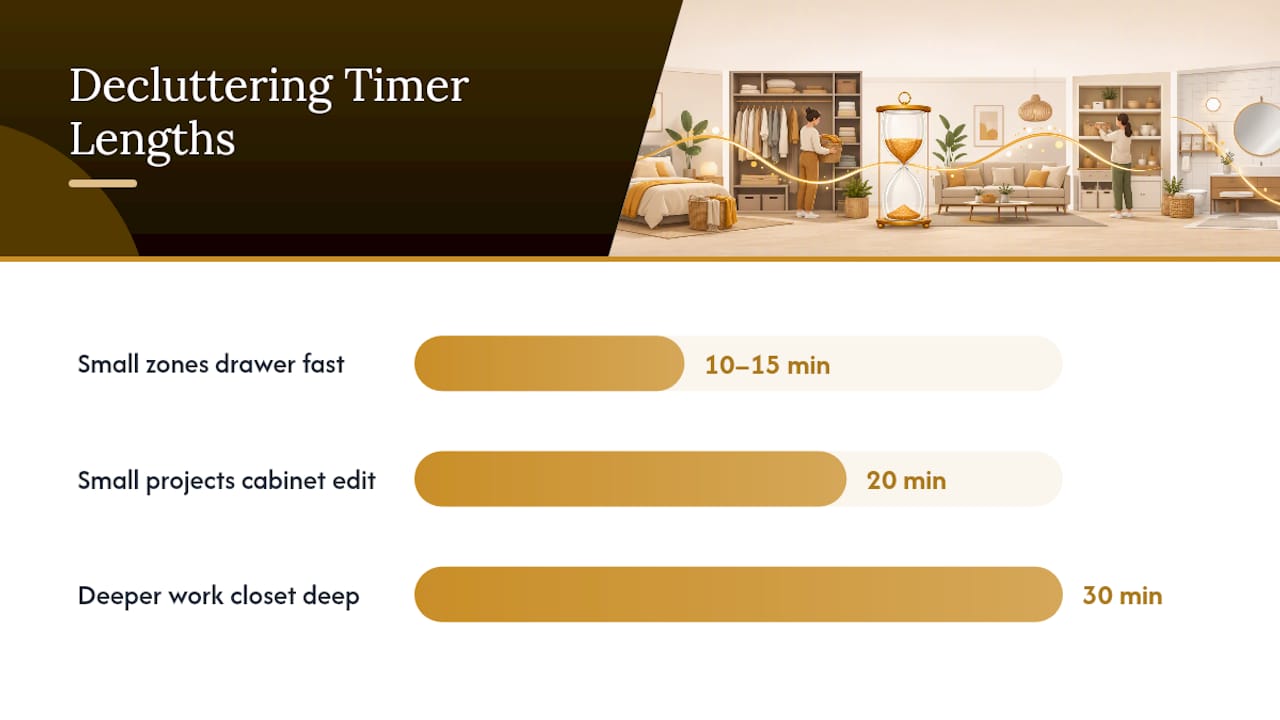
Timeboxing works alongside this system, and the length of your timer should match the task:
| Timer Length | Best For | Why It Works |
|---|---|---|
| 10–15 minutes | Small, focused zones (one drawer, one shelf) | Keeps decisions fast and prevents overthinking, per University of Georgia Extension |
| 20 minutes | Small projects (a cabinet, a closet shelf) | Enough time for a full sort without losing focus |
| 30 minutes | Deeper work (a full closet or garage corner) | Allows for a first pass and a second, tighter edit |
The University of Georgia Extension’s guidance is specific on one point that trips people up: stop when the timer ends and finish the logistics right then, not later. That means bagging trash and moving the donate box to your car the same session, not “eventually.”
To prevent items from lingering in your house after a session:
Pro Tip: Staged piles are where decluttering goes to die. If a “donate” bag sits by your front door for two weeks, it becomes part of the clutter again. Move it out the same day you sort it.
Decluttering by category instead of room by room reveals exactly how much of something you own, because it forces you to gather every instance of an item type before deciding what stays. Room-by-room sorting hides duplicates. You might toss two expired bottles of sunscreen in the bathroom, not realizing you have four more in a beach bag, a car console, and a kitchen junk drawer.
Time points out that gathering every instance of one item type across the whole home is what exposes true volume and hidden backups. The fix isn’t to dump your whole closet on the bed on day one. Start with micro-categories, narrow slices of a bigger group that are less overwhelming and easier to finish in one sitting.
Good micro-categories to start with:
Once you’ve done a micro-category, the sequence scales up naturally: gather everything from across the house, do a quick pass to eliminate obvious duplicates and expired items, do a final edit against your keep criteria, then decide where the survivors live. That last step matters. A category with no assigned storage spot just re-scatters within a month.
There’s no single best decluttering method. The right one depends on how much time you have, how attached you are to your belongings, and whether you’re maintaining a tidy home or digging out of years of accumulation.
A few approaches show up again and again:
| Method | Best For | Time Investment | Emotional Load |
|---|---|---|---|
| Micro-category sorting | Fast, visible progress | Low (10 to 20 minutes) | Low |
| KonMari-style joy check | Sentimental decluttering | High (multi-day) | High |
| 12-12-12 challenge | Structured, game-like tidying | Moderate (20 to 30 minutes) | Moderate |
| 1-3-5 rule | Busy schedules, daily maintenance | Low (10 to 15 minutes) | Low |
| One-in, one-out | Maintaining a decluttered home | Ongoing, minimal per swap | Low |
Interesting wrinkle here: research on order and disorder in downsizing decisions found that people often keep fewer items when choosing from a messy, jumbled pile than from a neatly organized one. If you’re stuck overthinking a tidy shelf of books, dump them in a pile on the floor first. Selecting from disorder, oddly, makes letting go easier.

Pick one method, then shrink it to fit a single 10 to 30 minute session instead of trying to run the full system across your entire house on day one.
Sorting is only half the job. Items that sit around after a session waiting for “someday” logistics have a way of quietly working their way back into your home. Assign each pile a deadline the moment you create it.
For donations, local charity thrift stores, Buy Nothing groups, and food banks each solve a different problem. Buy Nothing groups work best for usable household items you want gone fast with zero drop-off drive. Food banks want unopened, non-perishable pantry items specifically. Charity thrift stores are the catchall for clothing, books, and housewares in decent shape.
Pro Tip: Batch your donation runs. Keep one bin in your car trunk and add to it after every session, then drop it off once it’s full instead of making five separate trips.
Clean the surface the moment it’s cleared. This is the step people skip, and it’s a mistake, because dust and allergens accumulate under and around clutter for months, sometimes years, and stay behind even after the stuff is gone. The Mississippi State University Extension specifically recommends wiping down and cleaning newly exposed surfaces right after clearing them, since that’s often the first real cleaning those spots have seen in a long time.
Beyond the one-time clean, a handful of daily and weekly habits keep clutter from creeping back:
New habits like these take roughly two weeks of consistent repetition before they stick without conscious effort, so don’t judge the system by week one. A practical daily-cleaning guide can help you build a repeatable routine around these small tasks.
Pairing these habits with the right tools shortens the time each one takes. A quicker cleaning routine built around a few well-chosen gadgets turns a 15-minute kitchen reset into a 5-minute one, which matters most on the nights you’re too tired to do either.
Sentimental items need a different process than socks or expired spices, because the decision isn’t really about the object. It’s about the memory attached to it, and rushing that decision usually leads to regret either way, keeping too much or tossing something you’ll wish you’d kept.
A time-delayed “box of clarity” solves this well. Put anything you’re unsure about into a labeled box with a revisit date three to six months out, then set it aside completely. Research on decision processes related to clutter supports this quarantine approach: putting emotional distance between the decision and the moment reduces the pressure that makes people freeze or overkeep.
A few practical moves make this easier:
Pro Tip: Ask a trusted friend to sit with you during a sentimental sorting session. Someone without your emotional history with the object can ask “would you buy this again today?” in a way you can’t ask yourself.
Most clutter is a habits problem, solvable with the timeboxing and decision rules covered above. Sometimes it’s something more, and recognizing the difference matters.
Watch for these warning signs:
If any of that sounds familiar, a professional organizer is a reasonable first call for logistics, and a mental health professional experienced in hoarding disorder is the right resource if the resistance feels emotional rather than practical. Look for organizers certified through recognized professional bodies, and expect an initial consult to include a walkthrough and a judgment-free discussion of goals before any physical sorting starts. A guide to hiring a professional cleaner is a useful read if you’re weighing outside help versus doing it yourself, even for situations well short of a hoarding concern.
You don’t need a weekend blocked off. Pick one of these three templates based on the time you have right now.
A simple weekly checklist keeps momentum going:
If you live with others, assign roles before the timer starts. One person sorts, one person bags and hauls, one person wipes surfaces. Kids can handle their own toy bins with the same three-pile system, sized down to five minutes instead of twenty.
A cluttered kitchen counter is where most decluttering advice gets tested for real, and it’s a useful example of the whole plan working together. Starting with a junk drawer instead of a counter, setting a 15-minute timer, and sorting into three pre-decided piles turns an intimidating mess into a finished task before the timer even runs out.
The habit that actually sticks isn’t the big weekend purge. It’s the small nightly reset, five minutes, same time, same routine, repeated for about two weeks until it stops feeling like a chore and starts feeling automatic. That two-week window lines up with what habit researchers generally find about how long it takes a repeated action to become close to effortless.
The category method deserves real credit here too. Once you’ve gathered every phone charger in a house and realized you own eleven for four devices, room-by-room tidying starts looking a little naive by comparison.
A decluttered kitchen counter stays clear only if cleanup afterward is fast enough that you actually do it. That’s where the right tools change the outcome, not by doing the decluttering for you, but by shrinking the daily maintenance that keeps clutter from creeping back.

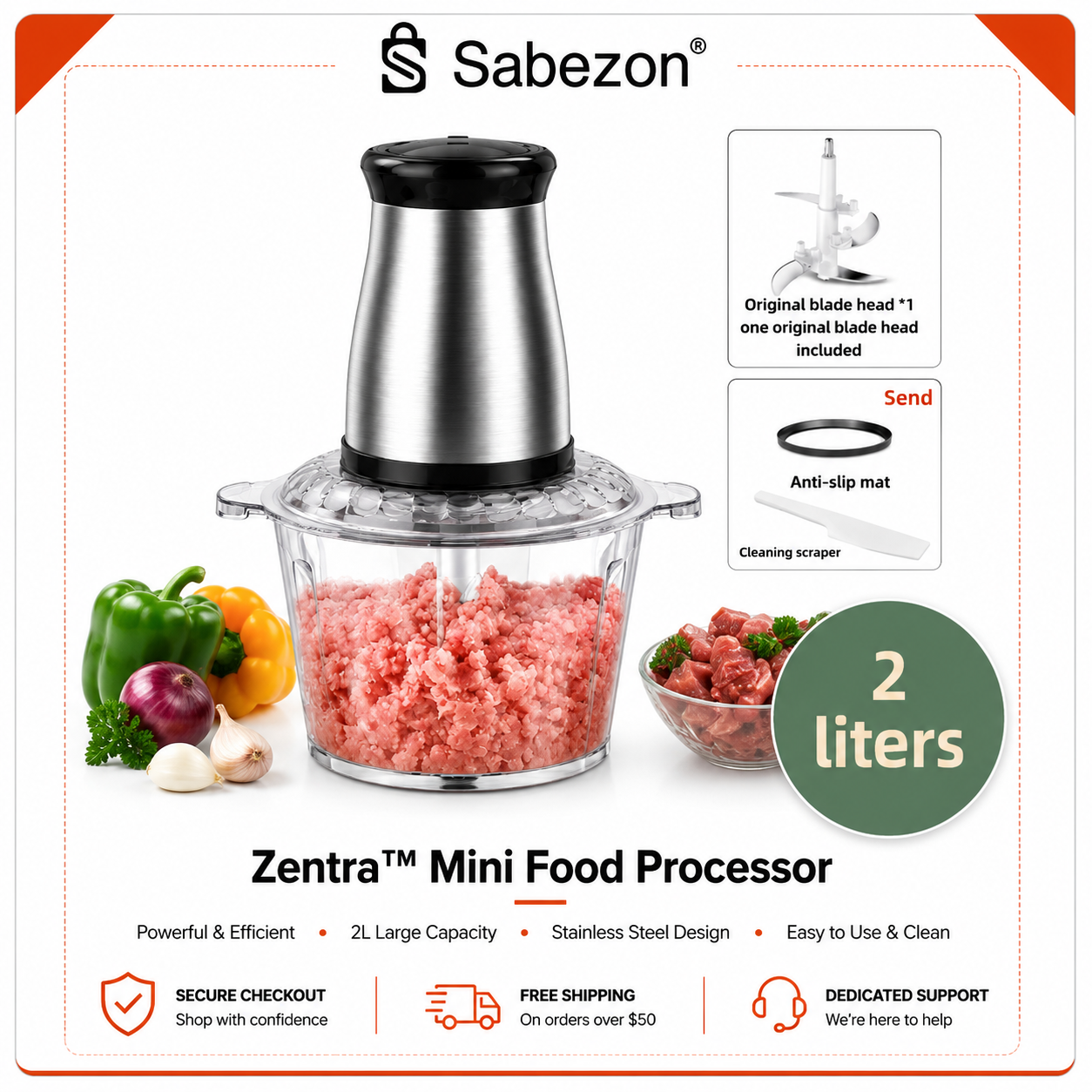
Compact, multi-function kitchen gadgets cut down on duplicate-tool clutter in the first place. A single mini food processor that chops, grinds, and blends replaces three separate single-use gadgets fighting for the same drawer space. On the cleaning side, a handheld steam cleaner or an electric spin scrubber turns the “wipe down the exposed surface” step from a five-minute scrub into a 90-second pass, which matters most on the exact nights you’re least motivated to do it.
Sabezon’s smart cleaning collection and smart kitchen tools are built around this exact idea: fewer single-purpose items taking up drawer space, faster maintenance once the decluttering work is done. Browse the Sabezon storefront for the full lineup, and pick one or two tools that match the zones you just cleared.
A few sources back the core strategies in this guide, and each one is worth a closer read if you want the fuller picture:
For donation logistics, local Buy Nothing groups and food banks are worth checking directly, since drop-off rules and accepted items vary by location. A home cleaning checklist is a solid companion resource if you want to pair your decluttering sessions with a broader cleaning routine.
If clutter in your home involves safety hazards, blocked exits, or intense emotional distress around sorting decisions, a certified professional organizer or a mental health professional experienced in hoarding concerns is a more appropriate next step than another solo attempt. This article offers general strategies, not professional or clinical advice, so confirm anything specific to your situation with a qualified provider.
How long does it take to declutter a house? It depends on the size of your home and how much you own, but working in 10 to 30 minute sessions, tackling one zone or micro-category at a time, most households see a visible difference within two to four weeks of consistent effort.
What is the 12-12-12 decluttering method? It’s a structured challenge where you find 12 items to toss, 12 to donate, and 12 to return to their proper place in a single session, giving you a clear finish line without needing a full room sort.
Should I declutter room by room or by category? Category-based decluttering, gathering every sock, cord, or cleaning supply from across the house, tends to expose hidden duplicates that room-by-room sorting misses, according to Time. Room-by-room still works well for a quick visible reset in a single space.
What should I do with items I’m not sure about? Put them in a labeled “box of clarity” with a revisit date three to six months out. If you haven’t thought about the item by then, donate it without reopening the box.
How do I keep my house clutter-free after decluttering? Build small daily habits, like the 60-second rule, a nightly 5-minute tidy, and sorting mail immediately, and give each new habit about two weeks to become automatic. Pairing these habits with quick-clean tools from a collection like Sabezon’s smart cleaning lineup shortens the maintenance work enough to make the habit easier to keep.