Cart
0
Complete Your Setup




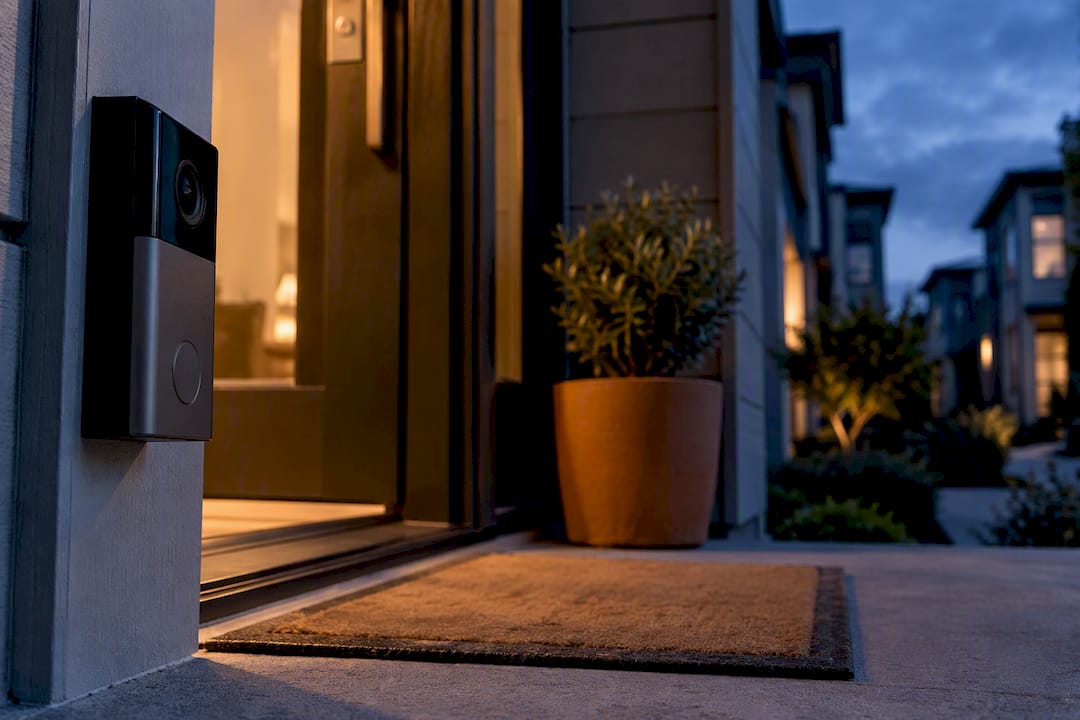
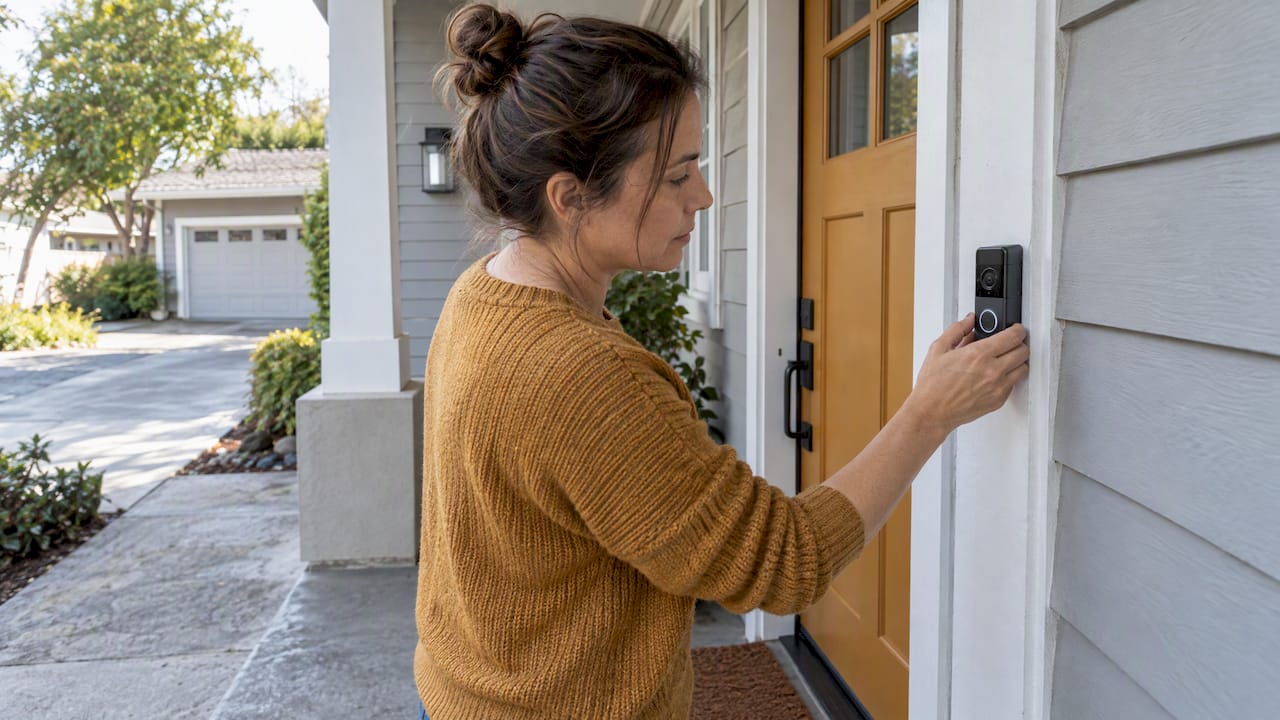
Doorbell cameras are legal to install on your own property across all 50 states, but two things can turn a legal setup into a legal problem: the audio recording feature and where you point the lens. The federal Wiretap Act allows one-party consent for recordings, yet several states require every person in a conversation to agree to it. If you’re not sure which rule applies to you, turn off the microphone and keep the camera’s view on your own porch, driveway, and walkway.
TL;DR:
- Most states allow video-only doorbell camera recordings on private property without legal issues, but audio recording requires careful consideration of consent laws.
- Disabling the microphone or switching to video-only mode during setup minimizes legal exposure, especially in all-party consent states like Illinois or California.
- Mount cameras to avoid private spaces like neighbor windows or fenced yards, using privacy masks to block incidental recordings of sensitive areas.
- Homeowners associations and landlords can impose additional restrictions, so reviewing CC&Rs or lease agreements is essential before installation.
- Police requests for footage can be voluntary or warrant-based; always clarify the request type and consider legal advice before sharing sensitive recordings.
No. Federal law sets the floor, and states build on top of it, often with stricter rules for audio.
The federal baseline comes from the Wiretap Act, 18 U.S.C. § 2511, which permits recording a conversation as long as one party involved (that includes you) consents to it. That’s called one-party consent, and it’s the default rule in most states. Under this standard, recording someone at your front door is generally fine because you, the homeowner, are effectively a party to the interaction.
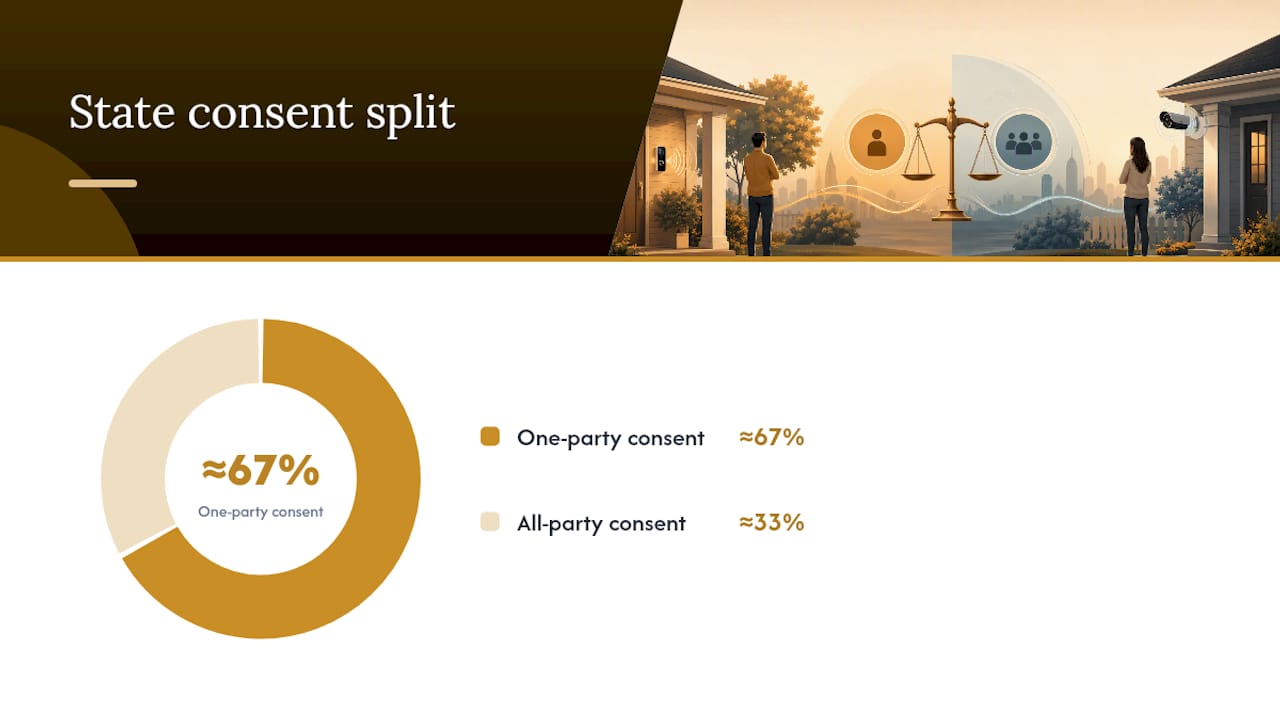
But roughly a third of states have decided that’s not protective enough. They’ve passed their own eavesdropping or wiretap statutes requiring all-party consent, meaning every person being recorded has to agree to it, not just you. This single difference is why a doorbell camera setup that’s perfectly fine in Texas can create legal exposure in Illinois or California.
State law doesn’t stop at audio, either. Many states also have voyeurism or “video voyeurism” statutes that criminalize recording someone in a place where they’d reasonably expect privacy, such as through a bathroom window or into a fenced backyard. These laws exist independently of your camera’s intent. A doorbell camera that happens to catch a neighbor’s bedroom window through a gap in the fence can trigger the same statute as a hidden camera planted for that purpose.
There’s also a civil side to this that catches homeowners off guard. Even when no criminal charge applies, a neighbor can sue for intrusion upon seclusion, a civil claim built around the idea that someone deliberately invaded a space where privacy was reasonable to expect. Courts weigh factors like:
That “reasonable expectation of privacy” test shows up throughout doorbell camera law, and it’s worth understanding on its own terms before you mount anything.
This is where most legal risk with doorbell cameras actually lives, not in the video itself.
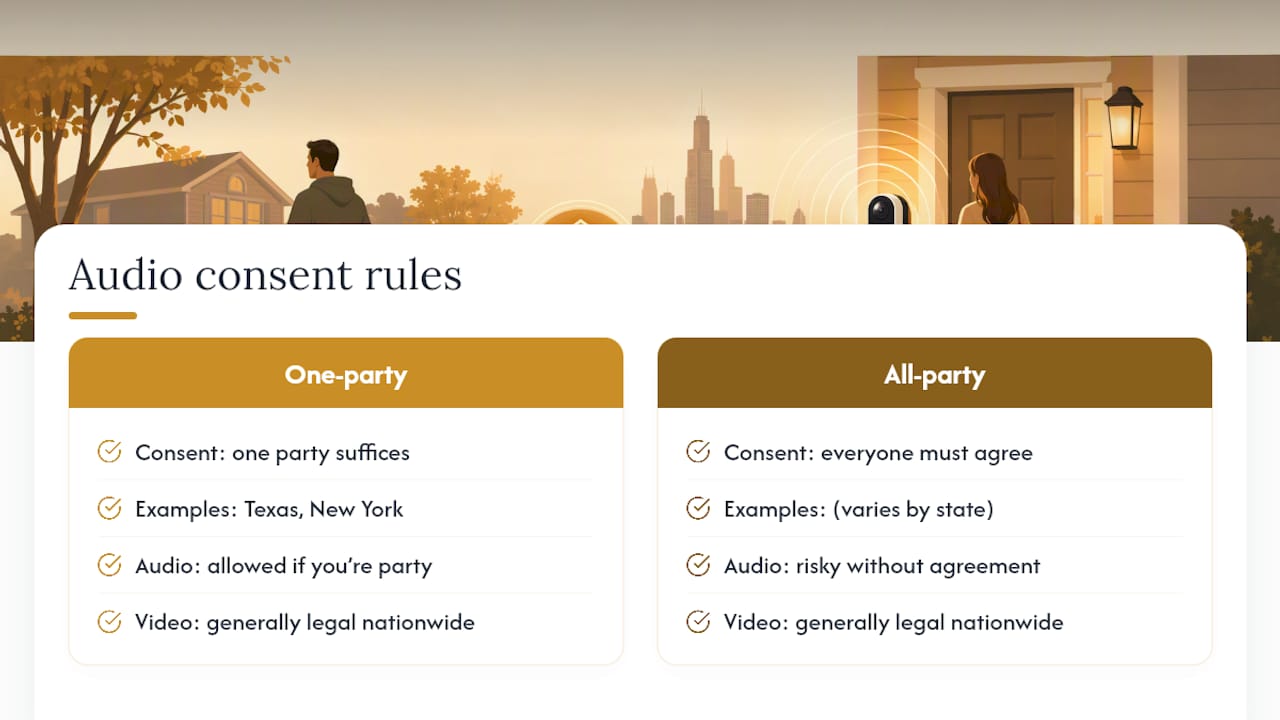
States fall into two buckets. One-party consent states (the majority, including Texas and New York) let you record audio as long as you, the resident, are one of the parties to the exchange. All-party consent states, sometimes called “two-party consent,” require everyone being recorded to agree, and a delivery driver or trick-or-treater standing on your porch has almost certainly never agreed to anything.
A Security notes that video capture in public-facing areas like porches and driveways is generally legal nationwide, but audio recording is consistently the feature that creates state-by-state legal exposure.
Video-only capture of your porch, driveway, or the public sidewalk in front of your house is treated differently than audio under almost every state statute, because there’s no reasonable expectation of privacy in a space anyone walking by can already see. Audio is different. A recorded conversation, even an incidental one picked up while someone waits for you to answer the door, can qualify as an “oral communication” under wiretap statutes.
Here’s the simple rule that avoids nearly all of this: disable the microphone unless you’ve confirmed your state allows one-party audio consent, or you have explicit agreement from anyone regularly recorded. Most doorbell camera apps let you switch to video-only capture in seconds, and it removes the entire category of legal risk in one tap.
If you want certainty rather than a rule of thumb, look up your specific state’s eavesdropping or wiretap statute, or run a quick search for “[state name] eavesdropping law,” since several states have amended these rules in the past few years.
The placement question comes down to one idea: plain view versus private space. Courts and statutes consistently protect areas where someone would reasonably expect not to be watched, and they consistently allow recording in areas open to public passersby.
Generally safe to capture:
High risk or off-limits:
Most current doorbell camera apps include privacy masking, which lets you black out a defined zone in the frame, such as a neighbor’s window, so it’s never recorded even if it falls within the camera’s natural field of view. Pair that with motion zone settings that only trigger recording within a defined boundary, and you’ve addressed both the legal exposure and the neighbor-relations problem in one step. Mounting height and tilt angle matter here too. Our own placement guidance and angle recommendations both aim for capturing faces at the door without drifting the lens toward adjacent property.
Pro Tip: Before you drill a single hole, stand where you plan to mount the camera and hold your phone up at that height and angle. Take a photo. If a neighbor’s window, yard, or interior space shows up in the frame, adjust the angle or add a privacy mask before installation, not after a complaint.
Yes, and this trips up more homeowners than state law does. Homeowners associations and landlords can layer additional rules on top of whatever your state permits, through CC&Rs (covenants, conditions, and restrictions) or lease agreements.
A CC&R might require board approval before installation, dictate an approved camera color or model, or restrict where on a shared exterior wall a device can be mounted. Lease agreements often go further, since landlords may prohibit tenant-installed hardware in shared entryways, hallways, or building common areas entirely, treating those as areas where other tenants have their own privacy expectations.
Before you install anything in a managed community or rental:
There’s a meaningful legal difference between sharing footage voluntarily and having it compelled from you, and knowing which situation you’re in changes your options.
If an officer knocks and asks whether you’d share footage of an incident, that’s a voluntary request. You can say yes, no, or ask them to come back with something in writing. A warrant or subpoena is different: it’s a legal order backed by a judge, and refusing to comply carries its own consequences. Reporting on doorbell camera and law enforcement partnerships has shown that some manufacturers maintain portals allowing police to request footage directly from users, which still relies on the homeowner’s voluntary consent rather than a legal mandate.
If you’re approached for footage:
Illinois is the state most homeowners point to when discussing audio recording risk, and for good reason. Under the Illinois Eavesdropping Act, 720 ILCS 5/14-2, recording a private conversation without the consent of every party involved is a felony offense, not a misdemeanor or a civil matter. That makes Illinois one of the strictest all-party consent states in the country and a useful benchmark for how seriously some states treat this issue.
| State | Consent type for audio | Practical effect for doorbell cameras |
|---|---|---|
| Illinois | All-party consent | Audio recording without everyone’s consent risks felony charges under 720 ILCS 5/14-2 |
| California | All-party consent | Audio capture of a private conversation without consent can trigger civil and criminal exposure |
| Texas | One-party consent | Homeowner’s own consent is sufficient; audio carries lower legal risk |
| New York | One-party consent | Similar to Texas; recording is generally lawful with the homeowner as a party |
| Florida | All-party consent | Audio recording without consent can expose the homeowner to liability despite video being lawful |
Video-voyeurism statutes run alongside these audio rules in most states, criminalizing recording someone in a place where privacy is reasonably expected, regardless of whether audio was captured. Civil remedies, including intrusion upon seclusion claims, remain available to a neighbor even in one-party consent states, since those claims are about the reasonableness of what was recorded, not just consent.
Reducing legal risk with a doorbell camera isn’t complicated, but it does require doing things in the right order.
Pro Tip: If a neighbor complains before you’ve had a chance to explain your setup, walk them through your privacy masking and motion zone settings directly. Showing them the blocked-out areas on your phone resolves more disputes than any conversation about legal statutes ever will.
We recommend mounting doorbell cameras between 48 and 52 inches high with a 10 to 15 degree tilt, framing the approach to your door without angling toward neighboring windows. Keep audio disabled unless you’ve confirmed consent, and lean on motion zones and privacy masking to keep captures on your own property. A video-first configuration reduces legal exposure while still catching faces at your door. For a full breakdown of upfront versus ongoing costs, compare options before you buy.
The mistake I see homeowners make most often isn’t malicious. It’s assuming that because a camera is legal to own, every angle and every feature is automatically fine to use. That’s backwards. The legality of the device says nothing about the legality of a specific placement or a specific recorded conversation, and that gap is where most disputes and, occasionally, lawsuits come from.
The homeowners who avoid trouble aren’t the ones with the most expensive setups. They’re the ones who disable audio by default, mask off their neighbor’s window, and treat “reasonable expectation of privacy” as a real design constraint rather than legal fine print. Follow the checklist above, and when your situation lands in a genuine gray area, a quick call to a local attorney is worth more than guessing.
— Tony
Sabezon’s approach to doorbell cameras is simple: give homeowners full control instead of forcing audio-on defaults that create legal headaches in all-party consent states. Every setting covered in this guide, video-only mode, motion zones, and privacy masking, comes standard, so you’re not hunting through menus to find them.

The Entryx™ Smart Doorbell Camera puts an audio toggle and app-based motion zone controls right at your fingertips, built for exactly the video-first setup this guide recommends. It’s a straightforward way to secure your entryway without second-guessing whether your camera’s default settings are creating legal exposure you didn’t ask for. Browse the full lineup in our smart home tech collection, or head to our collections page to compare options and find the setup that fits your porch, your budget, and your state’s rules.
Check the federal Wiretap Act text for the baseline consent standard, review Illinois’s eavesdropping statute as a strict-state example, and read the Cornell Law expectation of privacy explainer for the legal test courts apply.
This article is general information, not a substitute for advice from a qualified lawyer. Consult a qualified legal professional about your own circumstances before acting on anything here.
Yes, generally. If your neighbor’s camera captures your porch, driveway, or front door from their own property, it’s typically legal because those areas lack a reasonable expectation of privacy. It becomes a problem only if the camera’s audio picks up your conversations without proper consent, or if the angle is specifically aimed at your windows or fenced yard rather than incidental to a shared view.
Privacy concerns tied to data sharing and past security incidents are a common reason, separate from any state law issue. Reporting from the Electronic Frontier Foundation has documented breach and data-sharing controversies that made some owners distrust cloud-connected camera platforms altogether, prompting a shift toward devices with clearer privacy controls.
This depends heavily on state consent laws and the specific spaces involved. Interior cameras that capture audio in a shared home can trigger all-party consent requirements in states like Illinois or California, and cameras placed in private spaces like bedrooms or bathrooms raise separate voyeurism and civil privacy concerns regardless of who installed them. This is a situation where consulting a local attorney makes sense rather than relying on general guidance.
Legally, disclosure requirements vary by state and mainly apply to audio recording rather than video. As a practical matter, posting visible signage or a small notice near your entry is a smart step even where it’s not required, since it heads off disputes with delivery workers, neighbors, and guests before they start.