Cart
0
Complete Your Setup





Yes, lithium jump starters are safe when they carry proper protective circuitry and you store and use them within their rated temperature and condition limits. The real risk drivers are heat, physical damage, and defective or recalled units, so check for certification and keep the device away from extreme temperatures before you rely on it.
TL;DR:
- Look for UL 2743 testing and protection built into the housing, including reverse polarity and thermal safeguards, rather than relying only on cable protections.
- Store the unit in a padded case away from direct sun, and recharge it every three months if unused or after each jump.
- Connect the positive clamp first, then attach the negative clamp to a grounded chassis point away from the battery; follow the prescribed crank limits.
- Stop using any swollen, cracked, unusually hot, or smoking unit, and take damaged or recalled packs to hazardous waste collection, never household trash.
A quality lithium jump starter is safe largely because of what happens inside the case. A battery management system, or BMS, watches each cell for over-voltage, under-voltage, and over-current conditions, and balances the cells so none gets pushed past its limit. Reverse polarity protection stops current flow if you connect the clamps backward, which prevents sparks and protects both the booster and your vehicle’s electronics. Thermal cutoffs shut the unit down before heat buildup becomes dangerous, and many models enforce a duty cycle that forces a rest period between crank attempts.
UL 2743 is the standard that matters here. UL Solutions publishes this standard specifically for portable power packs, including booster and jump packs, and testing to it verifies that a unit’s safety circuitry performs as designed. A jump starter with protection built into the housing, rather than only on the cables, is generally the safer design.

Temperature is the single biggest factor in lithium jump starter safety, and it’s also the easiest to control. Consumer Reports testing shows these units can fail in extreme cold, and manufacturers publish maximum operating and storage temperatures that matter more in practice than most owners expect. A car’s interior on a hot day can climb well past what the battery pack is rated for, which stresses the cells even when the unit sits unused.
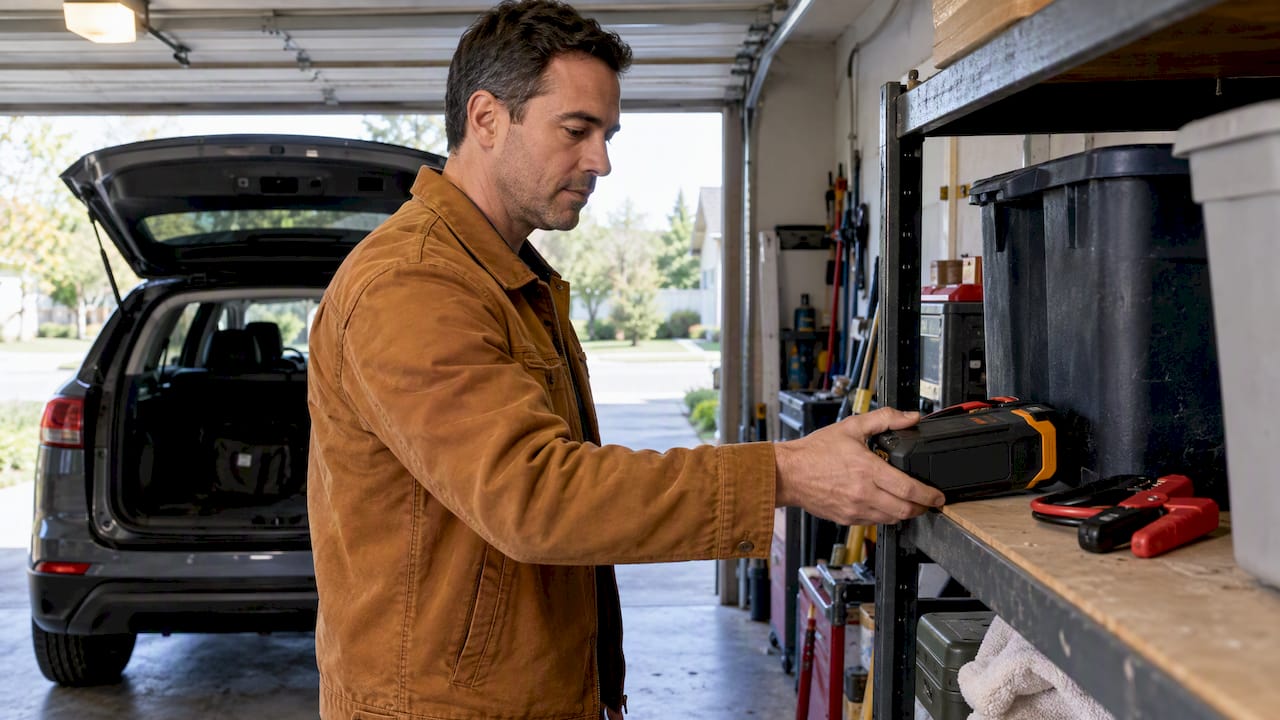
If you keep your jump starter in the vehicle, store it in a padded case, out of direct sun, and never on the dashboard where heat concentrates. Detach the clamps when possible and secure the unit so it doesn’t bounce around in the trunk or glove box. Vehicle electrical systems already work harder in summer heat, and a jump starter exposed to the same conditions needs the same consideration.
Pro Tip: If you live somewhere with hot summers, swap your jump starter’s storage spot seasonally, moving it from the trunk to an insulated bag inside the cabin during peak heat.
Keeping your jump starter ready and keeping it safe are the same habit, not two separate chores. Industry guidance from Vehicle Service Pros recommends keeping the pack charged above roughly 75% state of charge for readiness and recharging at least every three months if it sits unused. Skip charging if the unit is below freezing, above the manufacturer’s listed temperature limit, or shows any visible damage.
Our maintenance checklist for jump starters walks through this quarterly routine in more detail, including what each LED pattern typically signals.
A safe jump start follows a specific order, and skipping steps is where most sparks and shocks happen. Popular Mechanics recommends removing jewelry, wearing eye protection, and following the clamp sequence exactly rather than improvising.
Pro Tip: If the engine doesn’t start within a few short attempts, stop and let the unit rest for a few minutes instead of repeated cranking, which is exactly what built-in duty-cycle enforcement is designed to prevent you from overriding.
Our guide to using a jump starter safely covers this sequence with photos for each connection point.
Warning signs are usually visible before a failure becomes dangerous: a swollen case, unusual heat during charging, a chemical odor, smoke, or a cracked housing with visible leakage. If you notice any of these, stop using the unit immediately, move it away from flammable materials, and let it cool in a safe, ventilated spot rather than attempting to charge or discharge it again.
Recalls are common enough in this category to check regularly. CPSC’s recall of INIU power banks involved about 210,000 units after reports of overheating and fires, and a separate CPSC warning on Yiisonger power banks described multiple reports including a serious incident causing substantial property damage.
The USFA’s guidance on lithium-ion battery risks confirms that defective packs can overheat, swell, ignite, and explode, which is why disposal instructions exist in the first place. For battery disposal specifics, EVOQEN’s guidance on battery disposal offers another practical reference.
We built our checklist around habits that help keep lithium jump starters safe: quick, routine, and easy to remember.
Run through this list once a quarter, and always after a heavy-use event like a cold snap that required several jump starts in a row. Our full 60-second jump starter safety checklist breaks down UL 2743 basics and BMS protection in plain terms for anyone who wants the longer version.
Keeping a jump starter in your car makes sense if you drive remote routes or face harsh winters where a dead battery could leave you stranded. The tradeoff is manageable: store it properly, recharge it on schedule, and never trust a used or hand-me-down unit without checking its certification and recall status first. Preparedness and safety aren’t competing goals here, they’re the same habit practiced consistently.
— Tony
We designed our 4-in-1 car jump starter around the same safety principles this guide covers: built-in protective circuitry, clear LED readiness indicators, and a carrying case that makes proper storage simple instead of optional.

If a start attempt doesn’t go as planned, a reliable alternator and starting system check from a trusted shop like Chapman’s battery and starter repair can rule out a deeper electrical issue. For the jump starter itself, our product page has full specs, and our collections page covers the rest of our smart home and vehicle lineup.
Modern lithium-ion batteries rarely explode when they’re undamaged, properly certified, and used within their rated limits. The risk rises sharply with defective or recalled units, as shown by incidents reported in CPSC recall data involving overheating and fire.
Yes, a defective or damaged lithium-ion battery can overheat and ignite even while sitting unused, according to USFA’s safety guidance. This is why regular inspection for swelling or case damage matters as much as charging habits.
A well-made, certified lithium battery carries low everyday risk, but damage, extreme heat, or manufacturing defects can trigger overheating, swelling, or fire. UL 2743 testing exists specifically to verify that portable power packs meet safety standards before they reach consumers.
Yes, storing an undamaged lithium battery at home is safe when you keep it in a cool, dry, ventilated spot away from direct heat sources. Avoid storing it fully charged in extreme temperatures, and never keep a swollen, cracked, or recalled unit anywhere in the house.