Cart
0
Complete Your Setup





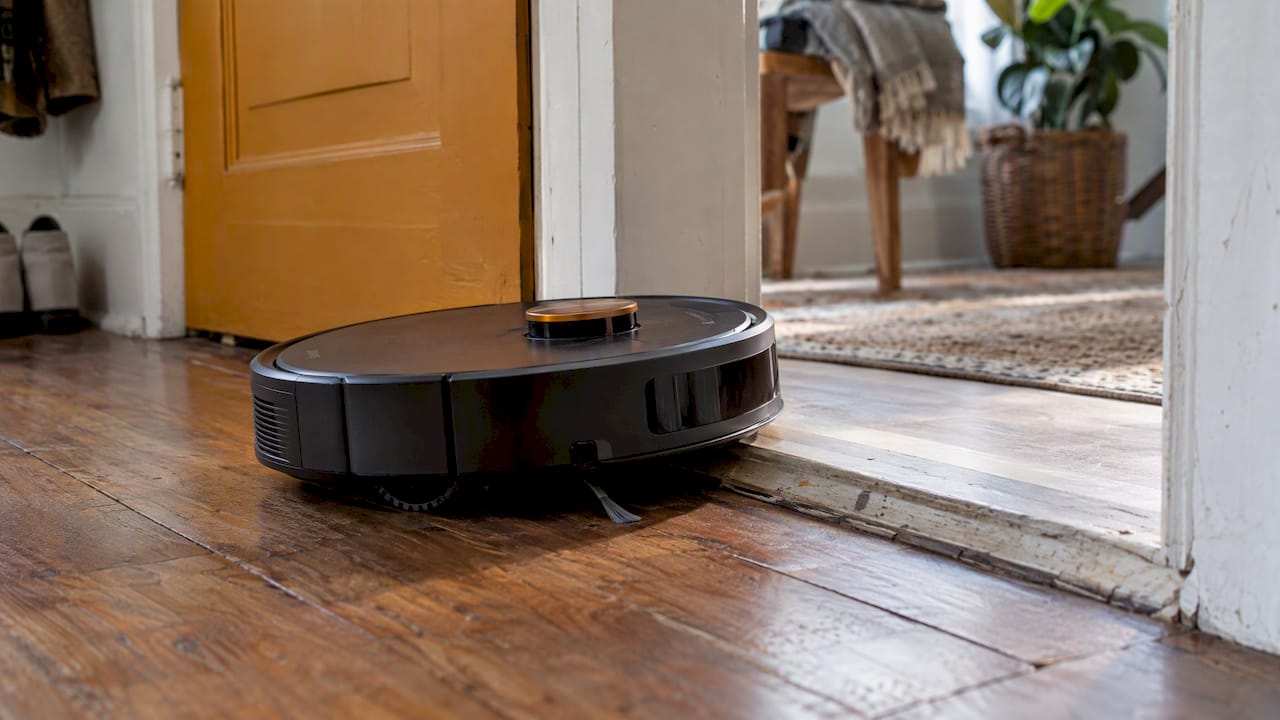
Most robot vacuums cross a flat, low threshold of about 0.6 to 0.8 inches without trouble. Anything taller, steeper or made of two stacked steps can stop one cold. The fix is usually simple: measure the threshold the right way, compare it to the clearance in your robot’s specs, and add a ramp if the numbers are close. Here is how to do each step.
Smart Products. Zero Hassle. That is how a robot vacuum should feel, and a stuck robot at the bedroom door is the opposite. This guide will help you avoid it.
The honest answer is: it depends on the model, and the range is wide.

Budget and mid-range robots usually list a climb height between 15 and 20 mm, which is about 0.6 to 0.8 inches. Higher-end machines go further. Tom’s Guide reported in January 2026 that one new flagship uses a lifting chassis to clear single thresholds up to 1.77 inches, plus another 1.57 inches for a double threshold. That is a premium design, not the norm.
So for most homes, a practical rule works well:
| Threshold rise | What to expect |
|---|---|
| Under 0.5 in (13 mm) | Almost any robot vacuum crosses it |
| 0.5 to 0.8 in (13 to 20 mm) | Most mid-range robots cross it if the edge is sloped |
| 0.8 to 1.2 in (20 to 30 mm) | Needs a high-clearance robot or a ramp |
| Over 1.2 in (30 mm) | Needs a lifting-chassis robot, a ramp, or both |
Treat that table as a starting point. Your robot’s own spec sheet always wins.
If your home was built to common accessibility rules, the bump may be small. The ADA standards for accessible buildings set a maximum threshold height of 1/2 inch (13 mm), with a bevel allowed on older or altered thresholds up to 3/4 inch. Those rules apply to public and commercial buildings, not every house. Older homes, sliding door tracks, tile-to-wood transitions and bathroom curbs can be much taller. Always measure.
A tape measure on the highest point is only half the job. Robots climb with wheels, so shape matters as much as height.
Lay a straightedge across the lower floor and the top of the threshold. Measure the gap under the straightedge at the highest point. Write it down in both inches and millimeters, because spec sheets use both.
A rounded or beveled edge is far easier than a square one. A square lip makes the front wheel hit a wall. A gentle slope lets the wheel roll up. If your threshold is a hard 90-degree edge, treat it as taller than it measures.
Many doorways have a metal strip on one side and a flooring edge on the other. Separate rises can add up. Guides that focus on door geometry, such as this one on doorway shape, point out that the spacing between steps decides whether a robot makes it, not just the headline number. If the two rises sit closer together than the robot’s wheelbase, the body can bottom out between them.
Thick rugs, door sweeps and carpet transitions add height. Measure from the floor the robot will actually be on, with the rug in place.
Clearance is one number on a spec sheet. Real crossing depends on several things working together.
If your robot stops at the same spot every time, our guide on rescuing a stuck robot vacuum walks through the quick checks before you buy anything.
A threshold ramp is a wedge, usually plastic or rubber, that turns a square step into a slope. It is the cheapest fix and often the best one.
A ramp helps most when:
A ramp will not help when:
Match the ramp to the height you measured. Buying guides list common ramp ranges of 0.6 to 1.2 inches or 1.6 to 2.5 cm, and many products are sold in fixed heights. A ramp that is too short leaves a lip at the top. A ramp that is too tall creates a new bump.
Check these five points before you buy:
If you rent, use removable tape or a weighted ramp so you do not damage the floor.
If you do not want to buy a ramp, a few small steps often do the job:
Before you buy a robot vacuum for a home with thresholds, read the spec sheet for these items.
| Spec | What to look for |
|---|---|
| Climb height | Stated in mm or inches. Compare to your measured rise. |
| Single vs. double | Some brands list a separate number for double thresholds. |
| Wheel design | Larger drive wheels or a lifting chassis help. |
| Mop lift | Does the mop pad raise over carpet and edges? |
| Cliff sensor behavior | Can you adjust it or does it stay fixed? |
| Navigation | Lidar mapping tends to approach doorways more consistently. |
| Weight | Heavier robots need more traction on a slope. |
A useful habit: give yourself a margin. If your threshold is 0.7 inches and the robot is rated for 0.8, add a ramp anyway. Rated numbers are measured under test conditions, on clean surfaces, with a full approach run. Your doorway has dust, a rug edge and a tight turn.
We cover how mapping affects doorway behavior in how robot vacuum mapping works. If your robot confuses rooms or drifts, these four mapping fixes are worth a look.
People often search “can a robot vacuum climb stairs” while looking for threshold help. They are very different jobs. A threshold is a low bump the robot rolls over. A stair is a vertical drop or rise with a flat tread, and the robot has to lift its whole body.
The Verge reported that a stair-climbing robot vacuum concept was shown climbing five stairs in January 2026, but no specifications or release date were given. In other words, it is a demo, not something you can plan a cleaning routine around. If you have a multilevel home, the practical answer today is one robot per floor, or carrying it up. Our piece on robot vacuums and stairs explains what to buy now and what to wait for.
We sell smart home gadgets for busy people, and we hear the same story often. Someone buys a robot, runs it once, and finds it stuck at the bedroom door. They blame the robot. Most of the time, it is the threshold.
Here is what we tell shoppers.
Measure first, shop second. Spend two minutes with a tape measure before you pick a model. It saves a return.
Do not chase the biggest number. A robot with a huge climb rating costs more, and many homes do not need it. A low, sloped threshold plus a standard robot works fine.
A ramp is a good answer, not a failure. It is a few dollars and five minutes. It lets a simpler, more affordable robot do a full-home job.
Pick easy over clever. Our approach is carefully curated, easy-to-use products with simple setup. Mapping, a clear app and sensible obstacle handling do more for a busy household than any single spec. Tested. Proven. Loved.

Keep it low maintenance. Wheels packed with hair lose grip, and that shows up first at the threshold. A quick weekly wheel check keeps climbing strong. See our robot vacuum maintenance routine for the under-10-minutes version.
Pet owners should note that hair wraps wheels faster, and our guide to robot vacuums for pet hair covers what to look for.
— Tony
If you are shopping for a robot vacuum, start with the floor plan. Count the thresholds, measure the tallest one, then match it to the specs.
The FloorPilot™ Smart Robot Vacuum is a vacuum and mop combo with a self-emptying station, lidar navigation, Wi-Fi and Alexa control, built for hard floors. Check the product page for its listed specifications and compare them against your measured threshold before you order.

Want to see more? Browse our Smart Cleaning collection or the full Sabezon collections. Shop Smarter, Live Better.
Different rooms have different thresholds. Walk through your home with a tape measure and note each one.
After you measure, sort them into three groups: crosses fine, needs a ramp, and skip. A robot does not have to cover every room to be useful. Most busy homeowners are happy with the main living areas done automatically.
If a threshold is too tall and you do not want to add a ramp, use the app to draw a no-go line at that doorway. This keeps the robot from repeatedly trying and getting stuck. It also protects the wheels and motor from strain. If you want the full picture, our guide on mapping shows how to set zones.
Some can, most cannot without help. Entry and mid-range models are typically rated for about 0.6 to 0.8 inches. A 1-inch threshold usually needs a high-clearance model or a ramp. Premium lifting-chassis designs claim well above that.
Yes, when the ramp matches the threshold height and has a gentle slope. They turn a square step into a slope the wheels can roll up. They do not help much if the rise is far beyond the robot’s rating, or if the doorway has a deep track.
Common causes are a threshold above its climb rating, a square edge, a thick rug, dirty wheels or cliff sensors reading a gap as a drop. Clean the wheels and sensors first, then test with a ramp. If it still fails, set a no-go line at that door.
Not in a way you can buy and rely on today. A stair-climbing robot has been demonstrated, but no specs or release date were given. For multilevel homes, use one robot per floor or carry it up.
Look at the spec sheet or product page for the climb height, listed in mm or inches. Check whether it is for a single or double threshold. Then add a margin of a few millimeters for dust, rugs and tight approaches.